
Lima
Overview
Lima is a city of roughly ten million people built on a desert coast, where it almost never rains and the sun is often invisible for months. Founded in 1535 as the seat of Spanish power in South America, it spent two centuries as the richest city on the continent, and its historic centre is on the UNESCO World Heritage list for the colonial architecture that wealth paid for.
Most visitors treat Lima as a connection, a night either side of Cusco. That is a mistake worth correcting by one day. Lima has the best food in South America, a pre-Inca pyramid standing in the middle of a residential district, and a coastline of cliffs with paragliders working the updraught above the traffic.
It sits at about 150 m above sea level, which is the other reason to build a night here: it is the last low-altitude sleep before the Andes.
Why Visit
For the food, first and honestly. Lima is where Peru’s Indigenous larder met Spanish, African, Chinese, Japanese and Italian cooking, and the results (chifa, nikkei, the ceviche traditions of the coast) are not fusion in the modern restaurant sense. They are what people have eaten here for generations.
For Huaca Pucllana: an adobe pyramid built by the Lima culture between roughly 200 and 700 CE, surrounded on all sides by apartment blocks in Miraflores. It is an unusually direct illustration of how much older this coast is than anything Spanish.
For the Larco Museum, which holds one of the world’s great pre-Columbian collections in a converted 18th-century mansion, with open storage rooms where you can see the objects that are not on display.
And for the Malecón: ten kilometres of clifftop park above the Pacific, best walked at sunset, when the garúa finally breaks.
Best Things to Do
- Museo Larco: pre-Columbian ceramics and metalwork in a colonial mansion, with visible storage. Allow half a day.
- Huaca Pucllana: the adobe pyramid in Miraflores, best on a guided evening visit when it is lit.
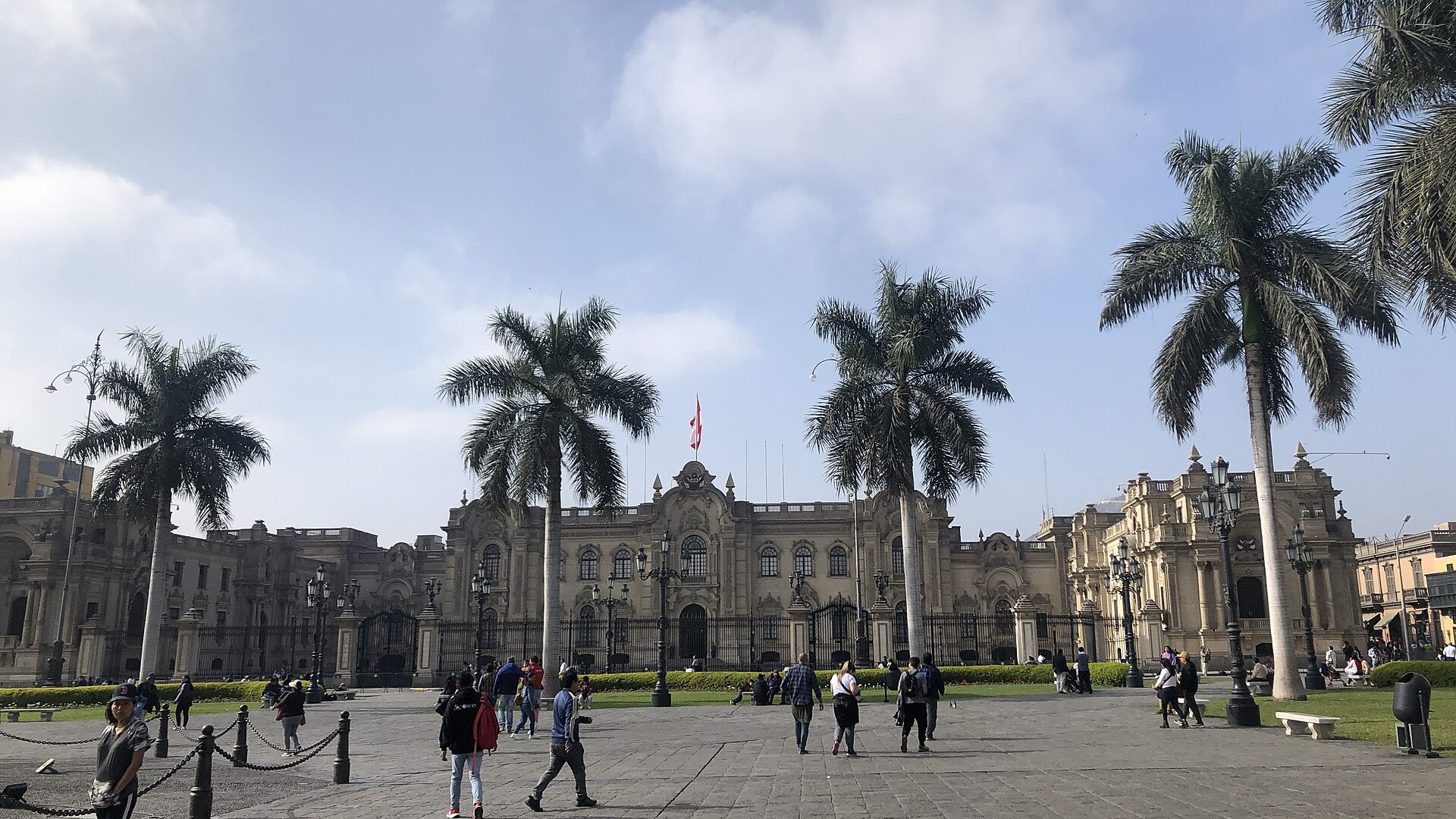
- Centro Histórico: Plaza Mayor, the cathedral, and the San Francisco monastery with its catacombs and library.
- Barranco: the bohemian district: the Puente de los Suspiros, street murals, the MATE museum, and bars that fill after 10 pm.
- Circuito Mágico del Agua: a park of illuminated fountains in the Parque de la Reserva. Unashamedly a spectacle, and a genuinely local night out.
- A ceviche lunch: at a cevichería, in the middle of the day. This is an activity, not a meal.
Map
Map data © OpenStreetMap contributors
Best Time to Visit
Lima runs opposite to the Andes. December to April is the bright season: sun, warm water, and the city at its most outward-facing. May to November sits under the garúa: a persistent low overcast that produces mist rather than rain, keeps temperatures mild and grey, and rarely clears before afternoon if it clears at all.
Neither season is bad, but they are genuinely different cities. If you are combining Lima with Cusco in the Andean dry season (May to September), expect grey on the coast and blue in the mountains on the same trip.
Rain is not a planning factor. Lima is one of the driest capital cities in the world, and measurable rainfall is an event.
Where to Stay
Miraflores for a first visit: safe to walk at night, close to the Malecón, and the best-connected for the airport run.
Barranco if you would rather have character than convenience, and if you plan to be out in the evening.
San Isidro for quiet, greenery and business travel.
One practical note: if you have an early domestic flight to Cusco, the airport run at 5 am takes a fraction of the daytime time, but the same trip at 8 am can take over an hour and a half. Plan the transfer around Lima’s traffic, not around the distance.
Neighborhoods
Miraflores: clifftop, walkable, well-lit, most hotels and the easiest base for a first visit. Also the most international-feeling part of the city.
Barranco: next door and considerably more characterful: 19th-century houses, galleries, murals and the best nightlife. Quieter by day, busy after dark.
San Isidro: the financial district, leafy and residential, with the city’s best parks and its most expensive restaurants. Calm to the point of being dull in the evening.
Centro Histórico: the colonial core and the UNESCO-listed architecture. Worth a full day; most visitors do not sleep there.
Callao: the port, and the location of the airport. The Monumental Callao arts district has been regenerated; the surrounding area has not, and is not somewhere to wander.
Transportation & Airports
The airport. Jorge Chávez International (LIM) sits in Callao, and the journey into Miraflores takes anywhere from 40 minutes to well over 90 depending entirely on traffic. Note that a passenger use fee applies and is not always included in the ticket price for transiting passengers.
Taxis and apps. Ride-hailing apps work well and remove fare negotiation, which in Lima is otherwise a necessary skill. Do not take unmarked cars hailed on the street, particularly at the airport.
The Metropolitano is a dedicated-lane bus rapid transit line running north–south through the city. It is fast, cheap and genuinely useful for the Centro–Miraflores axis, and requires a rechargeable card.
Walking. Miraflores and Barranco are connected by the clifftop Malecón and are pleasant to walk between. Most other distances are not walkable, and pedestrian priority at crossings is theoretical.
Onward. Lima is the hub for every domestic flight. The connection to Cusco takes a little over an hour.
Food
This is the reason to stay an extra day.
Ceviche is eaten at lunch, not dinner, because the fish arrives in the morning. A cevichería that is full at 1 pm and closed at 9 pm is doing it properly. The leche de tigre: the lime, chilli and fish-juice marinade left in the bowl, is served as a drink in its own right.
Chifa is Peruvian-Chinese cooking, brought by Cantonese migrants from the 1850s and now entirely Peruvian. Arroz chaufa is on menus nationwide.
Nikkei is the Japanese-Peruvian tradition, which applied sashimi technique to Pacific fish and produced tiradito.
Anticuchos: skewered beef heart, grilled on street corners in the evening, are the city’s best cheap food.
Menú del día: as everywhere in Peru, the set lunch is where the value is. In San Isidro or Miraflores you can also eat at some of the most decorated restaurants on the continent; Lima supports both without contradiction.
Day Trips
Pachacamac: a major pilgrimage complex 30 km south, in use for well over a thousand years before the Incas absorbed it. The site museum is excellent and the setting, between desert and sea, explains the location immediately.
Paracas and the Ballestas Islands: roughly four hours south, for sea lions, Humboldt penguins and the desert-meets-ocean national reserve. Long as a day trip; better as an overnight.
Caral: around 200 km north, one of the oldest urban centres in the Americas, roughly contemporary with the Egyptian pyramids. A serious day out and a quiet site.
Barranco to Chorrillos on foot: not a day trip, but the clifftop walk south past the fishing pier is the best two hours the city offers for free.
Budget
Lima is the most expensive city in Peru and still inexpensive by European or North American standards. The spread is wide: a set lunch in a neighbourhood restaurant and a tasting menu at an internationally ranked kitchen exist in the same district.
Transport is the hidden cost, not because fares are high but because journeys are long. Budget time rather than money. Museums are cheap. The Metropolitano is very cheap. Airport transfers are the one item priced for visitors.
Cards are accepted almost everywhere in Miraflores, San Isidro and Barranco. Markets and street food are cash.
Travel Tips
Do not judge the weather from the forecast. “Cloudy” in Lima from May to November is the default state, not a bad day.
Eat ceviche at lunch. This is the single most useful piece of local knowledge about the city.
Use apps for taxis, particularly from the airport.
Allow double the time for any cross-city journey between 7–10 am and 5–9 pm.
Spend the night before your Cusco flight in Lima, not in the air. Arriving at altitude tired makes the first day worse. See altitude in Cusco and Machu Picchu.
Keep phones out of sight in traffic. Snatch theft from car windows and pavements is the common opportunistic crime.
Other Cities in Peru

Frequently Asked Questions
Is Lima worth more than an airport night?
Yes, for at least one full day. The food alone justifies it, and Museo Larco and Huaca Pucllana are both first-rate.
Why is it always grey?
The garúa, a persistent coastal overcast caused by the cold Humboldt current meeting warm air. It runs roughly May to November and produces mist rather than rain.
Which neighbourhood should I stay in?
Miraflores for convenience and walkability, Barranco for character and nightlife, San Isidro for quiet.
Is Lima safe?
The tourist districts are routinely walked at night. Opportunistic theft is the realistic risk; unlicensed taxis are the main avoidable exposure.
How long from the airport to Miraflores?
Between 40 and 90-plus minutes depending on traffic. Early morning is fast; rush hour is not.
Plan your trip to Lima
Free tools for flight times, time differences, budget, money and plugs.
- Flight Duration CalculatorWork out real flight time across time zones.
- Time Zone ConverterFind the time in another city instantly.
- Trip Budget CalculatorEstimate your total trip cost, item by item.
- Currency ConverterConvert prices between currencies at indicative rates.
- Travel Plug & Voltage CheckerCheck if you need a plug adapter or voltage converter.
- Jet Lag CalculatorEstimate how many days you need to beat jet lag.