
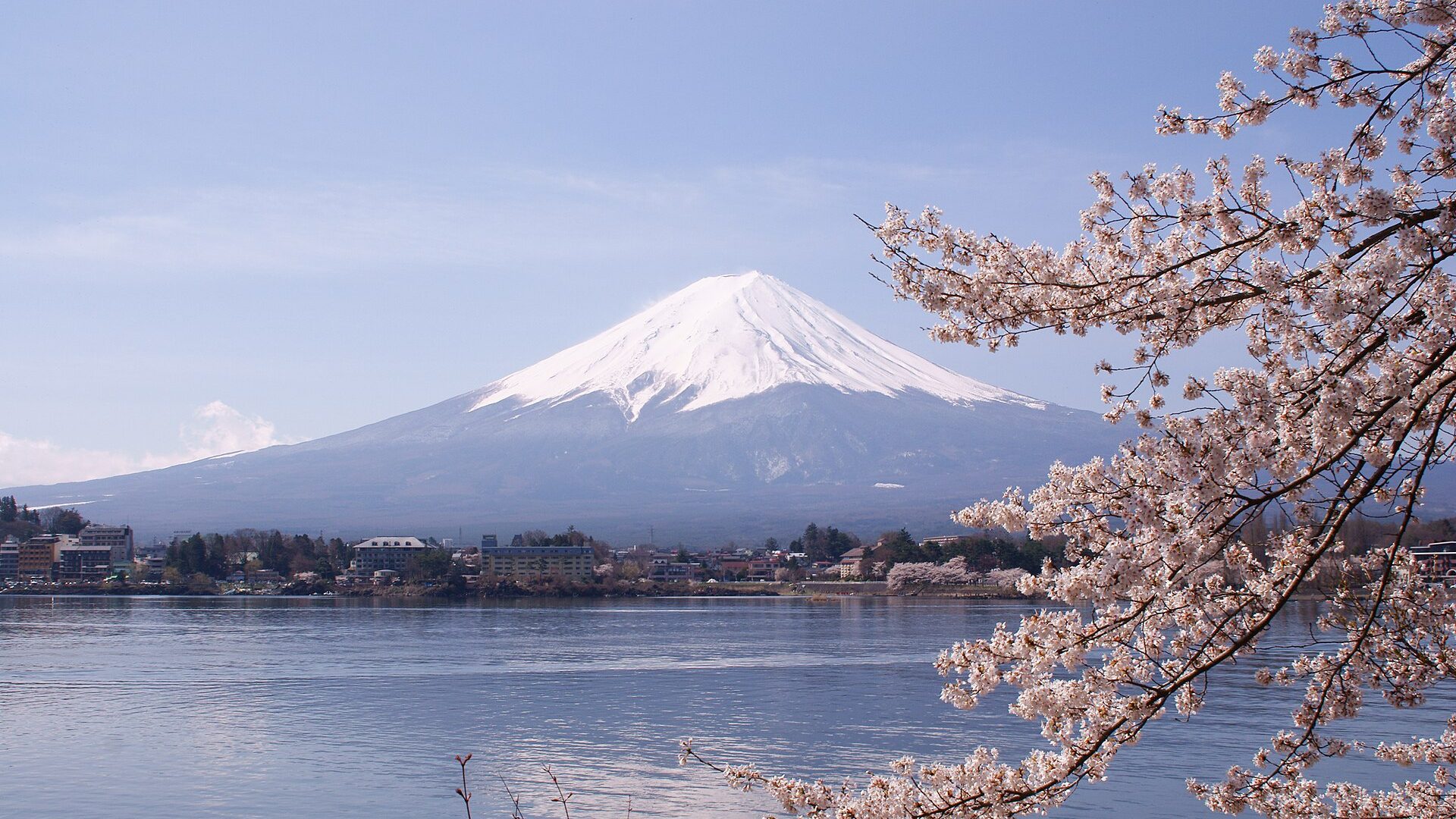
🇯🇵 Japan
Ultra-modern cities and centuries-old temple towns, connected by one of the world’s most efficient rail networks.
Japan rewards planning more than most countries, because almost everything about it runs on a system: the trains, the reservations, the seasons, the etiquette. Understand the systems and the country becomes extraordinarily easy to travel in. Ignore them and you spend the trip slightly out of step.
The classic first route is the Tokyo to Kyoto corridor, with Osaka, Hiroshima and Nara attached. Beyond it lie places that feel like a different country: the snow and wilderness of Hokkaido, the subtropical Okinawan islands, the mountain villages of the Japanese Alps, and the temple pilgrimage routes of Shikoku and the Kii Peninsula.
Best Time to Visit
Late March to May and October to November are the two prime windows. Spring brings the cherry blossom, which moves north over several weeks and shifts by a week or more each year with the weather; autumn brings the maple colour, moving in the opposite direction, and the clearest air of the year.
Both are peak domestic travel seasons, so book accommodation and reserved seats early. Golden Week in late April and early May and the Obon period in mid-August are national holiday clusters when the whole country travels at once — avoid them unless you have booked months ahead.
Winter is the season for Hokkaido skiing, snow monkeys and onsen, and it is the cheapest time in the cities. The rainy season runs from roughly early June into mid-July across most of the country, and September is the most active month for typhoons.
Weather & Climate
Japan stretches about three thousand kilometres from north to south, so it has no single climate. Hokkaido is subarctic with heavy snow and a short, mild summer. Honshu and Kyushu are humid subtropical: hot, sticky summers and cool to cold winters. Okinawa is subtropical year-round.
The Sea of Japan coast gets some of the heaviest snowfall in the world, because cold Siberian air picks up moisture crossing the sea and drops it on the mountains, which is why the ski resorts are where they are, and why the Pacific side of the same island can be dry and sunny on the same day.
Two seasonal features shape travel planning: the rainy season (tsuyu), roughly June into mid-July, and typhoon season, at its strongest from August through September, which occasionally suspends trains and flights for a day.
Map
Map data © OpenStreetMap contributors
Top Cities

Popular Destinations
Entry & Visa Guidance
Japan has reciprocal short-stay visa exemption arrangements with a large number of countries and regions — 74 according to the Ministry of Foreign Affairs — under which no visa is required for tourism. The permitted stay is commonly 90 days, but it is shorter for some nationalities: the Ministry lists 15 days for Indonesia and Thailand and 30 days for Brunei and Qatar, among other variations.
Some exemptions are conditional on holding an ICAO-compliant biometric passport; the Ministry states that travellers from certain countries without one may be refused entry. Check your own nationality on the official list rather than assuming, and confirm before booking, since arrangements are periodically suspended or reinstated.
Japan uses an online system for submitting immigration and customs declarations before arrival, which produces QR codes to scan at the airport. It is optional but shortens the queue considerably. Entry procedures include fingerprinting and a photograph for most foreign visitors.
Getting There & Around
The rail network is the reason to travel in Japan and the reason to think about cost. The Shinkansen connects the main cities at high speed and high frequency, and local and limited-express lines reach almost everywhere else.
The Japan Rail Pass covers JR lines nationwide for a fixed period. It is worth doing the arithmetic rather than buying it reflexively: it does not cover city subways, the fastest Nozomi and Mizuho Shinkansen services require a supplement or are excluded depending on the pass, and after the 2023 price rise it only pays off on genuinely long itineraries. Regional passes, covering one area such as Kansai or Kyushu, are often better value.
Within cities, use a rechargeable IC card: Suica, PASMO, ICOCA and their regional equivalents are now broadly interoperable and work on trains, buses and in convenience stores.
Long-distance buses are far cheaper than the Shinkansen and overnight services save a night's accommodation. Domestic flights are competitive for Hokkaido and Okinawa. Driving is only necessary for rural areas, and requires an International Driving Permit under the 1949 Geneva Convention, which some nationalities cannot use — check before planning a road trip.
Approximate Travel Budget
Japan is not the extravagantly expensive country of its reputation, but the cost is unevenly distributed. Eating is cheap and excellent at the everyday level: set lunches, ramen, standing soba, convenience store food. City transport is modest. Temples and shrines charge small admissions or none.
The costs that dominate are accommodation in the big cities during peak seasons and long-distance rail. A single Tokyo to Kyoto Shinkansen leg is a significant sum, which is what makes the pass arithmetic worth doing.
Ways to lower it: business hotels and capsule hotels instead of international chains; regional rail passes instead of the national one; overnight buses; eating the set lunch rather than the same restaurant's dinner; and travelling outside the blossom, autumn colour and national holiday peaks.
Local Customs & Culture
Japanese etiquette is less about rules than about not imposing on others, and visitors are given a great deal of latitude. A few things are worth getting right.
Shoes come off at the entrance to homes, ryokan, temple interiors and some restaurants — look for a step up or a shelf of slippers. Public transport is quiet: no phone calls, and headphones low. Eating while walking is uncommon outside festival streets.
Tipping is not practised anywhere and can cause genuine confusion; good service is standard and not transactional. At onsen and public baths you wash thoroughly before entering the water, and the bath itself is entered clean and naked; tattoos are still refused at some establishments, though this is loosening.
Money is often passed on a small tray rather than hand to hand. Business cards are given and received with both hands. Queueing is orderly and marked on the platform floor, and people stand aside to let passengers off before boarding.
Food
Japanese restaurants tend to specialise in one thing and do it for decades: sushi, tempura, unagi, soba, udon, tonkatsu, yakitori, ramen. Choosing a restaurant means choosing a dish first.
The regional differences are real and worth planning around: Osaka for okonomiyaki and takoyaki, Hiroshima for its own layered version of okonomiyaki, Fukuoka for tonkotsu ramen at riverside stalls, Hokkaido for seafood and dairy, Kyoto for kaiseki and tofu cooking developed around its temples.
Practical points: lunch sets at serious restaurants cost a fraction of the same kitchen's dinner; ticket machines at the door are normal at casual places; department store food halls are exceptional and need no reservation. Vegetarian travel takes preparation, because dashi made from bonito is in a great many dishes that otherwise look plant-based.
Safety & Travel Advice
Japan has very low levels of violent and petty crime, and lost property is routinely handed in. The realistic risks are natural rather than criminal.
Earthquakes are frequent. Learn the basic response — get under something solid, stay away from windows, do not run outside — and note that hotels display evacuation information. Phones sold or roaming in Japan receive the national emergency alert system, which gives seconds of warning before strong shaking and also warns of tsunami, typhoons and volcanic activity.
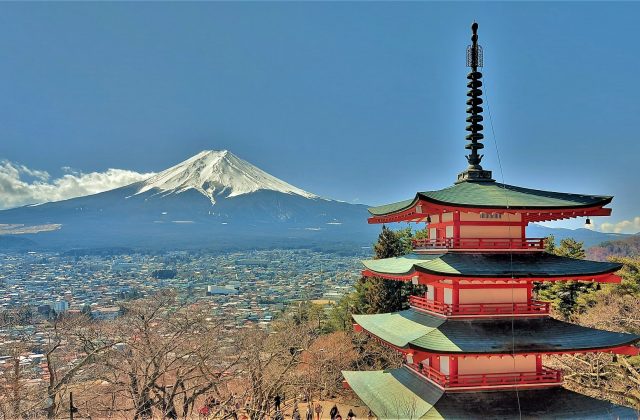
Typhoons in late summer and autumn can suspend transport for a day; follow the Japan Meteorological Agency rather than social media. Summer heat and humidity are severe enough to cause heatstroke in cities, and mountain weather changes quickly: Mount Fuji in particular has a formal climbing season with rules and reservations, outside of which the huts are closed.
Recommended Itineraries
Useful Phrases
Japanese uses three writing systems, but station and major signage is widely bilingual.
Konnichiwa - hello. Arigatou gozaimasu - thank you (polite). Sumimasen - excuse me, sorry, and to get attention; the most useful word you will learn.
Onegaishimasu - please, when asking for something. Hai - yes. Iie - no.
Eigo no menyu wa arimasu ka - do you have an English menu.
Oishii - delicious. Gochisousama deshita - said on leaving after a meal.
Daijoubu desu - it's fine, no thank you, I'm okay; useful for declining politely.
Eki wa doko desu ka - where is the station.
Official Sources
Visa, entry, and safety information changes. Always verify with the official sources below before you travel.