🇩🇰 Denmark
Bikes, beaches, Viking history and Nordic design in a small, easy-going kingdom
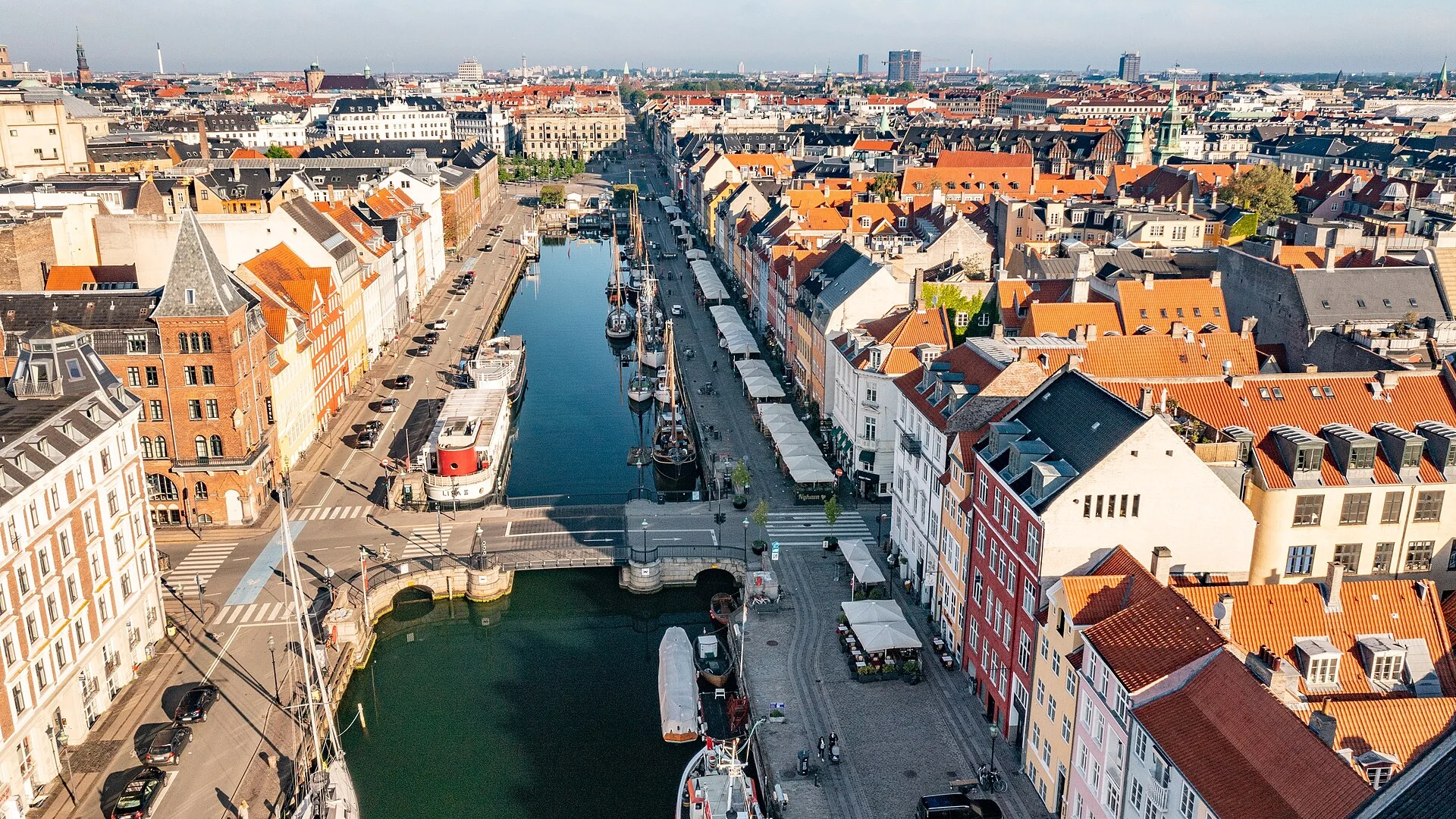
Denmark is small, flat and surrounded by sea: a peninsula and hundreds of islands where no point is far from a beach. Copenhagen sets the tone with cycling lanes, harbour swimming and celebrated food, but the country also offers Renaissance castles, Viking ships and wide North Sea dunes.
It is an easy place to travel, with excellent trains, near-universal English and a love of comfort the Danes call hygge.
Best Time to Visit
May to September is the main season, with long days, outdoor dining and beaches that are genuinely pleasant in July and August. June is a favourite: light until late, green countryside and fewer crowds than high summer.
Winter is dark and often grey, but cities glow with Christmas markets and candlelit cafés from late November, and museums are uncrowded. Copenhagen rewards a visit at any time of year; for beaches, islands and the west coast, aim for summer.
Weather & Climate
Denmark has a temperate maritime climate shaped by the sea. Summers are mild rather than hot, winters are cool and damp rather than severely cold, and wind is a constant companion, especially on the west coast.
Rain can fall in any month, so a waterproof layer is always useful. Daylight varies widely, from very long June evenings to short days around the winter solstice.
Map
Map data © OpenStreetMap contributors
Explore More in the Region

Albania
Ionian beaches, Ottoman hill towns and wild mountains on the Adriatic

Austria
Vienna's imperial grandeur and the Alps just beyond the city.

Belgium
Belfries, beer halls and art nouveau in a small country built for train travel

Bosnia and Herzegovina
Ottoman bazaars and Austro-Hungarian avenues in Sarajevo, the rebuilt bridge of Mostar, turquoise rivers and mountains…

Bulgaria
Rila Monastery, Roman Plovdiv, the medieval capital Veliko Tarnovo, Black Sea beaches and ski resorts at…

Croatia
Roman palaces, walled towns and a thousand islands on the Adriatic
Entry & Visa Guidance
Denmark is part of the Schengen area. Many non-EU nationals, including citizens of the UK, the USA, Canada and Australia, can visit without a visa for up to 90 days in any 180-day period across the whole Schengen area. Other nationalities need a Schengen visa; the Danish authorities' official portal is New to Denmark (nyidanmark.dk). Your passport generally needs to be less than ten years old on arrival and valid for at least three months after you plan to leave.
The EU's Entry/Exit System (EES) has been operational at all Schengen external borders since 10 April 2026, with non-EU travellers registering fingerprints and a facial image instead of receiving passport stamps. ETIAS is not yet in force; it is scheduled for the last quarter of 2026, with the date still to be confirmed.
Note that Greenland and the Faroe Islands, though part of the Kingdom of Denmark, are outside the Schengen area and the EU and have their own entry rules. Carry your passport even on trains to Sweden or Germany, as checks can take place at internal borders. Confirm the current rules for your nationality with the official source before booking. Checked October 2026.
Getting There & Around
Copenhagen Airport is the main gateway, a short metro or train ride from the centre of Copenhagen. Billund and Aarhus airports serve Jutland.
Trains run by DSB link the major towns, crossing the Great Belt Bridge between Zealand and Funen; the Rejseplanen journey planner covers trains, buses and ferries nationwide. The Øresund Bridge carries trains to Malmö in Sweden, and ferries serve the many islands, including Bornholm in the Baltic.
Cycling is a genuine way to travel here, with a national network of signposted routes and bike-friendly trains. Driving is on the right and roads are excellent, though city parking is limited and costly.
Approximate Travel Budget
Denmark is expensive by European standards, and Copenhagen especially so. Accommodation, restaurant meals and alcohol are the main costs; trains and public transport are fairly priced for the quality.
To save money, eat a main meal at lunchtime, use bakeries and supermarkets for picnics, and consider a city pass if you plan many museums. Hostels and simple guesthouses exist even in the capital. The currency is the Danish krone, not the euro, but cards are accepted virtually everywhere and many places are effectively cashless.
Local Customs & Culture
Danes are informal, egalitarian and direct; first names are used widely and modesty is valued. Punctuality matters, both for social invitations and for tours. Queues are respected, and in many shops and offices you take a number.
Hygge, the cultivation of cosy, unhurried time with others, shapes social life, especially in winter. Toasts come with eye contact (skål). Service is included in prices and tipping is not expected, though rounding up for good service is appreciated.
Food
The classic Danish lunch is smørrebrød: open sandwiches on rye bread topped with herring, roast beef, shrimp or egg. Other staples include frikadeller (meatballs), roast pork with crackling (flæskesteg) and pickled herring, plus pastries that the rest of the world calls Danish and Danes call wienerbrød.
Copenhagen played a key role in the New Nordic movement, and seasonal, local cooking now runs from fine dining to bakeries and street-food halls. Hot dogs from street stands remain a national institution. In Copenhagen, food halls and harbourside markets are an easy way to taste widely.
Safety & Travel Advice
Denmark is a very safe country. Pickpocketing happens in busy tourist areas, stations and nightlife districts, so keep valuables close. Cyclists are numerous and fast: look both ways before stepping into a bike lane, and if you ride, follow local hand signals and rules.
On beaches, respect flags and warnings, as North Sea currents can be strong. The emergency number is 112. Check your own government's travel advice, such as the UK FCDO or US State Department, before you go.
Useful Phrases
English is spoken almost everywhere in Denmark, but a few Danish words are a friendly gesture (Danish pronunciation is famously tricky).
Hej: Hello
Tak: Thank you
Mange tak: Thank you very much
Undskyld: Excuse me / Sorry
Ja / Nej: Yes / No
Taler du engelsk? Do you speak English?
Hvad koster det? How much does it cost?
Hvor er toilettet? Where is the toilet?
Skål! Cheers!
Hej hej: Goodbye
Official Sources
Visa, entry, and safety information changes. Always verify with the official sources below before you travel.
- https://www.dst.dk/en/Statistik/emner/borgere/befolkning/befolkningstal
- https://home-affairs.ec.europa.eu/policies/schengen/smart-borders/entry-exit-system_en
- https://travel-europe.europa.eu/etias/about-etias/news-corner
- https://www.visitcopenhagen.com/copenhagen/planning/transportation/copenhagen-airport-to-city-center-all-your-options
- https://whc.unesco.org/en/list/696
- https://www.gov.uk/foreign-travel-advice/denmark
Plan your trip to Denmark
Free tools for flight times, time differences, budget, money and plugs.
- Flight Duration CalculatorWork out real flight time across time zones.
- Time Zone ConverterFind the time in another city instantly.
- Trip Budget CalculatorEstimate your total trip cost, item by item.
- Currency ConverterConvert prices between currencies at indicative rates.
- Travel Plug & Voltage CheckerCheck if you need a plug adapter or voltage converter.
- Jet Lag CalculatorEstimate how many days you need to beat jet lag.