
🇨🇺 Cuba
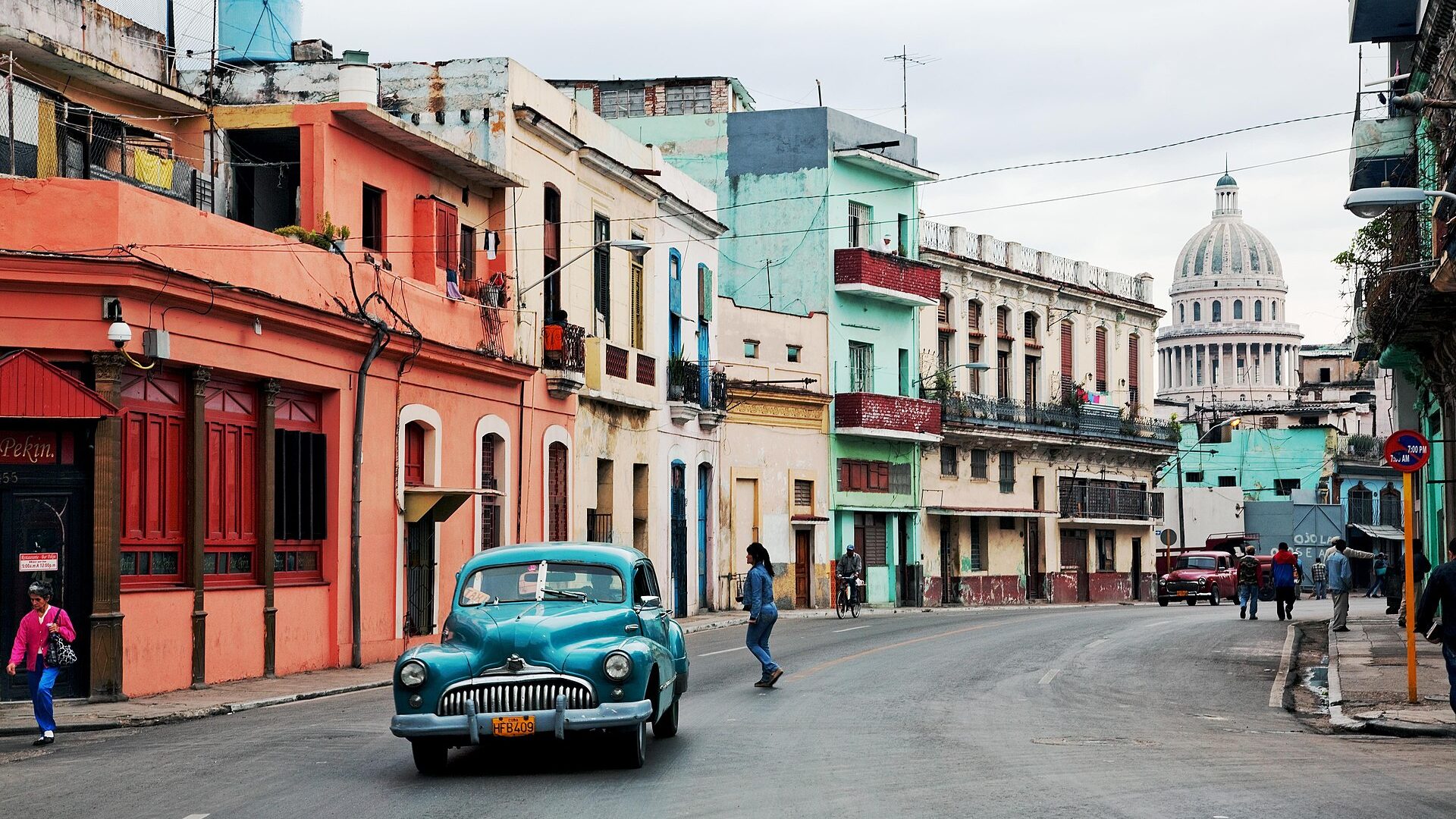
Havana’s classic cars, colonial architecture, and Caribbean beaches.
Cuba is the largest island in the Caribbean and the one that works least like the others. There is no resort-and-airport-transfer default here unless you choose it: the interesting version of the country is Havana, the colonial towns of Trinidad and Cienfuegos, the tobacco valley of Viñales, and the long drive east toward Santiago.
It also demands more preparation than almost any destination in the region, for reasons that have nothing to do with danger and everything to do with paperwork, connectivity and supply.
Best Time to Visit
December to April is the dry season and the best time: warm, sunny, low humidity, and the peak for prices and visitor numbers. Christmas and New Year are the busiest weeks of the year.
May to November is the wet season, hotter and more humid, with rain typically in afternoon bursts. Prices fall.
Hurricane season runs 1 June to 30 November, with peak risk from August to October. Cuba is regularly affected and infrastructure recovery can be slow; insurance covering weather disruption is worth having in that window.
Weather & Climate
Cuba is tropical with a marked dry and wet season rather than temperature extremes. The island is long and narrow, so the sea moderates everything and few places are far from a coast.
The east around Santiago and Baracoa is hotter and more humid than the west, and the Sierra Maestra mountains there are the highest ground in the country. Viñales in the west sits among limestone mogotes and is noticeably fresher in the evening.
Map
Map data © OpenStreetMap contributors
Explore More in the Region

Entry & Visa Guidance
A tourist card is required. UK Foreign Office guidance states that tourists need a tourist visa, also called a tourist card, obtained before travelling: through a Cuban embassy, a travel agent, or the official eVisa platform, which issues a QR code to present at the border.
Passport validity is demanding: the guidance states it must be valid for at least six months beyond your arrival date and three months beyond your planned departure.
You must also complete the DViajeros traveller information form within 72 hours before entry. It returns a QR code by email which must be shown on arrival: download or print it beforehand, because airport wifi may not be available.
Travellers from the United States should note that direct tourism travel from the USA to Cuba is prohibited under US law, and that a Cuba visit can affect later eligibility for the US visa waiver programme. Check current US guidance before booking either leg.
Getting There & Around
Viazul coaches are the practical intercity option for visitors: air-conditioned, reasonably reliable, and best booked ahead in season. Colectivos, shared vintage American cars running fixed intercity routes, are faster, more comfortable than they look, and negotiated.
Within Havana, licensed taxis, the yellow coco-taxis and the classic-car tours all operate; agree a fare before setting off. Local buses exist but are crowded and hard to use without Spanish.
Hire cars are available and expensive, and fuel supply has been unreliable, queues at service stations are a real planning factor. If you drive, fill up whenever you can rather than when you need to.
Domestic flights connect Havana with Santiago, Holguín and Varadero, and save a very long drive east.
Approximate Travel Budget
Cuba is not the bargain it is sometimes assumed to be, largely because the visitor economy is separate from the local one. Casas particulares: licensed private guesthouses, are the best value and the best experience, and paladares, private restaurants, are better and dearer than state ones.
Money needs planning rather than budgeting. The Cuban peso cannot be obtained or exchanged outside the country, exchange is only legal at official Cadeca houses, and foreign currency above 5,000 US dollars must be declared on entry. Cards issued by US banks do not work, and card acceptance generally is patchy, so most visitors bring cash and change it as needed.
Budget for shortages rather than prices: bring your own medicines, toiletries, sunscreen and batteries, because they are frequently unavailable to buy.
Local Customs & Culture
Cubans are sociable, direct and quick to talk, and casa hosts often become the best part of a trip. Spanish makes an enormous difference here; English is much less widespread than in the rest of the Caribbean.
Politics is discussed carefully in public. Cubans will often raise the subject themselves; visitors are better off listening than pronouncing, and it is worth remembering that a conversation costs a resident more than it costs you.
Tipping matters more than usual because of the wage structure: small amounts for musicians, guides, bathroom attendants and hotel staff are normal and appreciated.
Music is not a performance laid on for tourists: son, trova and rumba are living traditions, and the best of it happens in neighbourhood casas de la trova rather than hotel lobbies.
Food
Cuban home cooking is simple and savoury rather than spicy: ropa vieja shredded beef, roast pork, congrí or moros y cristianos (rice and black beans cooked together), tostones and yuca with mojo.
Eat in paladares: privately run restaurants, and in casas particulares, where the host cooks. Both are consistently better than state-run establishments, and a casa breakfast is usually the best meal of the day.
Supply shortages affect menus, so flexibility helps: the advertised dish may simply not be available. Seafood, pork and chicken are the reliable options.
Drinks: rum is excellent and cheap, coffee is strong and sweet, and fresh guarapo sugarcane juice is worth trying. Drink bottled or treated water.
Safety & Travel Advice
Violent crime against visitors is rare and Cuba is one of the safer countries in the region to walk around. Petty theft and persistent informal offers (of taxis, cigars, restaurants) are the everyday nuisance rather than a threat.
The practical difficulties are infrastructural. Power cuts are frequent and can last hours. Medicines, some foods and basic goods are in short supply. Internet access is limited and often requires a prepaid card; do not count on being reachable.
Medical care for foreigners is provided at designated facilities and Cuba has required proof of travel insurance from visitors in the past. Carry your policy documents and check the current requirement before travelling.
Photography of military and government installations is prohibited. Follow hurricane instructions from local authorities in season.
Useful Phrases
Spanish is the language and English is limited outside hotels. Even basic Spanish transforms a trip here.
Buenos dias / buenas tardes / buenas noches - good morning / afternoon / evening.
Por favor - please. Gracias - thank you. De nada - you're welcome.
Cuanto cuesta - how much is it.
Casa particular - licensed private guesthouse.
Paladar - private restaurant.
No hay - there isn't any; you will hear this often and it is not rudeness.
Asere - mate, friend (very informal Cuban).
Que bola - what's up (informal greeting).
Donde esta el bano - where is the toilet.
Official Sources
Visa, entry, and safety information changes. Always verify with the official sources below before you travel.
Plan your trip to Cuba
Free tools for flight times, time differences, budget, money and plugs.
- Flight Duration CalculatorWork out real flight time across time zones.
- Time Zone ConverterFind the time in another city instantly.
- Trip Budget CalculatorEstimate your total trip cost, item by item.
- Currency ConverterConvert prices between currencies at indicative rates.
- Travel Plug & Voltage CheckerCheck if you need a plug adapter or voltage converter.
- Jet Lag CalculatorEstimate how many days you need to beat jet lag.