
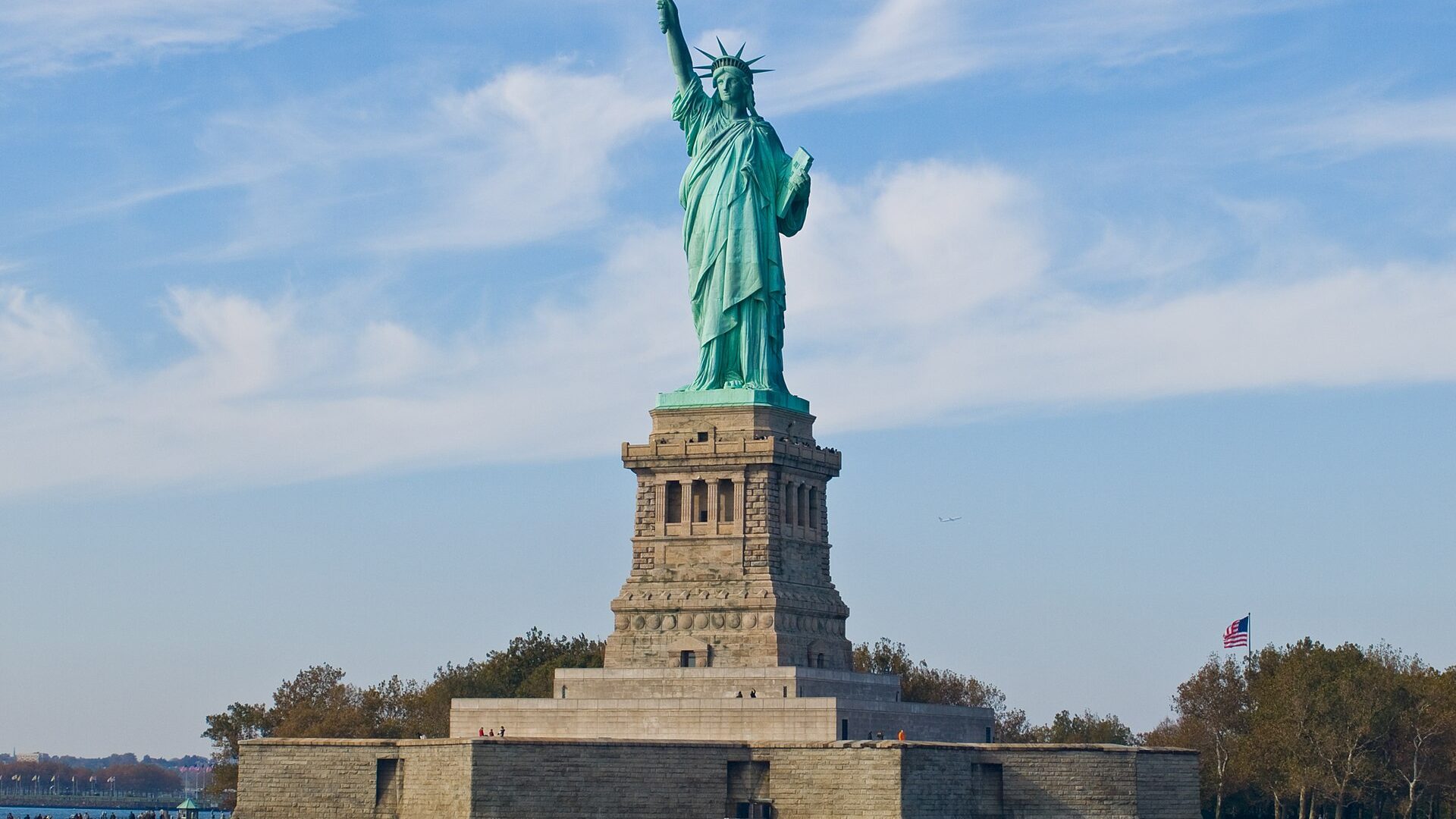
🇺🇸 United States
From New York to national parks, a continent-sized range of trips in one country.
The United States is not one destination and cannot be treated as one. New England, the Deep South, the Southwest desert, the Pacific Northwest and Hawaii differ in landscape, climate, food and law, and the distances between them are continental — New York to Los Angeles is a five to six hour flight.
The practical consequence is that a trip here works when it commits to a region: a national parks loop in the Southwest, a coastal drive in California, a city-and-history route in the Northeast, or the music corridor from Nashville to Memphis to New Orleans.
Best Time to Visit
There is no national answer, only regional ones.
The Northeast is best in late spring and in autumn, when the foliage in New England peaks between late September and late October; winters are cold and snowy.
The Southwest and desert parks: Utah, Arizona, Death Valley — are best in spring and autumn; summer is dangerously hot and winter brings snow at altitude on the Colorado Plateau.
California is year-round, with the caveat that coastal summer mornings are foggy and the Sierra high country, including much of Yosemite's Tioga Road, is closed by snow into late spring.
The South and Florida are best from November to April; summer is hot and humid, and the Atlantic hurricane season runs from June through November.
Domestic travel peaks around Thanksgiving in late November, Christmas, and the summer school holidays, when national parks and flights are at their most crowded and expensive.
Weather & Climate
The contiguous United States spans four time zones and almost every climate: humid continental in the Northeast and Midwest, humid subtropical in the Southeast, arid and semi-arid across the Southwest and Great Plains, Mediterranean along coastal California, oceanic in the Pacific Northwest, and alpine through the Rockies and Sierra Nevada. Alaska is subarctic to arctic; Hawaii is tropical.
Severe weather is regional and seasonal: tornadoes in the central plains, mainly spring into early summer; hurricanes on the Gulf and Atlantic coasts from June to November; wildfire season across the West, broadly summer into autumn; and winter storms across the north and the mountain passes.
Map
Map data © OpenStreetMap contributors
Top Cities

Las Vegas
The Strip's casinos and shows, plus a gateway to the Grand Canyon.

Los Angeles
Hollywood, beaches, and year-round sunshine.
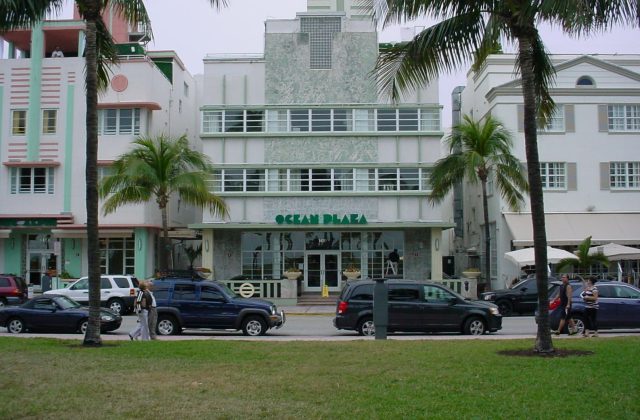
Miami
Art Deco South Beach and a Latin American cultural crossroads.

New York City
Museums, Broadway, and a skyline that needs no introduction.
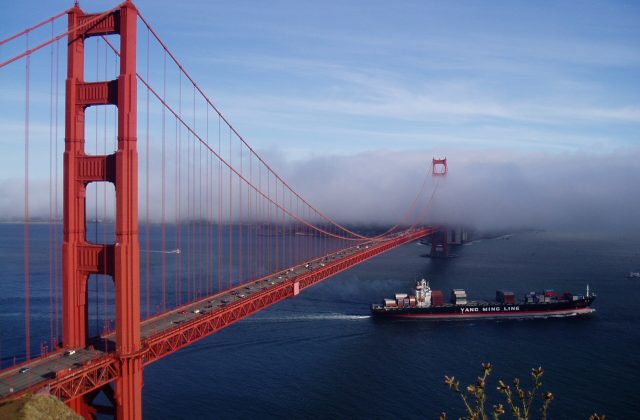
San Francisco
The Golden Gate Bridge, steep hills, and easy wine country access.
Entry & Visa Guidance
Visitors from Visa Waiver Program countries travel for tourism without a visa but must hold an approved ESTA: an electronic travel authorisation applied for in advance through the official Department of Homeland Security site. Other nationalities need a visitor visa, typically a B-2, applied for at a US embassy or consulate with an interview; appointment waiting times vary widely by country and can be months, so start early.
Apply for the ESTA only at the official government site. Numerous commercial sites charge a markup for the same application.
Eligibility for the Visa Waiver Program can be lost by certain travel history or dual nationality, in which case a visa is required instead. Check the current rules on the official site rather than assuming.
There is no national health service for visitors and medical costs are very high. Comprehensive travel insurance with substantial medical cover is not optional here; it is the single most important piece of preparation.
Getting There & Around
Domestic flights cover the long distances and there is strong competition. Note that budget carriers charge separately for carry-on as well as checked bags, and the advertised fare often bears little relation to the final price.
A car is necessary for national parks, the South and most of the interior. Driving is on the right, distances are large, and fuel is cheap by European standards. An International Driving Permit alongside your own licence is advisable and required by some states and rental firms. Note that many toll roads are now cashless and bill the rental company, which adds administration fees.
Passenger rail exists but is slow and limited outside the Northeast Corridor between Washington, New York and Boston, which is genuinely useful. Long-distance trains are scenic journeys rather than efficient transport.
City transit is excellent in New York, Chicago, Washington, Boston and San Francisco and thin almost everywhere else, where ride-hailing fills the gap.
Approximate Travel Budget
The United States is expensive, and the headline price is never the final price. Sales tax is added at the register and varies by state and city, and tipping is expected: commonly around twenty per cent in restaurants and bars, plus tips for taxis, hotel housekeeping and tour guides. Budget roughly a third above menu prices for a sit-down meal.
Hotels frequently add a nightly resort or facility fee not shown in the booking price, and parking in cities is a significant daily cost.
Where the value is: the America the Beautiful annual pass covers entry to all national parks and federal recreation sites for a vehicle and pays for itself quickly on a parks trip; state parks are often excellent and cheaper; and portions in restaurants are large enough that sharing is normal.
Local Customs & Culture
American social style is friendly, informal and direct. Strangers make conversation easily, service staff are attentive by professional expectation, and first names are used quickly.
Tipping is not a bonus but part of how service workers are paid, and not tipping reads as a complaint rather than as thrift.
Practical norms: personal space is larger than in much of the world, queueing is orderly, and smoking is prohibited in most indoor public places nationwide.
Laws differ by state to a degree visitors underestimate: drinking age is 21 everywhere and identification is checked regardless of apparent age; cannabis is legal in some states, illegal in others, and federally illegal, which matters at airports and national parks. Open containers of alcohol in public are prohibited in most places.
Food
American food is regional and immigrant-derived. Barbecue alone splits into distinct traditions — Texas beef brisket, Carolina pulled pork with vinegar, Kansas City and Memphis with their own sauces — and people argue about them seriously.
Other regional markers: New England seafood and clam chowder; New Orleans Creole and Cajun cooking, which are not the same thing; Tex-Mex and New Mexican chile in the Southwest; Californian produce-driven cooking; and Hawaiian food with its Japanese, Filipino and Portuguese layers.
The everyday layer is as interesting as the famous one: diners, delis, food trucks, farmers' markets, and the Chinese, Mexican, Korean, Vietnamese, Ethiopian and Indian restaurants that are mainstream American food in any large city.
Practical notes: tap water is safe and served free, portions are large, and free refills on soft drinks and coffee are common.
Safety & Travel Advice
The United States is generally safe for visitors, with risks that are highly localised. Crime varies street by street rather than city by city, so local advice is more useful than national generalisations.
The realistic hazards for most trips are environmental and vehicular. Driving distances lead to fatigue; desert parks kill visitors most years through heat and inadequate water; wildlife rules in bear and bison country are not decorative; and ocean rip currents are the main cause of beach fatalities.
Wildfire and hurricane seasons can close roads and parks at short notice — check the National Park Service and state transport sites when travelling in those windows.
Emergency services are reached on 911. Treat any hospital visit as a substantial expense and carry proof of insurance.
Useful Phrases
English is the working language nationwide, and Spanish is very widely spoken, particularly in the Southwest, Florida and large cities.
Terms that differ from British English and cause confusion:
Restroom or bathroom - toilet; asking for the toilet sounds odd.
Check - the restaurant bill. Entree - the main course, not a starter.
Gas - petrol. Sidewalk - pavement. Pavement - the road surface itself.
Fall - autumn. Cell phone - mobile. Line - queue.
Takeout - takeaway. To go - to take away.
Elevator - lift. First floor - ground floor; floors are numbered from one at street level.
Official Sources
Visa, entry, and safety information changes. Always verify with the official sources below before you travel.