

🇵🇪 Peru
Machu Picchu, the Sacred Valley, and Lima’s celebrated food scene.


Peru’s Inca heritage (Machu Picchu, Cusco, the Sacred Valley) anchors most itineraries, but Lima’s globally-ranked restaurant scene has made the capital a destination in its own right.
Best Time to Visit
Peru runs three climates side by side, so the useful question is not when to visit Peru but which Peru you are visiting.
The Andes: Cusco, the Sacred Valley, Machu Picchu. The dry season runs roughly May to September: clear mornings, cold nights, the most dependable trekking conditions and the cleanest light at Machu Picchu. It is also when entry slots and trail permits go first. From November to March the rain arrives in the afternoons, the terraces turn green and the crowds thin out considerably. The Classic Inca Trail closes every February for maintenance.
The coast: Lima and the desert south. The pattern inverts. Lima is brightest from December to April, and spends much of May to November under the garúa, a low grey overcast that seldom becomes real rain but rarely lifts either.
The Amazon. Hot and humid year-round. High water from December to May opens creek routes only reachable by boat; low water from June to November exposes trails and river beaches.
If you need one window that serves most of the country, May and September sit at the shoulders of the Andean dry season and dodge the worst of both the rain and the queues.
Weather & Climate
Altitude decides the weather here, not latitude. Lima sits at about 150 m on a desert coast where measurable rain is an event. Cusco, an hour away by plane, sits at 3,399 m and falls close to freezing on clear winter nights. You can experience both in a single day, and people regularly pack for only one of them.
In the highlands the daily swing matters more than the season. A dry-season afternoon in Cusco can feel warm in direct sun and drop below 5 °C once it sets. Layers work; one thick coat does not. Most accommodation below about 3,000 m has no heating at all, because for eleven months of the year it does not need any.
The coastal garúa deserves its own warning. Visitors arrive in Lima in July expecting South American sun and meet three weeks of flat grey cloud. It is not rain and it stops nothing, but it changes what you pack and how the city photographs.
Map
Map data © OpenStreetMap contributors
Top Cities
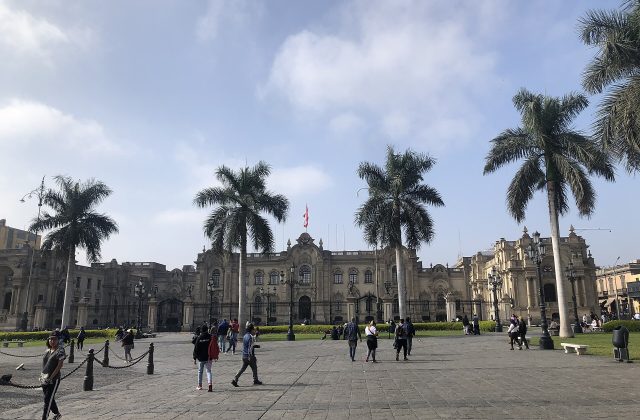
Popular Destinations
Entry & Visa Guidance
Visitors from most of Europe, North America and Latin America enter Peru for tourism without a visa. Your passport must be valid for at least six months beyond the date you arrive.
Length of stay is decided by the officer on arrival rather than by a fixed entitlement. The usual grant is up to 90 days within a 180-day window, and officials may grant up to 183 days within 365. Overstaying carries fines.
Two things catch people out:
- At airports your entry is recorded digitally through the Tarjeta Andina de Migración. Nothing is stamped into your passport, so check the stay you were actually granted on the Migraciones website rather than assuming.
- At land borders you need a physical stamp. Crossing from Bolivia, Chile or Ecuador without stopping at the immigration post creates a real problem when you try to leave.
There is also an airport use fee at Lima’s Jorge Chávez International that is not always bundled into the fare for transiting passengers — worth settling with your airline in advance rather than at the gate.
Entry rules change. Confirm against your own government’s travel advice and Peru’s Superintendencia Nacional de Migraciones before booking.
Getting There & Around
Getting there. Almost every international arrival lands at Jorge Chávez International in Lima (LIM), the main hub for the western side of South America, with direct services from Madrid, Amsterdam, Miami, Atlanta, Mexico City, Bogotá Santiago and São Paulo. There are no direct long-haul flights into Cusco; you will transit Lima whether you want to or not.
Domestic flights. Lima to Cusco takes a little over an hour and is the spine of most itineraries. It is also weather-sensitive: Cusco’s runway sits in a bowl at altitude and morning departures are markedly more reliable than afternoon ones. If a connection depends on it, take the first flight of the day.
Long-distance buses. The premium operators run genuinely comfortable overnight coaches between major cities. Lima to Cusco by road is a long haul, but it climbs gradually, which is far kinder on the body than arriving at 3,399 m by air — see our guide to altitude in Cusco and Machu Picchu.
Trains. Peru has almost no passenger rail, with one consequential exception: the line from Cusco and Ollantaytambo down to Aguas Calientes. It is the only public way to reach Machu Picchu without trekking, which is why it is priced the way it is.
Within cities. Ride-hailing apps work in Lima and Cusco and remove fare negotiation entirely. In Lima the constraint is traffic, not distance: allow considerably longer than any map suggests.
Approximate Travel Budget
Peru stretches across a very wide range. A traveller moving by bus, sleeping in hostels and eating set lunches spends a fraction of what someone flying between cities, staying in the Sacred Valley’s boutique hotels and hiring a private guide will spend.
What is worth knowing is that three costs dominate nearly every Peru budget, and none of them is daily spending:
- The Lima–Cusco flight, or the time you spend avoiding it.
- The train to Aguas Calientes, priced far above what its distance suggests because it is the only line in.
- Machu Picchu entry, plus a guide where guiding is required.
Almost everything else is inexpensive by European or North American standards: food, city transport, intercity buses, entry to most museums and archaeological sites. The menú del día: a set lunch of soup, main and drink in an ordinary neighbourhood restaurant — remains one of the best-value meals anywhere.
Cash still matters outside the cities. Cards are taken across Lima and central Cusco; Sacred Valley villages, market stalls and rural transport are cash only. The currency is the sol.
Local Customs & Culture
Peru is not one culture. Broadly, the coast is Hispanic and Afro-Peruvian, the Andes are Quechua and Aymara, and the Amazon holds dozens of distinct Indigenous peoples. Quechua and Aymara are official languages alongside Spanish, and in the highlands Quechua is spoken in markets and at home, not performed for visitors.
Textiles are language rather than souvenirs. In the villages around Cusco, patterns carry community, region and sometimes marital status. Weaving cooperatives will read a piece for you if you ask, and the price gap between a handwoven textile and a machine-made imitation reflects weeks of work.
Reciprocity runs deep. The Andean principle of ayni, mutual obligation, still organises rural labour and community projects, and offerings to the Pachamama before a meal or a journey are a living practice rather than folklore.
On photography: people in traditional dress in Cusco's central squares are generally there to be photographed for a small fee and expect to be asked and paid. In villages, ask first and accept no for an answer.
Coca leaves are legal, ordinary and offered constantly in the highlands as tea. In this context they are not a drug; they are what your host puts in front of you when you arrive short of breath.
Food
Peruvian cooking rests on an unusual inheritance: an enormous native larder — thousands of potato varieties, quinoa, chílis, corn in colours you have not seen — layered with Spanish, West African, Chinese, Japanese and Italian immigration. The fusions are old enough to have their own names. Chifa is Peruvian-Chinese. Nikkei is Peruvian-Japanese.
On the coast: ceviche, cured in lime and eaten at lunchtime. A ceviche restaurant busy at 9 pm is cooking for visitors; the fish came in that morning and is eaten the same day. Lima is where this reaches its highest expression.
In the highlands: heavier, warmer food built for cold and altitude, where the soup arrives first and matters. Lomo saltado: beef stir-fried with onion, tomato and chips over rice — is the single clearest dish for understanding what Chinese technique did to Peruvian ingredients.
To drink: pisco is the national spirit and the pisco sour a long-running argument with Chile. Chicha morada, pressed from purple corn, is non-alcoholic and everywhere. In the highlands you will be handed mate de coca before you have taken your coat off.
Safety & Travel Advice
Peru is visited safely by millions of people every year, and the realistic risks are undramatic.
Altitude is the most likely thing to affect your trip. Flying from Lima at sea level to Cusco at 3,399 m in ninety minutes places you in the highest-risk category for acute mountain sickness; published clinical guidance puts rates in that scenario at roughly 30 to 40 per cent. It is predictable and manageable if you plan for it, and we have written a full guide to acclimatising in Cusco and at Machu Picchu.
Opportunistic theft is the crime that actually affects visitors: bags taken from the backs of chairs, phones from hands in traffic, distraction thefts at bus terminals. Unlicensed taxis flagged on the street are the main avoidable exposure, so use an app or a car booked through your accommodation.
Night driving in the mountains carries more risk than the same road by day. On overnight routes, premium operators running two drivers are the safer choice.
Protests and road blockades occur periodically and can close highways and rail lines at short notice, including the route to Machu Picchu. This is the most common cause of disrupted itineraries in Peru. Leave slack around tight connections and check current advice before you travel.
Consult your own government's travel advice before departure, since conditions change.
Useful Phrases
Hello (formal): Buenos días / Buenas tardes
How much is it?: ¿Cuánto cuesta?
The bill, please: La cuenta, por favor
Do you have a set lunch?: ¿Hay menú?
Without chilli, please: Sin ají, por favor
I'm short of breath: Me falta el aire
Hello (Quechua): Allillanchu
I'm well (Quechua): Allillanmi
Thank you (Quechua): Añay
Until we meet again (Quechua): Tupananchiskama
Official Sources
Visa, entry, and safety information changes. Always verify with the official sources below before you travel.