🇧🇼 Botswana
Okavango waterways, Chobe’s elephants and the vast silence of the Kalahari
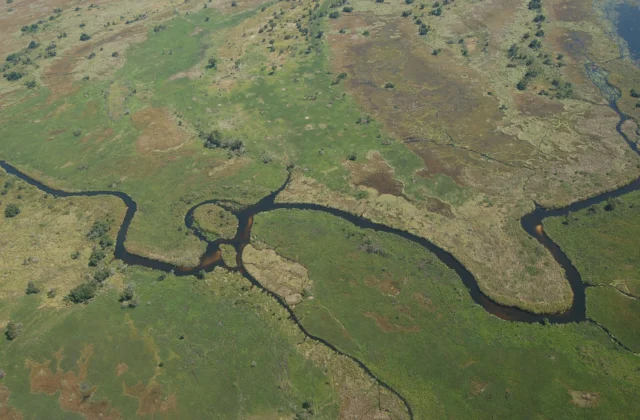
Botswana is one of Africa’s great wilderness destinations: a country of desert and delta where elephants wade through papyrus channels and salt pans stretch to the horizon. Tourism is deliberately low-impact, with small camps and wide open spaces, which makes a safari here feel unusually wild.
Best Time to Visit
The dry season, roughly May to October, is classic safari time. Vegetation thins, animals gather around rivers and waterholes, and the Okavango Delta is at its fullest, because the floodwaters that run down from the Angolan highlands reach the delta during the dry winter months. Nights in June and July can be cold, especially in open vehicles.
September and October are hot but excellent for big concentrations of game along the Chobe riverfront. The green season, about November to April, brings afternoon storms, newborn animals, superb birdlife and fewer visitors; the Makgadikgadi and Central Kalahari come alive after the rains. Some remote camps and tracks close or become difficult in the wettest months.
Many itineraries combine Botswana with Namibia or South Africa, or end with a beach stay in Mauritius.
Weather & Climate
Botswana has a semi-arid climate with two main seasons. The winter (May to August) is dry and sunny, with warm days and nights that can drop close to freezing in the Kalahari. Temperatures climb steeply in September and October, the hottest and driest stretch of the year.
The summer rains, mostly between November and March, fall as short, heavy thunderstorms rather than all-day drizzle. Rainfall is higher in the north and northeast and lower in the southwest Kalahari.
Map
Map data © OpenStreetMap contributors
Explore More in the Region
Botswana
Les eaux de l'Okavango, les éléphants du Chobe et le silence du Kalahari

Egypt
Millennia of history along the Nile: pyramids, temples, and the Red Sea coast.
Ethiopia
Rock-hewn churches, ancient highlands, and the source of Ethiopian coffee.

Ghana
West African coastline, history, and a warm welcome.

Kenya
The Maasai Mara, the Great Migration, and East Africa's classic safari country.
Madagascar
Lemurs, baobabs and limestone tsingy on the world's fourth-largest island
Entry & Visa Guidance
Citizens of many countries, including the UK and US, can visit Botswana without a visa for up to 90 days. Nationals of countries that need a visa can apply through the official Botswana e-Visa portal (evisa.gov.bw) or at a Botswana embassy or consulate; the government indicates a processing time of seven to fourteen working days.
- Your passport should be valid for at least six months beyond your arrival date and have at least three blank pages. Make sure it is stamped on entry.
- Parents travelling with children aged 17 or under must carry the full birth certificate (original or certified copy); if one parent is absent, bring that parent's signed consent.
- A yellow fever certificate is needed only if you arrive from a country with yellow fever risk.
- Cash of 10,000 pula or more must be declared (threshold checked October 2026).
Confirm the current rules for your nationality with the official source (Botswana's Department of Immigration and your own government's travel advice) before booking. Checked October 2026.
Getting There & Around
The main international gateway is Sir Seretse Khama International Airport in Gaborone, but most safari travellers fly into Maun (for the Okavango and Moremi) or Kasane (for Chobe), often via Johannesburg. Kasane is also close to the borders with Zambia, Zimbabwe and Namibia, so the Victoria Falls are an easy add-on.
Inside the delta, many camps are reached only by light aircraft, which have strict, soft-bag luggage limits. Self-drive safaris are popular but require a well-equipped 4x4, experience in deep sand and careful planning of fuel, water and campsite bookings.
Driving is on the left. Main roads are generally good, but wildlife and livestock wander onto them, particularly after dark, so avoid driving at night outside towns. In towns, use licensed taxis, which carry blue number plates.
Approximate Travel Budget
Botswana follows a low-volume, high-value tourism model, so a lodge-based safari in the Okavango or Linyanti is among the most expensive travel experiences in Africa; fly-in camps usually include meals, activities and park fees.
Costs drop considerably with a self-drive and camping trip, or by basing yourself in Maun or Kasane and joining day activities such as boat cruises on the Chobe River or mokoro (dug-out canoe) trips. Card payments are common in towns and lodges; carry some pula for fuel stations and small purchases.
Local Customs & Culture
Courtesy matters in Botswana. Always greet before asking anything: a simple Dumela followed by rra (to a man) or mma (to a woman) opens doors. Elders are treated with respect, and people often give and receive things with the right hand or both hands.
Ask before photographing people, dress modestly in villages, and keep your voice down around wildlife and in camps. Tipping guides, trackers and camp staff is customary on safari.
Food
Botswana's national dish is seswaa, beef or goat slow-cooked and pounded until tender, usually served with bogobe (a stiff sorghum or maize porridge) and morogo, wild spinach. Meat, especially beef, is central to the table.
Look out for magwinya, fried dough balls sold at roadside stalls, and, for the adventurous, mopane worms, dried caterpillars eaten as a snack. Safari lodges serve international cooking, often with a local touch.
Safety & Travel Advice
Botswana is one of the more stable and relaxed countries in the region, and attacks on tourists are rare. Crime is increasing in the major towns, including Gaborone, Francistown and Maun, so lock car doors, keep valuables out of sight and secure your room.
The main risks in the bush are wild animals and the road. Follow your guide's and park rangers' instructions, never walk around camps at night unaccompanied, and never swim in rivers or lakes, which hold crocodiles, hippos and waterborne diseases. Malaria is present in the north, so seek medical advice before travelling. Check your own government's travel advice before and during your trip.
Useful Phrases
English is the official language, but a few words of Setswana are warmly received.
Dumela rra / Dumela mma: Hello (to a man / to a woman)
O kae? How are you?
Ke teng. I'm fine
Ke a leboga: Thank you
Ee: Yes
Nnyaa: No
Go siame. It's fine / OK
Sala sentle: Goodbye (said to someone staying)
Tsamaya sentle: Goodbye (said to someone leaving)
Pula: Rain (also a greeting of good fortune and the currency)
Official Sources
Visa, entry, and safety information changes. Always verify with the official sources below before you travel.
- https://www.gov.uk/foreign-travel-advice/botswana/entry-requirements
- https://www.gov.uk/foreign-travel-advice/botswana/safety-and-security
- https://travel.state.gov/content/travel/en/international-travel/International-Travel-Country-Information-Pages/Botswana.html
- https://gov.bw/visa-applications/visa-application-visitors-visa
- https://statsbots.org.bw/node/59694
- https://whc.unesco.org/en/statesparties/bw
- https://www.botswanatourism.co.bw/
Plan your trip to Botswana
Free tools for flight times, time differences, budget, money and plugs.
- Flight Duration CalculatorWork out real flight time across time zones.
- Time Zone ConverterFind the time in another city instantly.
- Trip Budget CalculatorEstimate your total trip cost, item by item.
- Currency ConverterConvert prices between currencies at indicative rates.
- Travel Plug & Voltage CheckerCheck if you need a plug adapter or voltage converter.
- Jet Lag CalculatorEstimate how many days you need to beat jet lag.