🇬🇷 Greece
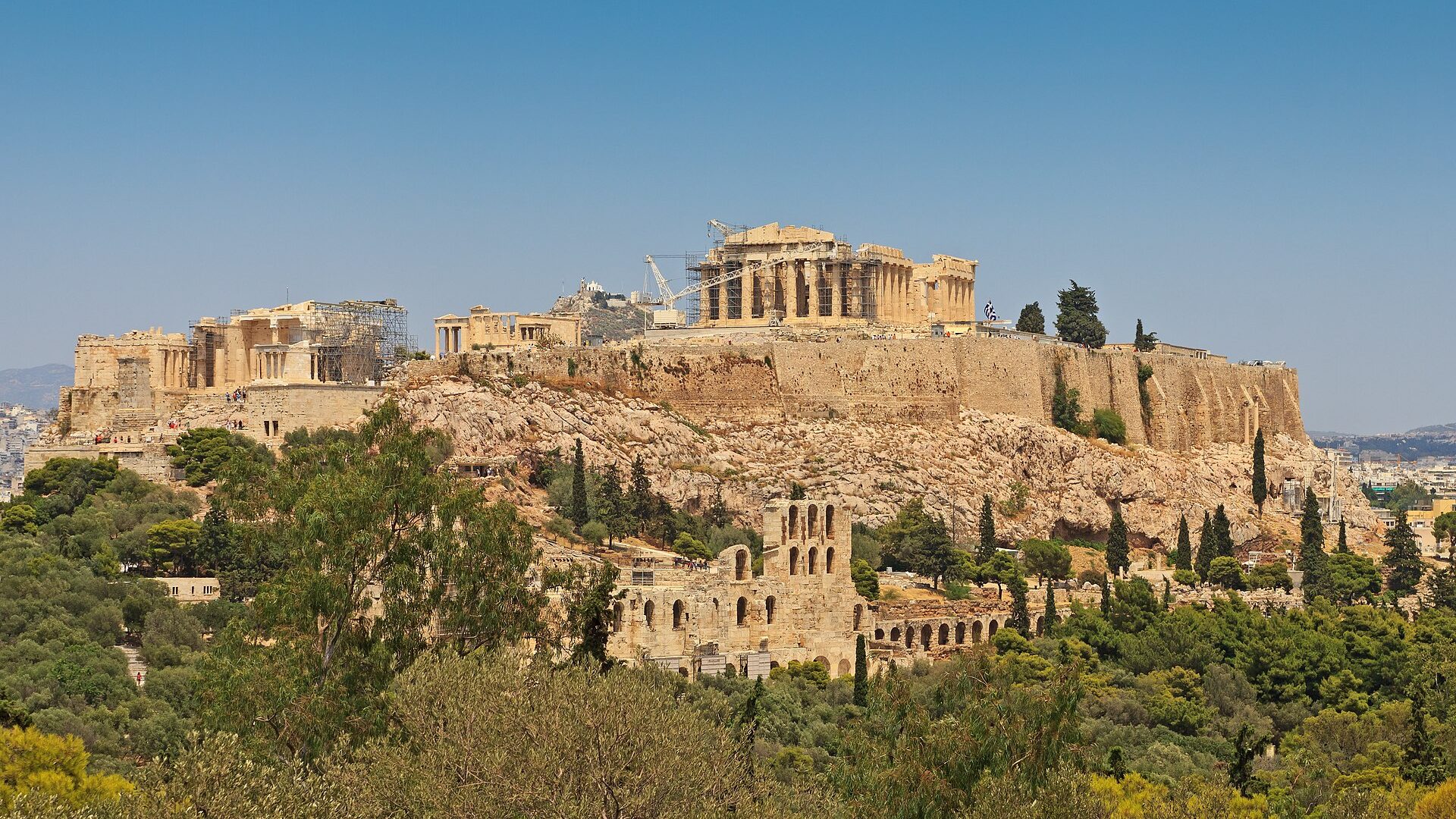
Santorini’s caldera, Athens’s ruins, and thousands of islands.


Greece is really two countries for a traveller: the mainland, with the archaeology, the mountains and the monasteries, and the islands, which are scattered across two seas in groups that differ from each other more than visitors expect. Choosing badly between the groups is the most common planning mistake here.
The other thing worth knowing in advance is that the ferry network, not the road network, is the backbone of island travel, and that it runs on a seasonal timetable which thins dramatically outside summer.
Best Time to Visit
May, June, September and early October are the best months: warm enough to swim, not hot enough to suffer, and with the archaeological sites bearable in the middle of the day.
July and August are hot, expensive and full, and the meltemi wind blows hard through the Aegean, which can cancel ferries in the Cyclades for a day at a time. Winter on the islands means most hotels, restaurants and ferry routes shut down entirely — Santorini and Mykonos largely close — while Athens, Thessaloniki, Crete and Rhodes stay open and are very cheap.
If the trip is about ruins rather than beaches, the shoulder and winter months are better: Delphi, Olympia and the Acropolis in February are quiet and cool.
Weather & Climate
Greece is Mediterranean: hot dry summers and mild wet winters, with the rain concentrated between November and March. Summer heatwaves have become a regular feature and have closed the Acropolis during the hottest hours on some days.
There is real variation. The mountainous north and the Pindus range have cold, snowy winters and ski resorts. The Ionian islands on the west side are wetter and noticeably greener than the Cyclades. Crete and the Dodecanese in the southeast are the hottest and driest, with the longest swimming season.
The meltemi, a strong northerly wind, blows across the Aegean mainly in July and August. It makes the heat tolerable and the sea rough, and it is the main reason summer ferry sailings get cancelled.
Map
Map data © OpenStreetMap contributors
Top Cities
Popular Destinations
Entry & Visa Guidance
Greece is in the Schengen area. Visa-exempt visitors may generally stay up to 90 days in any 180-day period, counted across all Schengen countries together rather than per country.
The Entry/Exit System (EES), which registers biometrics at the external border instead of stamping passports, has been fully operational across all Schengen countries since 10 April 2026. ETIAS, the pre-travel authorisation for visa-exempt nationalities, is scheduled to start in the last quarter of 2026, with the exact date to be announced officially; it is not in force yet.
Travelling on to Turkey from the eastern Aegean islands means leaving and re-entering the Schengen area, which is worth accounting for in your 90-day total. Check the European Commission's own travel pages shortly before departure, as the ETIAS timetable has moved more than once.
Getting There & Around
Ferries are the core of Greek travel. Routes run from Piraeus and Rafina near Athens to the Cyclades and the Dodecanese, from Patras and Igoumenitsa to the Ionian islands, and between islands within each group, but rarely between groups. Getting from Santorini to Corfu usually means going back through Athens.
Two practical points: high-speed catamarans cost more and are cancelled more readily in wind than the slower conventional ferries, and schedules expand hugely from June and contract in October. Book vehicles and peak-season cabins ahead; foot passengers usually have more flexibility.
Domestic flights connect Athens to the larger islands and are worth it for long hops. On the mainland, intercity buses (KTEL) are comprehensive and reliable; the rail network is limited. A car is genuinely useful on the bigger islands and in the Peloponnese, and unnecessary in Athens, which has a good metro.
Approximate Travel Budget
Greece is moderately priced, with a wide spread between the famous islands and everywhere else. Santorini and Mykonos in August are among the most expensive places in the Mediterranean; Naxos, Sifnos, Kefalonia or the Peloponnese in the same week cost a fraction of that for a comparable or better experience.
Everyday costs are low: taverna meals, local wine, bakery food, buses and site admissions. Many archaeological sites offer combined tickets covering several monuments in a city, which are worth checking against your plans.
The main savings are choosing a less famous island, travelling in the shoulder season, and eating where the menu is in Greek first. Ferries are the cost that surprises people on a multi-island trip — count them into the budget before fixing the route.
Local Customs & Culture
Meals are long and social, and lunch or dinner is not hurried. Tavernas often serve dishes as they are ready rather than in courses, and sharing plates is normal.
Orthodox churches and monasteries have dress codes: covered shoulders and knees for everyone, and at some monasteries — Meteora and Mount Athos most strictly — trousers are not permitted for women, with wrap skirts lent at the door. Mount Athos admits men only, by permit.
Name days are often celebrated more than birthdays. Hospitality is taken seriously, and a small complimentary dessert or spirit at the end of a taverna meal is common and should be accepted graciously.
In many older plumbing systems, paper goes in the bin beside the toilet rather than down it; a sign will usually say so.
Food
Greek cooking is seasonal, olive-oil based and far broader than the taverna standards. Beyond moussaka and souvlaki, look for wild greens (horta), slow-baked bean dishes, stuffed vegetables, grilled octopus, and the cheeses that vary island by island.
Regional differences are strong: Crete has its own dietary tradition with rusks, snails and raki; the Ionian islands carry Venetian influence in dishes like pastitsada; the north has Ottoman-influenced pies and peppers.
Practical points: the mezze approach — several small plates shared — is the best way to eat; the house wine in a carafe is usually local and good; and ouzo and tsipouro are drunk with food, not before it. A taverna with a handwritten daily list and no photographs is the reliable signal.
Safety & Travel Advice
Greece is a safe country with low violent crime. Petty theft occurs in central Athens, particularly on the metro and around Omonia and Monastiraki.
The real risks are environmental. Summer heatwaves are severe and have prompted official closures of outdoor sites during peak hours; carry water and plan archaeology for early morning. Wildfires are a recurring summer danger in forested and coastal areas: follow the civil protection service and local instructions, and note that evacuation orders are issued by SMS alert.
At sea, the meltemi makes some beaches unsafe for swimming and cancels ferries; check the forecast before committing to a tight connection. Greece is seismically active, though damaging earthquakes are infrequent for visitors.
Useful Phrases
Greek uses its own alphabet, but transliterated signage is common and English is widely spoken in tourism.
Yia sou / Yia sas - hello (informal / formal or plural).
Parakalo - please, and also you're welcome.
Efharisto - thank you. Signomi - excuse me, sorry.
Nai - yes. Ohi - no. Note that nai sounds like no to English ears and means the opposite.
Ton logariasmo, parakalo - the bill, please.
Poso kanei - how much is it.
Kalimera - good morning. Kalispera - good evening.
Milate anglika - do you speak English.
Stin ygeia mas - to our health, the common toast.
Official Sources
Visa, entry, and safety information changes. Always verify with the official sources below before you travel.