
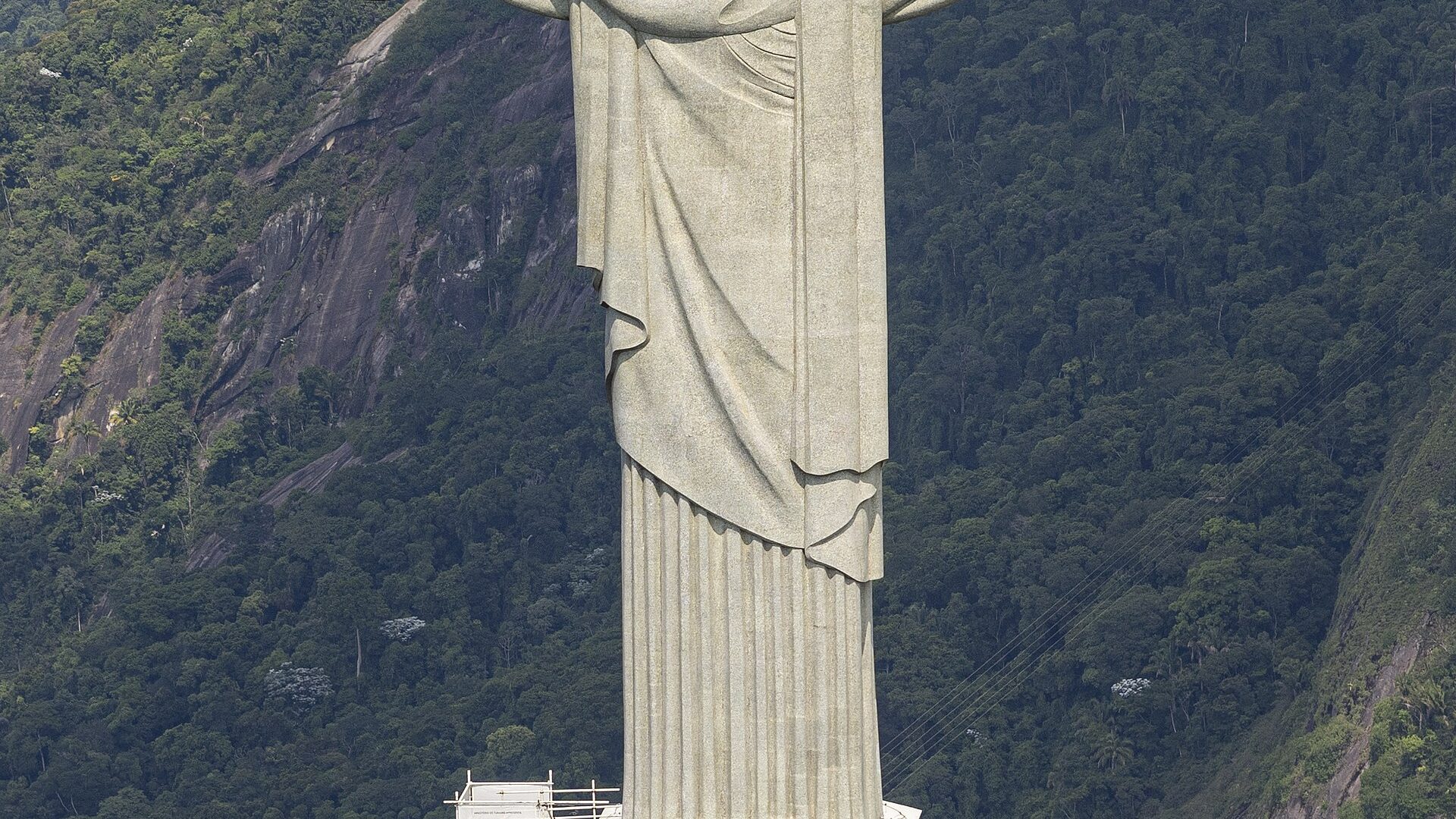
🇧🇷 Brazil
Rio’s beaches and Carnival, and the Amazon rainforest.
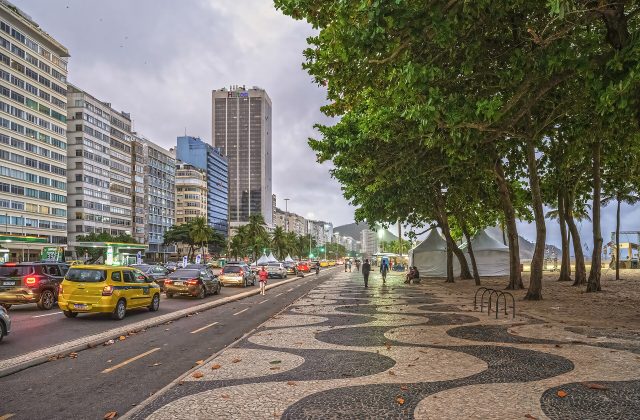
Brazil occupies nearly half of South America and borders every country on the continent except Chile and Ecuador. Its scale is the first planning constraint: Rio to Manaus or to the Iguaçu falls is a flight, not a drive, and a two-week trip realistically covers two or three regions.
The second is that Brazil is Portuguese-speaking, which sets it apart from its neighbours in language, music, food and the rhythm of daily life, and means Spanish is less useful here than travellers often assume.
Best Time to Visit
Seasons are reversed from the northern hemisphere, and the right months depend entirely on the region.
The southeast coast: Rio, São Paulo, the colonial towns — is best from April to June and September to November: warm, drier and less crowded than the summer peak.
The Amazon has a high-water season roughly December to May, when flooded forest is navigable by boat, and a low-water season June to November, better for hiking, beaches and wildlife on the riverbanks. Neither is wrong; they are different trips.
The Pantanal, for wildlife, is best in the dry season from May to September, when animals concentrate around remaining water.
Carnival falls in February or early March and is extraordinary, expensive and fully booked months ahead.
Weather & Climate
Most of Brazil is tropical, with the far south reaching a subtropical and occasionally cold climate. The Amazon basin is equatorial: hot, humid and wet year-round with a wetter and a drier period rather than a true dry season.
The northeast coast around Salvador and Recife is hot all year with rain concentrated between April and July. The southeast has a hot, wet summer from December to March and a mild, dry winter. The south around Porto Alegre has four recognisable seasons and genuine winter cold in the highlands.
The interior plateau, including Brasília, is high and has a marked dry season from May to September when humidity falls sharply.
Map
Map data © OpenStreetMap contributors
Top Cities
Entry & Visa Guidance
Brazil's visa policy operates on reciprocity and has changed direction more than once in recent years, with visa requirements for several Western nationalities reintroduced and then adjusted. Check your own nationality against the Ministry of Foreign Affairs or the nearest Brazilian consulate before booking, rather than relying on an older account.
Where a visa is required, Brazil operates an electronic visa application for tourism for eligible nationalities. Passport validity and proof of onward travel are standard requirements.
Yellow fever is the health requirement worth attention. Vaccination is recommended for travel to large parts of the country including the Amazon, the Pantanal and parts of the southeast, and proof of vaccination may be required on entry to other countries afterwards. Consult a travel health service well in advance, as the certificate takes effect ten days after vaccination.
Travellers under 18 crossing the border are subject to specific parental authorisation rules, which are enforced.
Getting There & Around
Domestic flights are the default for long distances and there is strong competition between carriers. Book early for the best fares, particularly around Carnival and the December holidays.
Long-distance buses are excellent by international standards, with reclining and full-sleeper classes on overnight routes, and they cover the country far more comprehensively than the minimal passenger rail network.
In the Amazon, riverboats are genuine public transport: hammock-deck passage between Belém, Santarém and Manaus takes days and is an experience in itself.
Within cities, metro systems in São Paulo, Rio and a few others are good on the routes they cover. Ride-hailing apps are widely used, are cheaper than taxis and remove the fare negotiation; they are also the recommended way to move after dark in the larger cities.
Approximate Travel Budget
Brazil is mid-priced and varies sharply by region and season. The northeast and the interior are inexpensive; Rio and São Paulo are not, and Carnival and New Year on the coast push accommodation to several times its normal rate.
Everyday eating is good value: the por quilo buffet, where you pay by the weight of your plate, and the weekday prato feito set lunch are both cheap and substantial.
The costs that add up are domestic flights, organised Amazon and Pantanal trips — which are necessarily guided and lodge-based — and drinks in beach and nightlife areas.
Local Customs & Culture
Brazilians are physically warm and informal: greetings involve a handshake or kisses on the cheek, the number varying by region, and conversation stands closer than northern Europeans expect.
Punctuality is treated flexibly for social occasions and firmly for flights and business. Invitations to eat are frequent and sincere.
Football is a genuine social language rather than a stereotype; so are regional musical traditions, which differ enormously between samba in Rio, forró in the northeast and sertanejo in the interior.
Race, inequality and politics are discussed openly among Brazilians and are worth listening to rather than pronouncing on as a visitor.
Food
Brazilian cooking is regional and shaped by Indigenous, African and Portuguese traditions. Feijoada, the black bean and pork stew, is the national dish and is traditionally a long weekend lunch rather than an evening meal.
Bahia, in the northeast, has the most distinct cuisine, built on dendê palm oil, coconut and seafood — acarajé, moqueca, vatapá — and is the clearest culinary legacy of the African diaspora in the Americas. The south is cattle country and the home of churrasco. The Amazon has ingredients found nowhere else, including tucupi, jambu and river fish such as pirarucu.
Everyday items worth knowing: pão de queijo, the cheese bread of Minas Gerais; the juice bars serving fruits with no English names; and cachaça, the sugarcane spirit that makes a caipirinha.
Safety & Travel Advice
Crime is the aspect of Brazil most travellers ask about, and it is a real consideration in the large cities without being a reason to avoid the country. The pattern is opportunistic robbery rather than crime targeted at tourists specifically.
Practical habits that locals follow: carry little, keep phones out of sight on the street, use ride-hailing rather than walking at night, do not display jewellery or cameras in crowded areas or on beaches, and if robbed, hand over possessions without resistance.
Favelas should not be entered independently. Areas and conditions vary and change; follow local advice and your own government's current guidance for specific cities.
Beyond crime: strong Atlantic currents on many beaches, mosquito-borne illness including dengue in urban areas, and the yellow fever considerations noted above. Tap water is generally not drunk.
Useful Phrases
Brazilian Portuguese differs from European Portuguese in pronunciation and vocabulary. Spanish is understood less often than visitors expect, and English is not widely spoken outside tourism.
Oi / Ola - hi / hello. Bom dia, boa tarde, boa noite - good morning, afternoon, evening.
Obrigado (men) / Obrigada (women) - thank you.
Por favor - please. Desculpa - sorry.
Quanto custa - how much is it.
A conta, por favor - the bill, please.
Tudo bem - all good, used as both greeting and answer.
Onde fica o banheiro - where is the toilet.
Nao falo portugues - I don't speak Portuguese.
Official Sources
Visa, entry, and safety information changes. Always verify with the official sources below before you travel.
