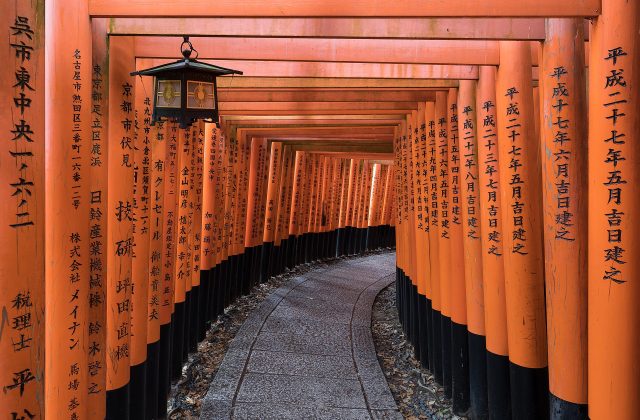

🇨🇳 China
The Great Wall, ancient dynasties, and hyper-modern megacities.
China is the third-largest country in the world by land area and spans five geographic time zones while officially keeping just one, Beijing time. That single fact tells you most of what you need to know about planning here: distances are continental, and the country is best treated as several regional trips rather than one.
The classic first route is Beijing, Xi’an and Shanghai, linked by high-speed rail. Beyond it lie the karst rivers of Guangxi, the Tibetan-influenced highlands of Sichuan and Yunnan, the desert Silk Road of Gansu and Xinjiang, and the Cantonese south: each a different climate, cuisine and often a different spoken language.
Best Time to Visit
April to May and September to October are the best months across most of the country: mild, drier, and outside the worst of the summer heat.
Two periods to plan around deliberately. Chinese New Year, falling between late January and mid-February, triggers the largest annual human migration on earth; transport books out weeks ahead and many businesses close. The National Day holiday in the first week of October has a similar effect on domestic tourism.
Summer is hot and humid in the east and south, with a rainy season moving north from June. Winter is severe in the north and in Tibet, mild in the far south.
Weather & Climate
China covers almost every climate type outside the tropics proper. The northeast has long, severely cold winters. The North China Plain around Beijing is continental with hot summers and cold, dry winters. The Yangtze basin, including Shanghai and Chengdu, is humid subtropical with muggy summers and damp, chilly winters and little central heating.
The south around Guangzhou and Hong Kong is subtropical to tropical, with a typhoon season affecting the coast mainly between July and September. The west is arid: the Taklamakan and Gobi deserts, and the Tibetan Plateau, where altitude rather than latitude sets the conditions.
Air quality varies by city and season and is worst in the northern winter heating months. Readings are published publicly and worth checking if you are sensitive.
Map
Map data © OpenStreetMap contributors
Explore More in the Region
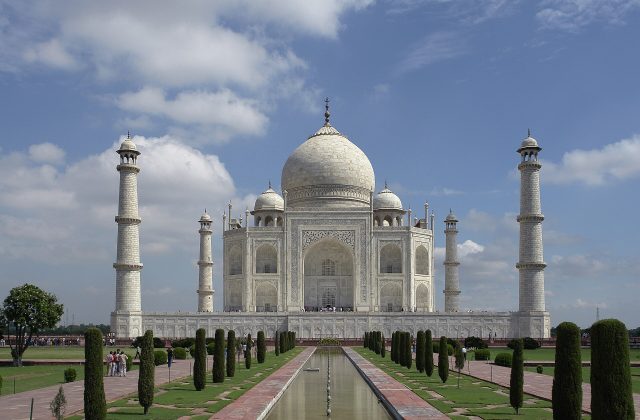
India
The Taj Mahal, Kerala's backwaters, and a subcontinent of regional cultures.

Indonesia
Bali's temples and surf, and thousands of other islands to explore.
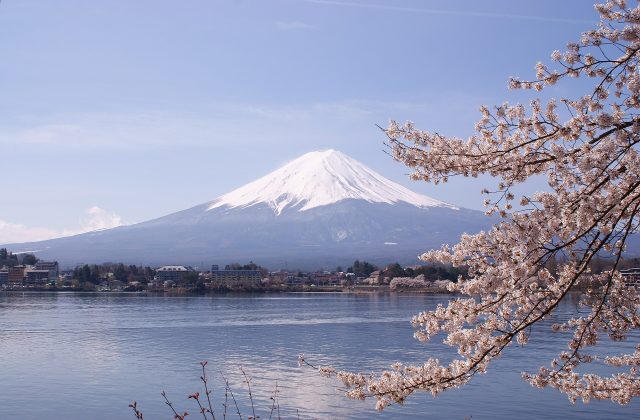
Japan
Ultra-modern cities and centuries-old temple towns, connected by one of the world's most efficient rail networks.

Malaysia
Kuala Lumpur's skyline, rainforest, and a genuine cultural crossroads.

Nepal
The Himalayas, Everest Base Camp, and Kathmandu's temples.

Philippines
Over 7,000 islands of beaches, diving, and warm hospitality.
Entry & Visa Guidance
Most nationalities require a visa obtained in advance from a Chinese embassy, consulate or authorised visa centre; the tourist category is the L visa. Requirements, supporting documents and biometric appointments vary by country, so start with your own nearest mission rather than a third-party summary.
China also operates visa-free transit schemes for eligible nationalities passing through certain cities en route to a third country, and separate visa-free arrangements for some passports that have been introduced and revised repeatedly in recent years. Because these change often and carry precise conditions on port of entry, onward ticket and area of travel, confirm the current position with the National Immigration Administration or your nearest Chinese mission before booking.
Hong Kong and Macao have their own immigration systems. Entering either from mainland China, or returning, counts as crossing a border and may consume an entry on a single-entry Chinese visa. Tibet requires an additional permit arranged through a tour operator, and some border regions have their own restrictions.
Getting There & Around
China has the largest high-speed rail network in the world, and it is the best way to travel between cities: Beijing to Shanghai, Xi'an or Guangzhou are all comfortable daytime journeys. Tickets are tied to your passport number and are checked against it at the gate; book through the official railway channel or a reputable agent and carry the passport you booked with.
Domestic flights cover the distances rail does not, particularly to the far west. Sleeper trains remain useful and inexpensive on long routes.
Within cities, metro systems are extensive, modern and cheap, with bilingual signage in the major cities. The practical obstacle for visitors is payment: daily life runs on mobile payment apps rather than cash or cards, and the main platforms now allow foreign cards to be linked. Set this up before arrival, as cash is accepted but increasingly awkward.
Note that many international apps and services are inaccessible on the mainland without a VPN, including common map and messaging tools — plan offline maps and an alternative for navigation.
Approximate Travel Budget
China is good value relative to the quality of its infrastructure. Metro fares, street and canteen food, domestic rail and mid-range hotels all cost considerably less than in western Europe or North America.
The costs that rise are international-standard hotels in Shanghai and Beijing, entry to the major heritage sites, guided arrangements in Tibet, and domestic flights booked late.
The everyday saving is simply to use what residents use: the metro rather than taxis, local restaurants rather than hotel dining, and high-speed rail second class, which is comfortable by any standard.
Local Customs & Culture
Hospitality is structured and generous. At a meal, dishes are shared from the centre, the host orders, and the guest of honour is seated facing the door. Refusing food or drink outright is less graceful than accepting a token amount.
Business cards and gifts are offered and received with both hands. Do not stand chopsticks upright in a bowl of rice — it resembles incense offered to the dead.
Face matters: public criticism, visible anger or forcing someone to admit error makes a problem harder to solve. Calm persistence works better.
Queueing norms are looser than in some countries and personal space is smaller; neither is rudeness. Political topics, particularly Taiwan, Tibet, Xinjiang and Hong Kong, are sensitive and best not raised with people you have just met.
Food
There is no single Chinese cuisine. The eight great culinary traditions differ fundamentally: Sichuan for the numbing heat of its peppercorn, Cantonese for steaming, roasting and dim sum, Shandong for seafood and clear broths, Jiangsu for refined braises, Hunan for a drier chilli heat, Fujian for soups, Anhui for wild ingredients, Zhejiang for freshwater fish.
Regional staples split roughly along the wheat-and-rice line: noodles, dumplings and steamed bread in the north, rice in the south. Breakfast is savoury: congee, soy milk, fried dough sticks, baozi.
Practical notes: tap water is not drunk, and boiled water is provided everywhere, including on trains. Tipping is not customary. Menus with pictures are common and helpful; translation apps that work offline are worth downloading before arrival.
Safety & Travel Advice
China has low levels of violent crime and street crime against visitors is uncommon. The practical difficulties are administrative and infrastructural rather than criminal.
Traffic is the main everyday risk: crossing roads requires attention even on a green signal, and scooters use pavements and bike lanes in both directions.
Scams aimed at foreigners persist in tourist areas of Beijing and Shanghai, the best known being the tea ceremony and art gallery invitations from friendly English-speaking strangers, which end in a very large bill.
Altitude is a serious consideration in Tibet and western Sichuan, where cities sit above 3,500 metres. Check your own government's current travel advice on legal and consular matters before travelling, as these have changed in recent years.
Useful Phrases
Mandarin is the official language and is tonal. Cantonese is spoken in Guangdong and Hong Kong, and many regional languages exist alongside these.
Ni hao - hello. Xie xie - thank you. Bu yao - I don't want it.
Duo shao qian - how much is it.
Zhe ge - this one; pointing at a menu with zhe ge solves most ordering.
Ting bu dong - I don't understand (what I'm hearing).
Ce suo zai na li - where is the toilet.
Mai dan - the bill, please.
Bu yao la - not spicy.
Written numbers are widely used for prices, and shopkeepers will often type the figure on a calculator or phone.
Official Sources
Visa, entry, and safety information changes. Always verify with the official sources below before you travel.