🇰🇭 Cambodia
Angkor’s temples, Mekong capitals and a slow, rice-paddy rhythm
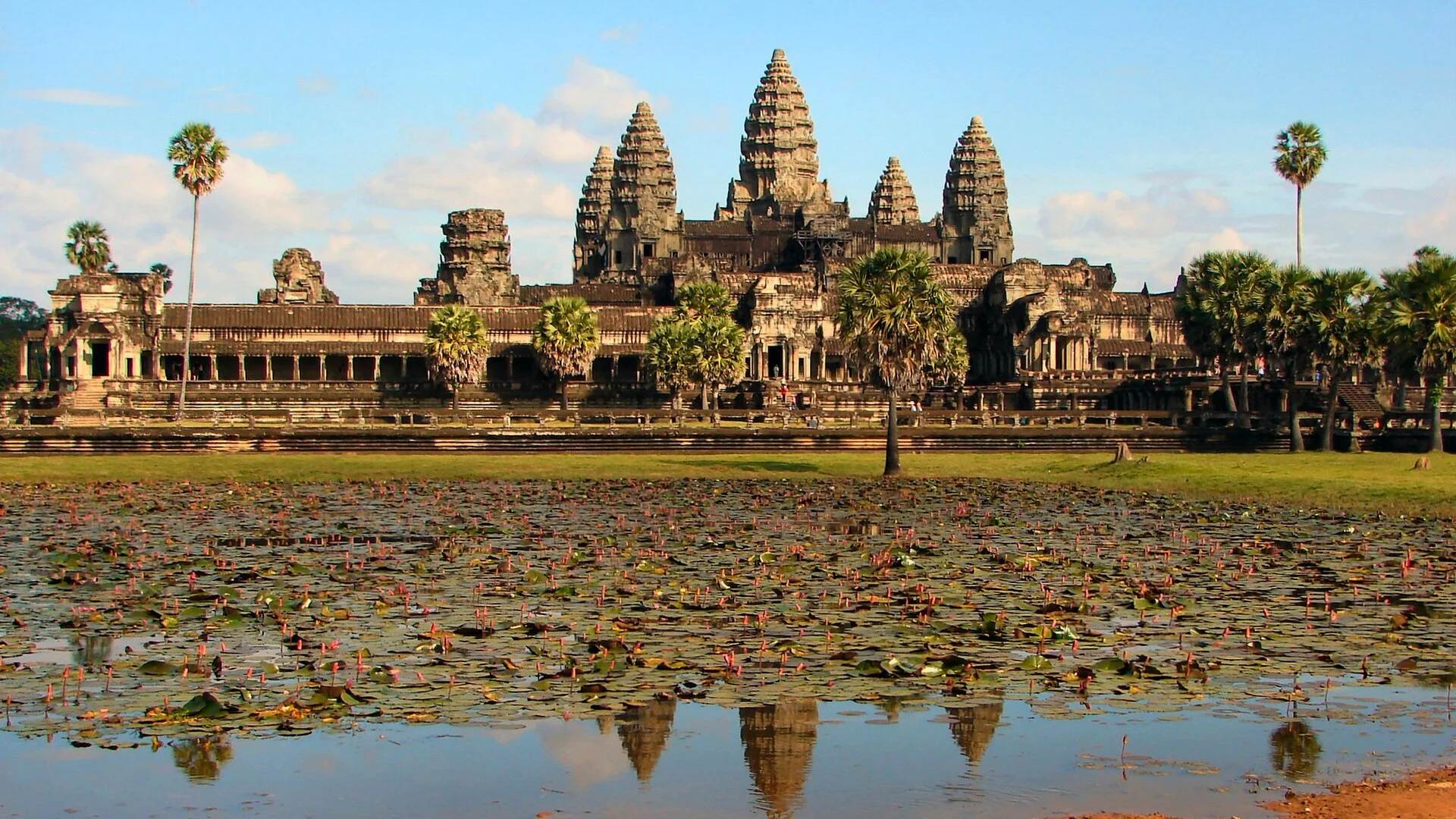
Cambodia is a small country with an outsized past: the stone cities of Angkor, the riverside boulevards of Phnom Penh and a countryside of sugar palms and flooded paddies that still moves to the monsoon. It is easy to travel, warm-hearted and, for many visitors, the most memorable stop in Southeast Asia.
Best Time to Visit
The classic season runs from November to February, when the rains have passed, the air is relatively dry and early mornings at the temples are almost cool. This is also the busiest period at Angkor, so start before dawn or after lunch to dodge the crowds.
March to May is the hot season: still very visitable, but plan sightseeing for the early hours and rest at midday. The wet season, roughly May/June to October, brings short, heavy afternoon downpours, green landscapes, lower hotel rates and the Tonle Sap lake at its fullest.
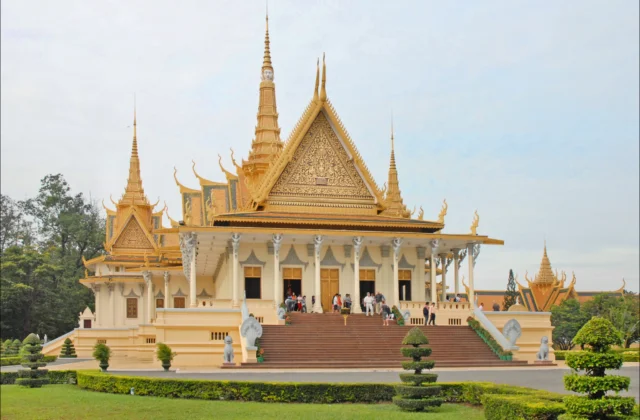
For the temples, base yourself in Siem Reap; for museums, markets and river life, give Phnom Penh at least two days.
Weather & Climate
Cambodia has a tropical monsoon climate: hot all year, with a dry season from about November to April and a wet season from about May to October. Humidity is high outside the cool months, and April is usually the hottest month.
Rain tends to fall in intense bursts rather than all day, but rural roads can turn to mud and some floating villages and boat routes depend on water levels, so check locally in the shoulder months.
Map
Map data © OpenStreetMap contributors
Top Cities
Entry & Visa Guidance
Most visitors need a visa. A tourist visa allows a stay of 30 days from entry. You can apply online for an e-visa through the official Cambodian government e-visa service (at least 4 days before travel), or get a visa on arrival at international airports and some land borders, paying in US dollars and bringing a passport photo. Nationals of several ASEAN countries are exempt for shorter stays.
Your passport should be valid for at least 6 months from arrival, undamaged and with all pages intact. If you arrive by air at Phnom Penh, Siem Reap or Sihanoukville, you must complete the free Cambodia e-Arrival card (arrival.gov.kh) within 7 days before arrival. Avoid unofficial visa websites that add hefty service fees.
Confirm the current rules for your nationality with the official source before booking. Checked October 2026.
Getting There & Around
Most international flights now arrive at two new airports: Techo International Airport (KTI), which replaced the old Phnom Penh airport in September 2025 and lies south of the capital, and Siem Reap–Angkor International Airport (SAI), about an hour's drive from Siem Reap. Allow time for the transfer either way.
Between cities, travellers use air-conditioned buses and minivans, private cars with drivers and domestic flights. The Phnom Penh–Siem Reap road trip takes most of a day; in the wet season, boats on the Tonle Sap can be an option depending on water levels.
In towns, tuk-tuks (remork) and app-based rides are cheap and convenient; agree a fare first if you hail one on the street. Overland, buses run to Vietnam and there are crossings to Laos, but land borders with Thailand were suspended at the time of writing following the 2025 border conflict, so fly to Bangkok rather than going overland.
Approximate Travel Budget
Cambodia is one of the better-value destinations in the region. Street food, local buses and guesthouses keep daily costs low, while boutique hotels in Siem Reap and Phnom Penh offer real comfort for considerably less than in neighbouring capitals.
The big fixed cost is the Angkor Pass: US$37 for one day, US$62 for three days (used within a week) and US$72 for seven days (used within a month), sold by Angkor Enterprise (prices checked October 2026). Most prices are quoted in US dollars; small change comes back in riel, so carry clean, undamaged dollar notes.
Local Customs & Culture
The traditional greeting is the sampeah, palms pressed together at chest height with a slight bow; return it when offered. Buddhism shapes daily life: cover shoulders and knees at temples and the Royal Palace, take off shoes before entering shrines, and women should not touch monks or hand things to them directly.
Avoid touching people's heads, pointing your feet at people or Buddha images, and public displays of anger; calm, smiling persistence gets far more done. Ask before photographing people, especially monks and children. At memorial sites of the Khmer Rouge period, behave as you would at any place of mourning.
Food
Khmer food is fragrant rather than fiery, built on kroeung (a paste of lemongrass, galangal and turmeric), fish sauce and the fermented fish paste prahok. Try amok, fish steamed in coconut curry in a banana-leaf cup; bai sach chrouk, grilled pork and rice for breakfast; nom banh chok, rice noodles with green fish curry; and lok lak, peppery stir-fried beef.
Kampot pepper, palm sugar and tropical fruit appear everywhere. Phnom Penh has the widest range of restaurants and markets, while Siem Reap has a lively café scene and several social-enterprise restaurants training young cooks.
Safety & Travel Advice
Most visits are trouble-free, but take ordinary precautions. Bag snatching from passing motorbikes is the most common crime, especially along the Phnom Penh riverfront; carry little, keep phones away from the roadside and use hotel safes. Counterfeit dollar notes occasionally circulate.
Road accidents are a bigger risk than crime: avoid travelling after dark where possible and think twice before riding a motorbike. Landmines and unexploded ordnance remain in some rural areas, so stay on marked paths. Watch your drink in bars and avoid unbranded spirits, as methanol poisoning has been reported.
The UK government advises against all but essential travel within 20 km of the Thai border following fighting in 2025. Check your own government's travel advice before and during your trip.
Useful Phrases
A few words of Khmer are warmly received, even if most tourist businesses speak some English.
Chum reap suor: Hello (polite)
Suor sdei: Hi (informal)
Or kun: Thank you
Baat / Chaa: Yes (said by men / by women)
Te: No
Som toh: Sorry / Excuse me
Tlai ponmaan? How much is it?
Chnganh: Delicious
Lea suhn hai: Goodbye
Muy, pi, bei: One, two, three
Official Sources
Visa, entry, and safety information changes. Always verify with the official sources below before you travel.
- https://www.gov.uk/foreign-travel-advice/cambodia
- https://www.gov.uk/foreign-travel-advice/cambodia/entry-requirements
- https://www.gov.uk/foreign-travel-advice/cambodia/safety-and-security
- https://whc.unesco.org/en/statesparties/kh
- https://www.angkorenterprise.gov.kh/en/available-tickets
- https://www.unfpa.org/data/world-population/KH
Plan your trip to Cambodia
Free tools for flight times, time differences, budget, money and plugs.
- Flight Duration CalculatorWork out real flight time across time zones.
- Time Zone ConverterFind the time in another city instantly.
- Trip Budget CalculatorEstimate your total trip cost, item by item.
- Currency ConverterConvert prices between currencies at indicative rates.
- Travel Plug & Voltage CheckerCheck if you need a plug adapter or voltage converter.
- Jet Lag CalculatorEstimate how many days you need to beat jet lag.