🇵🇱 Poland
Kraków’s old town, Warsaw’s rebuilt history, and excellent value.

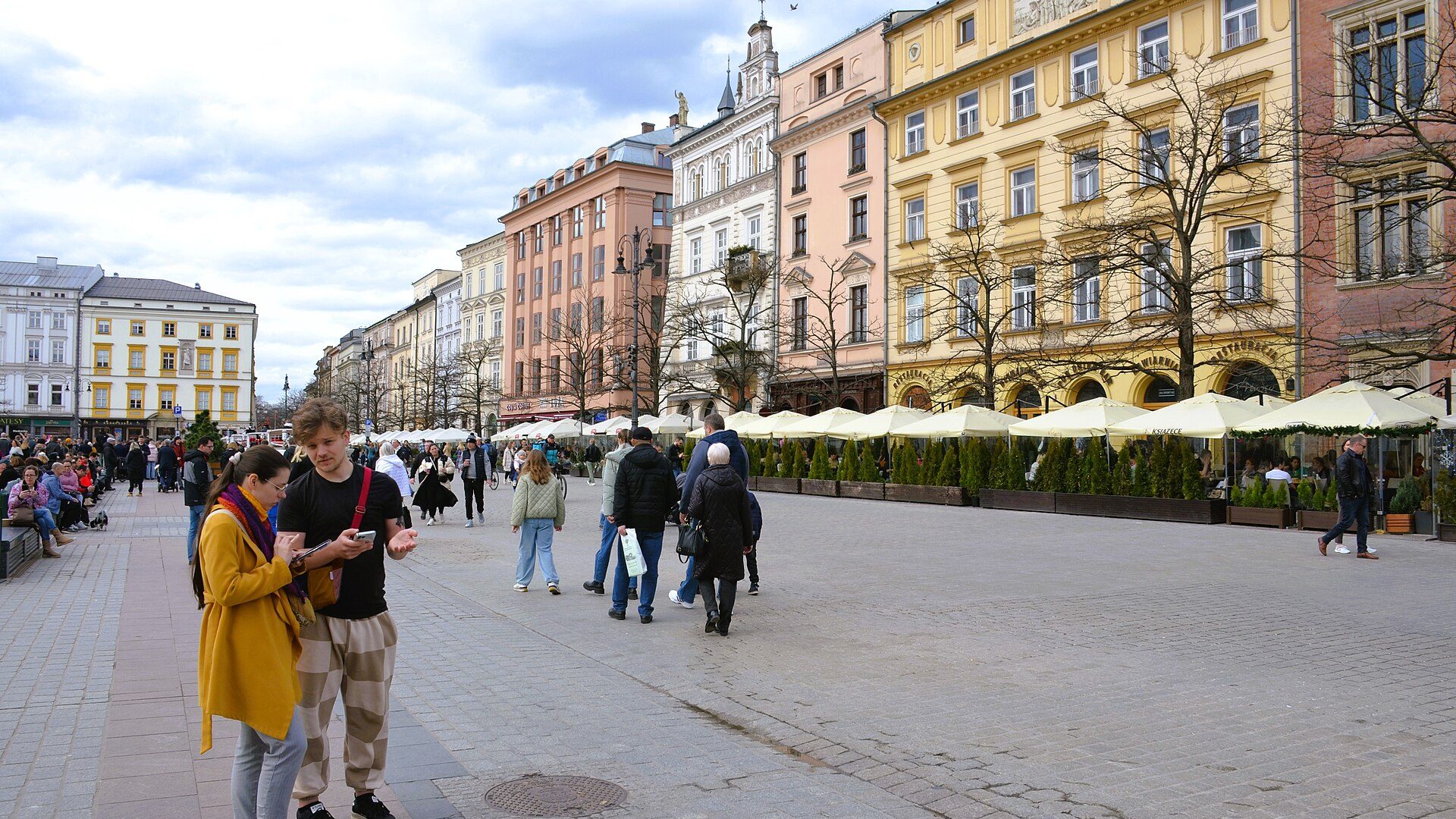
Poland is large, flat in the centre, mountainous in the south, and considerably more varied than its reputation as a city-break destination suggests. Kraków and Warsaw are the two obvious entry points, but they are nothing alike: one survived the war largely intact, the other was deliberately destroyed and rebuilt from paintings and photographs.
It is also one of the best-value countries in the European Union, with an intact café culture, serious museums and a Baltic coast that most visitors never reach.
Best Time to Visit
May to September is the main season: long days, warm weather, outdoor cafés and the Baltic beaches usable. June has light until late evening.
May, June and September are the sweet spot — warm without July and August crowds and prices. December brings Christmas markets in Kraków, Wrocław and Gdańsk, which are genuinely atmospheric.
January and February are cold, often below freezing, and the cheapest time; they are also the ski season in the Tatras around Zakopane. March and November are the weakest months: grey, damp, with little compensation.
Weather & Climate
Poland has a transitional climate between maritime and continental, which in practice means changeable. Winters are cold with reliable frost and snow inland, summers warm and sometimes hot, with thunderstorms.
The regional differences matter. The Baltic coast is windier and milder in winter than the interior. The southeast around Zakopane and the Tatras is genuinely alpine, with snow from roughly December to March and mountain weather that changes fast. The northeast, around the Masurian lakes and Białowieża, records the coldest winter temperatures in the country.
Map
Map data © OpenStreetMap contributors
Top Cities
Entry & Visa Guidance
Poland is in the Schengen area. Visa-exempt visitors may generally stay up to 90 days in any 180-day period, counted across all Schengen countries together rather than per country.
The Entry/Exit System (EES), which registers biometric data at the external border instead of stamping passports, has been fully operational across all Schengen countries since 10 April 2026. ETIAS, the pre-travel authorisation for visa-exempt nationalities, is scheduled to start in the last quarter of 2026, with the exact date to be communicated officially; it is not required yet.
Poland uses the złoty, not the euro, despite EU membership. Check the European Commission's own travel pages shortly before departure, as the ETIAS timetable has been revised more than once.
Getting There & Around
Trains are the best way between cities. The operator's fast intercity services connect Warsaw, Kraków, Gdańsk, Wrocław and Poznań comfortably, and advance fares are considerably cheaper than walk-up. Regional trains are slower and very cheap.
Long-distance buses cover the routes trains miss, particularly toward the mountains and smaller towns, and are inexpensive.
A car is useful for the Masurian lakes, the Tatras and rural Podlasie, and unnecessary in the cities, where the historic centres are largely pedestrianised and parking is restricted.
City transport is excellent value: trams and buses in every major city, plus two metro lines in Warsaw. Buy and validate a ticket before or on boarding: inspectors check and fine, and a ticket must be stamped or activated, not merely purchased.
Approximate Travel Budget
Poland is one of the better-value destinations in the EU. Restaurant meals, public transport, museum entry and accommodation all cost noticeably less than in western Europe, though Kraków's old town in summer is priced for visitors.
The everyday bargain is the milk bar (bar mleczny): a subsidised canteen format surviving from the communist era, serving pierogi, soups and cutlets at very low prices. They are not a novelty; people eat in them daily.
Where money goes: guided tours, particularly at Auschwitz-Birkenau and the Wieliczka salt mine, both of which require booking; and the tourist-facing restaurants on the main squares.
Tipping is around ten per cent in restaurants. Note that saying thank you as you hand over payment can be taken to mean keep the change.
Local Customs & Culture
Poles are formal on first contact and warm once past it. Titles and surnames are used until invited otherwise, and a handshake is standard. Flowers are brought to a home visit, in odd numbers.
History is present and personal. Nearly every family was affected by the Second World War and the communist decades, and the sites that address them — Auschwitz-Birkenau, the Warsaw Rising Museum, POLIN, the Gdańsk Solidarity centre — are among the most important things to see here. Treat them as memorials rather than attractions; at Auschwitz in particular, photography rules and quiet are enforced.
Catholicism remains socially significant; churches are active places of worship and modest dress is appropriate. Remove shoes when entering a private home.
Vodka is drunk cold, neat and in company, usually with food and a toast — na zdrowie.
Food
Polish cooking is substantial and seasonal. Pierogi are the emblem — dumplings filled with potato and cheese, meat, cabbage and mushroom, or fruit — usually boiled and sometimes fried afterwards.
Beyond them: żurek, a sour rye soup often served in a bread bowl; bigos, the hunter's stew of cabbage and meat; kotlet schabowy, a breaded pork cutlet; placki ziemniaczane, potato pancakes; and barszcz, clear beetroot broth. Rye bread and pickles accompany almost everything.
Regional notes: Gdańsk and the coast do Baltic herring and smoked fish; the highlands around Zakopane produce oscypek, a smoked sheep's cheese with protected status; Silesia has its own dumplings.
Drinks: vodka is the national spirit and the craft beer scene has grown substantially. Kompot, a cooked fruit drink, appears in milk bars. Tap water is safe in cities.
Safety & Travel Advice
Poland is a safe country with low levels of violent crime. Pickpocketing occurs in crowded tourist areas and on trams in Kraków and Warsaw.
The everyday cautions are mundane: agree taxi fares or use a ride-hailing app rather than accepting street offers near stations, and be aware that some bars in tourist districts have a history of inflated bills — check prices before ordering.
In the mountains, the Tatras demand real respect: weather changes quickly, trails are steep and rocky, and the mountain rescue service is called out to unprepared walkers year-round. Check the forecast and trail conditions.
Poland borders Ukraine and Belarus. Your own government's travel advice covers the border regions specifically; read the current version for the areas on your route.
Useful Phrases
Polish is the language. English is widely spoken by younger people and in tourism, less so elsewhere.
Dzien dobry - good day, the standard greeting. Dobry wieczor - good evening.
Czesc - hi (informal).
Dziekuje - thank you. Prosze - please, and also here you are, and you're welcome.
Przepraszam - excuse me, sorry.
Tak - yes. Nie - no.
Ile to kosztuje - how much does this cost.
Rachunek, prosze - the bill, please.
Nie rozumiem - I don't understand.
Na zdrowie - cheers, and also said after someone sneezes.
Official Sources
Visa, entry, and safety information changes. Always verify with the official sources below before you travel.