
🇮🇳 India
The Taj Mahal, Kerala’s backwaters, and a subcontinent of regional cultures.
India is less one destination than a subcontinent of them: Rajasthan’s palaces, Kerala’s backwaters, and the Himalayan north each feel like different countries.
Best Time to Visit
October to March, avoiding both the summer heat and the June–September monsoon.
Weather & Climate
India spans the Himalaya to the tropics, so a single national forecast means little. Three broad seasons govern most of the country: winter (roughly November to February), summer (March to May) and the southwest monsoon (June to September), which arrives in Kerala first and sweeps north over several weeks.
The north: Delhi, Rajasthan, Uttar Pradesh — is comfortable from November to February, with cold nights and frequent winter fog that disrupts flights and trains. Summer heat there is extreme.
The south stays warm year-round; Kerala and Tamil Nadu also receive a second, northeast monsoon roughly October to December.
The Himalaya inverts the pattern: Ladakh and the high valleys are accessible in summer, when the passes open, and closed or very cold in winter. Kerala's backwaters and Goa's beaches are at their best from November to March.
Map
Map data © OpenStreetMap contributors
Explore More in the Region

China
The Great Wall, ancient dynasties, and hyper-modern megacities.

Indonesia
Bali's temples and surf, and thousands of other islands to explore.
Japan
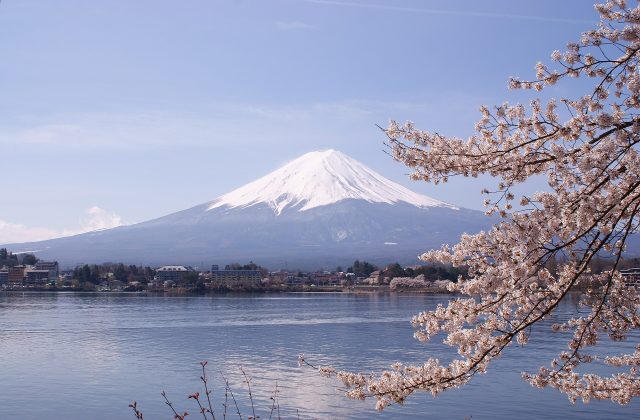
Ultra-modern cities and centuries-old temple towns, connected by one of the world's most efficient rail networks.

Malaysia
Kuala Lumpur's skyline, rainforest, and a genuine cultural crossroads.
Nepal
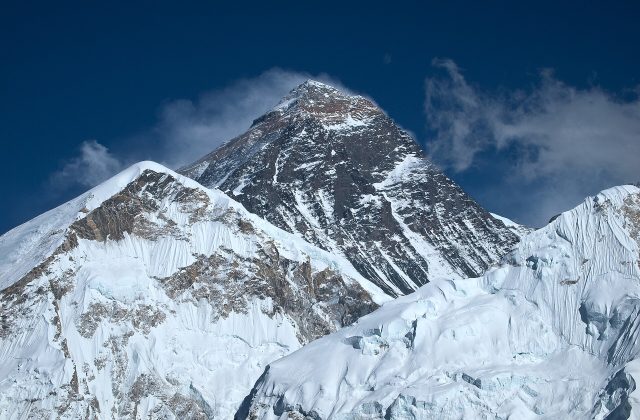
The Himalayas, Everest Base Camp, and Kathmandu's temples.

Philippines
Over 7,000 islands of beaches, diving, and warm hospitality.
Entry & Visa Guidance
A visa is required for almost all visitors. UK government advice states that you must have a visa to visit India unless you hold an Overseas Citizen of India card.
Apply only through official government portals. The regular visa site is indianvisaonline.gov.in/visa/index.html and the e-visa site is indianvisaonline.gov.in/evisa/tvoa.html. Unofficial intermediary sites are widespread, charge substantial mark-ups and are explicitly warned against. The Bureau of Immigration (boi.gov.in) publishes current categories and requirements.
Passport: the same guidance specifies an expiry date at least six months after your arrival date and at least two blank pages.
E-arrival card: all foreign nationals must complete this online, up to 72 hours before arrival, at indianvisaonline.gov.in/earrival/.
Restricted and protected areas. Parts of the north-east, the Andaman and Nicobar Islands, and some border regions require a separate permit in addition to your visa. Some must be arranged around three months in advance through an Indian High Commission or the relevant state liaison office. If your itinerary includes these areas, check requirements early — this is not something that can be fixed on arrival.
Getting There & Around
Trains are the backbone. Indian Railways is one of the world's largest networks and the classic way to travel long distances. Classes range from unreserved to air-conditioned sleepers; AC 2-tier and AC 3-tier are the usual choices for visitors. Popular routes sell out weeks ahead, so book early through IRCTC, the official operator, rather than a reseller. A small tourist quota exists on many services.
Domestic flights are inexpensive and save whole days on a country this size. For a two-week trip covering more than one region, flying at least one leg is usually the right call.
In cities, app-based taxis and auto-rickshaws are the practical choice, and the apps remove the fare negotiation that otherwise dominates. Delhi, Mumbai, Bengaluru, Chennai, Kolkata and Hyderabad all have metro systems that are clean, cheap and far faster than the roads.
Hiring a car with a driver is common, affordable and much less stressful than self-driving, which is not recommended for visitors. Driving is on the left.
Buses cover everything trains do not, with quality varying enormously between state services and private sleeper coaches.
Approximate Travel Budget
India can be travelled at almost any budget, and the gap between the extremes is wider than in most countries. Simple guesthouses, train travel in sleeper class and street food cost very little; heritage hotels, private drivers and internal flights cost a great deal more.
The main levers are accommodation standard, whether you fly or take trains between regions, and whether you hire a car with a driver. Food is inexpensive almost everywhere, including in good restaurants. Monument entry has a two-tier structure, with a higher foreign-visitor rate at major sites — worth factoring in if your itinerary is monument-heavy.
A practical point: paying slightly more for AC train classes and better-rated accommodation buys rest, which on a long India trip is what determines whether you enjoy the second week.
Local Customs & Culture
Shoes come off before entering temples, mosques, gurdwaras and many homes and shops. Some sites also require covered shoulders and knees, and a head covering in Sikh and some Muslim sites.
The right hand is used for eating, giving and receiving. The left is considered unclean.
Public displays of affection between couples attract attention and are best avoided.
Dress modestly outside beach resorts and metropolitan nightlife. For women travellers this is both a cultural courtesy and, in practice, reduces unwanted attention.
Photography of people requires asking first. Many religious sites prohibit photography inside, and some prohibit it entirely; military and border installations are off limits.
The head shake: a side-to-side tilt — generally means yes, agreement or acknowledgement rather than no.
Bargaining is expected in markets and with rickshaws, and not in shops with marked prices.
Alcohol laws vary by state. Gujarat and Bihar are dry; others require permits or restrict sale on particular days. Check locally rather than assuming.
Food
There is no single Indian cuisine. The north leans on wheat, dairy and tandoor cooking; the south on rice, coconut, tamarind and fermented batters; the east on fish, mustard and river produce; the west on everything from Gujarati thalis to Goan pork vindaloo, which is Portuguese-influenced and nothing like the British curry-house version.
Thali is the everyday format worth understanding: a metal tray with several small dishes, rice, bread and pickle, usually refillable and inexpensive. It is the fastest way to taste a region's range in one meal.
Vegetarian food is exceptional and ubiquitous: India is one of the easiest countries in the world for vegetarians and, in many places, vegans. Restaurants are commonly marked "pure veg".
Street food is a major part of the culture. The usual precautions apply: eat where there is a queue and high turnover, prefer food cooked in front of you and served hot, be cautious with raw salads, cut fruit and ice, and drink bottled or filtered water. Stomach upsets are common in the first days regardless; build a light first day into the itinerary.
Safety & Travel Advice
India is visited safely by very large numbers of travellers each year, with preparation and ordinary caution.
Use reputable transport and tour operators, book intercity travel through official channels, and prefer app-based taxis in cities for the fare transparency and the record of the journey.
Water and food. Drink bottled, filtered or boiled water only, and avoid ice of unknown origin. Take the usual precautions with street food.
Scams cluster around transport hubs and major monuments: claims that your hotel has closed or moved, unsolicited "official" guides, gem and carpet schemes, and taxi drivers taking you to a commission-paying shop. Confirm bookings directly and decline redirection.
Women travellers should read current, specific advice before going. Many travel independently without incident; common precautions include conservative dress, avoiding isolated areas after dark, pre-booked transport at night, and women-only carriages where provided on metro systems.
Health. Consult a travel clinic well ahead about routine and recommended vaccinations and about malaria risk, which varies by region and season. Air quality in northern cities, particularly Delhi in late autumn and winter, can reach levels that matter for anyone with respiratory conditions.
Regional advisories vary significantly. Check current guidance for the specific states on your route rather than for India as a whole.
Useful Phrases
Hindi and English are official at national level, alongside 21 other official languages, and the useful language changes by region. English is widely spoken in cities, hotels and among younger people. A few Hindi phrases go a long way in the north:
Namaste — hello and goodbye, said with palms together.
Dhanyavaad / Shukriya — thank you.
Kitne ka hai? — how much is it?
Bahut mehenga hai — that's very expensive.
Paani — water. Chai — tea.
Theek hai — OK, fine, agreed.
Nahin chahiye — I don't want it. Useful and polite.
Bathroom kahan hai? — where is the bathroom?
In the south, Hindi is much less useful; English is generally the better common language there.
Official Sources
Visa, entry, and safety information changes. Always verify with the official sources below before you travel.