🇵🇭 Philippines
Over 7,000 islands of beaches, diving, and warm hospitality.
The Philippines is an archipelago of more than seven thousand islands, and that number is the whole planning problem. There is no way to see it in one trip, and the mistake most visitors make is trying: island-hopping by domestic flight through Manila eats days.
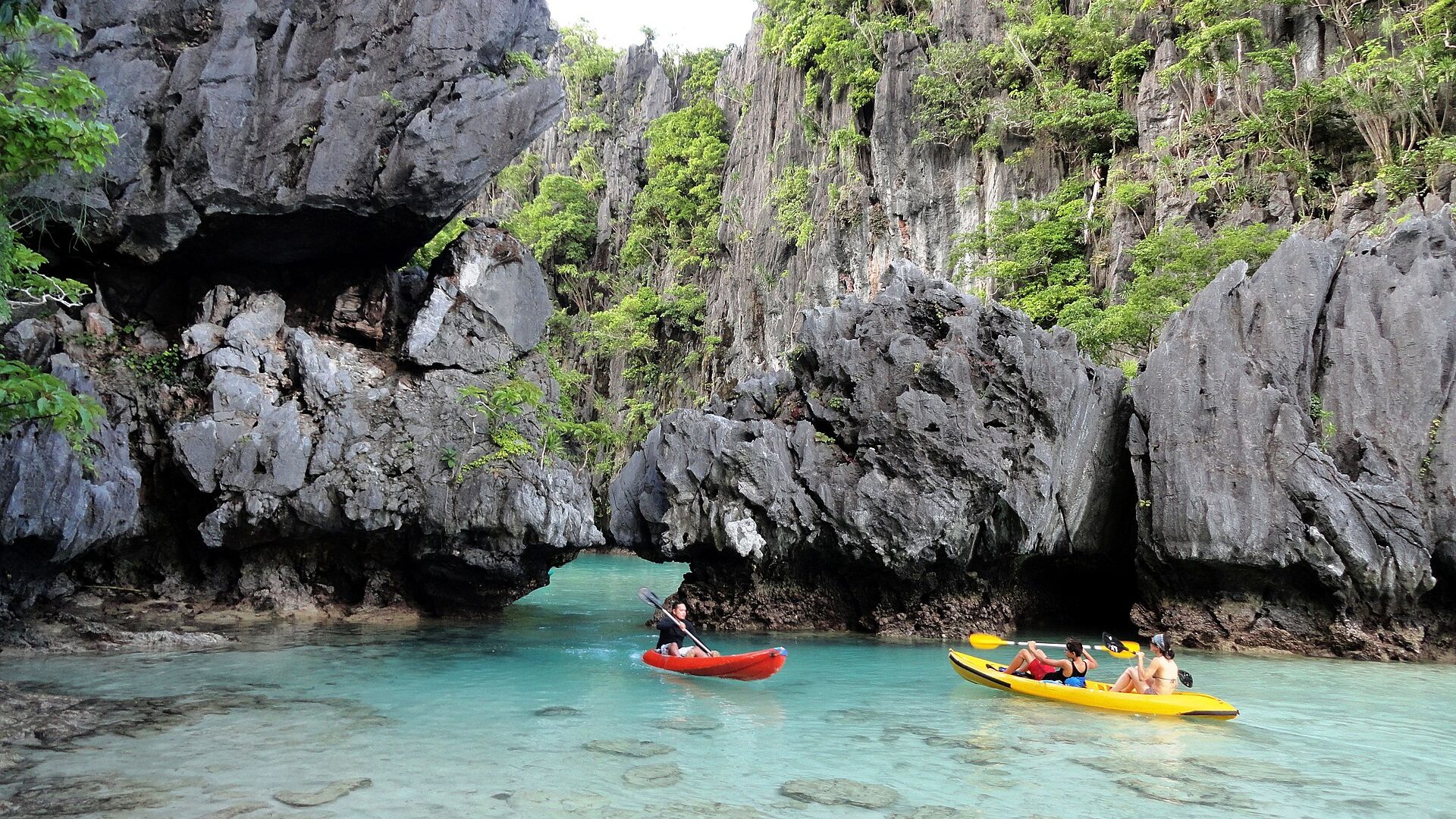
Pick one or two regions. Palawan for limestone karst and lagoons, Cebu and Bohol for diving and accessibility, northern Luzon for the Cordillera rice terraces and cool mountain towns, Siargao for surf.
Best Time to Visit
December to February is the coolest and driest period across most of the country and the best overall window. March to May is the hot dry season, getting genuinely fierce by April and May.
June to November is the wet season and the typhoon season, with the highest risk from July to October. The Philippines is one of the most typhoon-exposed countries in the world, and a storm means cancelled ferries and flights rather than just rain.
The archipelago does not share one season. The eastern seaboard (Siargao, eastern Mindanao, the Pacific coast of Luzon) gets its heaviest rain from November to February, when the west is dry. If your dates are fixed, choose the region to match rather than the reverse.
Weather & Climate
Tropical maritime: hot and humid at sea level all year, with the variation coming from rainfall rather than temperature.
Two monsoons govern it. The southwest monsoon (habagat), roughly June to October, brings rain to the western side. The northeast monsoon (amihan), roughly November to February, brings drier, cooler air to most of the country but rain to the east-facing coasts.
Altitude provides the only real escape from the heat: Baguio and the Cordillera sit high enough to need a jacket at night, and Sagada can be genuinely cold.
The country sits on the Pacific Ring of Fire, with active volcanoes and frequent earthquakes.
Map
Map data © OpenStreetMap contributors
Top Cities
Entry & Visa Guidance
Many nationalities enter visa-free for tourism; UK Foreign Office guidance gives 30 days for British visitors, extendable in country. Check your own nationality's allowance with the Philippine Bureau of Immigration before booking.
The passport must be valid for at least six months from the date of arrival, and proof of return or onward travel is expected and is checked in practice by both airlines and immigration.
All arriving travellers must register on the eTravel system within the 72 hours before arrival and carry the resulting QR code. Some airlines will not allow boarding without it, so treat it as part of check-in rather than an optional formality. The service is free on the official government site.
Yellow fever proof is required from countries with transmission risk, and polio vaccination may be required from certain high-risk countries.
Getting There & Around
Domestic flights do the heavy lifting between island groups, and Manila and Cebu are the hubs. Budget carriers are cheap and cancellations in the wet season are common. Leave a buffer day before an international departure.
Ferries connect almost everything, from fast craft between neighbouring islands to overnight vessels. Check the operator's safety record where you can, avoid boarding visibly overloaded boats, and accept that sailings are suspended when the coastguard raises a warning.
On land, the jeepney is the iconic shared route vehicle, cheap and unmarked in any way a visitor can decode without asking. Tricycles and habal-habal motorbikes handle short hops. Buses cover long routes on Luzon and Mindanao, with overnight services.
Manila traffic is among the worst anywhere; allow far more time than any map suggests, and use ride-hailing apps rather than negotiating taxis.
Approximate Travel Budget
The Philippines is inexpensive for food, transport and simple accommodation, and mid-priced for the resort islands. Boracay, El Nido and Coron are priced well above the national average.
The costs that add up are the ones nobody budgets for: domestic flights and ferries on a multi-island route, environmental and terminal fees charged at many islands and piers, and boat tours, which are the main activity in Palawan and are priced per person per day.
What keeps it down: eating at carinderias and local eateries, which is very cheap; travelling within one island group rather than between several; and going outside the December to February peak.
Cash matters. Card acceptance is limited outside cities and resorts, and ATMs on small islands run out or charge high fees. Carry enough pesos before heading somewhere remote.
Local Customs & Culture
Filipino social life runs on warmth, indirectness and the avoidance of embarrassment. A direct no is rare; a vague yes may mean no. Reading the softer signal saves confusion.
Respect for elders is formalised: po and opo are added to speech as politeness markers, and pagmamano: touching an elder's hand to your forehead, is a traditional greeting. A smile and a raised eyebrow can be a full conversation.
The country is predominantly Catholic, with a significant Muslim population in the south; Holy Week is the biggest holiday of the year and much of the country stops. Karaoke is a genuine national pastime and declining an invitation to sing is harder than it sounds.
English is an official language and is very widely spoken, which makes the Philippines one of the easiest countries in Asia to travel independently.
Food
Filipino cooking is sour, salty and sweet rather than chilli-hot, which surprises people expecting Southeast Asian heat. Adobo: meat braised in vinegar, soy and garlic, is the national dish and varies by household. Sinigang is a sour tamarind soup; kare-kare a peanut stew; lechon whole roast pig, and the country's showpiece.
Regional specialities are worth chasing: Bicol Express and other coconut-and-chilli dishes from Bicol, the only genuinely spicy regional cuisine; Ilocano bagnet and pinakbet in the north; halo-halo shaved ice everywhere.
Street and market food is cheap and good: barbecue skewers, lumpia, banana cue. The carinderia, a small canteen with dishes displayed in trays, is the everyday way to eat.
Practical notes: rice accompanies everything, including breakfast; calamansi, the local citrus, is the standard souring agent; and tap water is not drunk.
Safety & Travel Advice
Filipinos are exceptionally hospitable and most visits are trouble-free. The real risks here are natural and transport-related rather than criminal.
Typhoons, flooding and landslides are the major hazard in season; follow PAGASA, the national weather service, and local authorities. Ferry and boat safety is a genuine concern: the country has a poor maritime accident record, and refusing to board an overloaded boat is reasonable.
Volcanic and seismic activity is monitored by PHIVOLCS and can close areas at short notice.
Petty theft and scams occur in Manila; use ride-hailing, avoid displaying valuables, and be cautious of anyone offering to help at an ATM.
Parts of Mindanao and the Sulu archipelago are subject to strong travel advisories from most governments, including advice against all travel to some areas. Read your own government's current guidance for the specific regions on your route. This is one of the countries where that distinction genuinely matters.
Useful Phrases
Filipino (based on Tagalog) and English are both official, and English is very widely spoken. Regional languages such as Cebuano and Ilocano are the first language for millions.
Kumusta - how are you, hello.
Salamat - thank you. Salamat po - thank you (respectful).
Oo - yes. Hindi - no.
Po and opo - politeness markers added when speaking to elders or strangers.
Magkano - how much.
Saan ang banyo - where is the bathroom.
Tara - let's go. Sige - okay, go ahead.
Kuya / ate - older brother / sister, used politely for staff and strangers of similar age.
Bahala na - come what may; a genuine cultural attitude.
Official Sources
Visa, entry, and safety information changes. Always verify with the official sources below before you travel.
Plan your trip to Philippines
Free tools for flight times, time differences, budget, money and plugs.
- Flight Duration CalculatorWork out real flight time across time zones.
- Time Zone ConverterFind the time in another city instantly.
- Trip Budget CalculatorEstimate your total trip cost, item by item.
- Currency ConverterConvert prices between currencies at indicative rates.
- Travel Plug & Voltage CheckerCheck if you need a plug adapter or voltage converter.
- Jet Lag CalculatorEstimate how many days you need to beat jet lag.