
🇳🇿 New Zealand
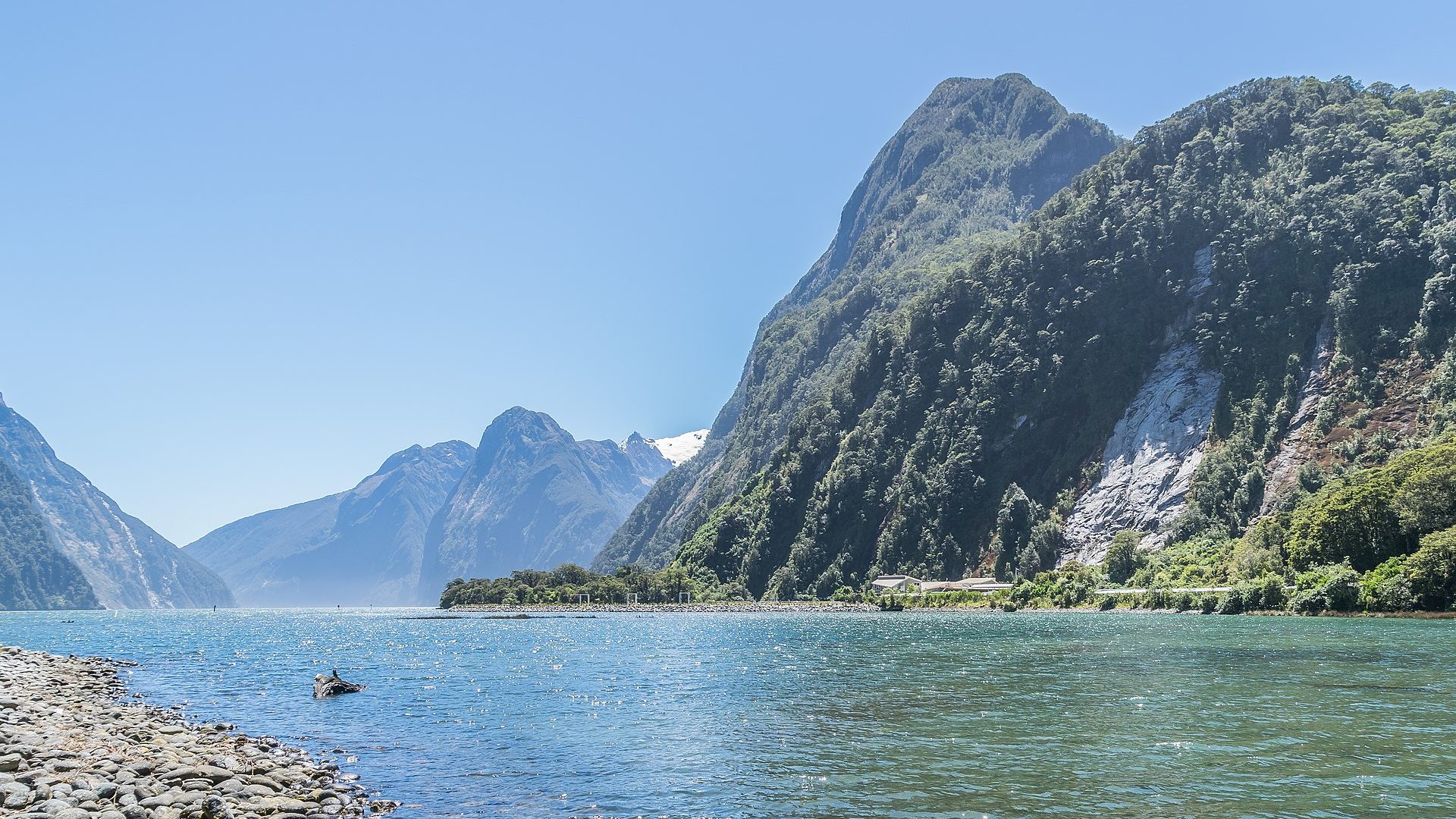
Fjords, glaciers, and adventure sports across two dramatic islands.

New Zealand is two long islands in the southern Pacific, and the distinction between them decides most itineraries. The North Island has the cities, the Māori cultural heartland, the volcanic plateau and the geothermal fields; the South Island has the Southern Alps, the fiords and the glaciers.
The country is the size of Great Britain or Japan with a population of around five million, which is why the roads are empty, the landscapes feel unpeopled, and the driving distances are longer than a map suggests.
Best Time to Visit
Seasons are reversed from the northern hemisphere. December to February is summer and the peak: long days, all alpine tracks open, and the busiest and priciest weeks, especially around Christmas when New Zealanders take their own holidays.
March and April are arguably the best: settled weather, autumn colour in Central Otago, and noticeably fewer people. October and November are spring: unsettled but green, with lambs and waterfalls at full flow.
June to August is winter: the ski season around Queenstown and Wanaka and on Mount Ruapehu, short days, and many alpine tracks and passes closed or requiring proper equipment.
The Great Walks have a booked season, generally late October to April, when huts are serviced; outside it they become serious backcountry undertakings.
Weather & Climate
New Zealand is temperate maritime and highly changeable, four seasons in one day is a local cliché because it is accurate. The sea is never far away and weather systems move quickly from the west.
The Southern Alps split the South Island into two climates: the West Coast is one of the wettest inhabited places on earth, while Central Otago in the rain shadow is semi-arid with hot summers and frosty winters.
The north is subtropical around Northland; the south is cooler year-round. UV is extreme by northern-hemisphere standards because of the thin ozone layer and clean air: sunburn happens fast even on cool, overcast days, and this matters more than the temperature.
Map
Map data © OpenStreetMap contributors
Top Cities

Entry & Visa Guidance
Most visa-exempt visitors need an NZeTA: the New Zealand Electronic Travel Authority, before arrival. UK Foreign Office guidance states it should be applied for allowing up to 72 hours for processing and is valid for up to two years. An International Visitor Conservation and Tourism Levy is paid when applying.
Visa-free visitors can generally stay up to six months; working or studying requires a visa. Transit passengers also need an NZeTA or a transit variant.
Passport validity must extend at least three months beyond your planned departure, though connecting through other countries may require six.
Everyone travelling to New Zealand must complete the New Zealand Traveller Declaration (NZTD), which is free and submitted online, via app or on paper before passport control. Biosecurity is taken extremely seriously: declare all food, plant material, wooden items, and used hiking boots or camping gear. Fines for failing to declare are immediate and substantial, and boots are inspected and cleaned.
Getting There & Around
A car or campervan is how most visitors travel, and distances are deceptive: winding roads mean average speeds are low, and a 300-kilometre day is a full day. Driving is on the left, many rural roads are single-lane with one-lane bridges, and fatigue after a long-haul flight is a documented cause of visitor accidents. Do not drive the day you land.
The Interislander and Bluebridge ferries cross the Cook Strait between Wellington and Picton in around three to four hours and book out in summer, particularly with vehicles.
Intercity coaches connect most towns and are a genuine option without a car. Domestic flights link the main centres and Queenstown cheaply.
Two scenic rail journeys are attractions in themselves: the TranzAlpine across the Southern Alps and the Coastal Pacific along the Kaikōura coast.
Approximate Travel Budget
New Zealand is expensive, comparable to western Europe or Australia, and the cost is spread across accommodation, food and activities rather than concentrated anywhere.
The adventure activities are the discretionary line that can dominate a budget: bungee, skydiving, jet boats, glacier helicopter flights and Milford cruises are all priced as premium experiences.
What keeps costs down: Department of Conservation campsites and huts, which are inexpensive and often spectacular; self-catering, since supermarkets are reasonable and restaurants are not; holiday parks and hostels; and travelling in the shoulder months. A DOC hut pass pays off on a walking trip.
Tipping is not expected, staff are paid a full wage, which takes a noticeable amount off a restaurant bill compared with North America.
Local Customs & Culture
New Zealanders are informal, understated and allergic to self-promotion. First names are used immediately, and overstated enthusiasm lands oddly.
Māori culture is a living part of the country, not a historical exhibit. Te reo Māori is an official language and appears on signage; place names are Māori and pronouncing them with some effort is appreciated. A pōwhiri, the formal welcome onto a marae, follows protocols a host will explain; follow them. Do not sit on tables or pillows, which is considered tapu.
The land itself carries obligations that visitors are expected to share: stay on tracks, clean your boots between forests to prevent kauri dieback, take all rubbish out, and respect rāhui, temporary access restrictions placed for cultural or environmental reasons.
Removing shoes on entering a home is common. Barefoot in public is normal and not a sign of anything.
Food
New Zealand food is built on excellent raw material: lamb, beef, venison, dairy, and seafood including green-lipped mussels, crayfish and Bluff oysters in season. Kaikōura crayfish and Marlborough mussels are worth planning around.
The hāngī is the traditional Māori earth oven and is best experienced through a Māori-run cultural operator rather than a hotel buffet. Kūmara, the Polynesian sweet potato, is a staple.
Coffee culture is serious (the flat white is claimed by both New Zealand and Australia) and independent cafés are the norm. Wine regions worth a detour: Marlborough for sauvignon blanc, Central Otago for pinot noir, Hawke's Bay for reds.
Everyday items: the meat pie from a bakery, fish and chips wrapped in paper, pavlova and hokey pokey ice cream. Tap water is excellent and free everywhere.
Safety & Travel Advice
New Zealand has low crime and the risks are almost entirely environmental and vehicular.
Driving is the biggest one: unfamiliar side of the road, winding routes, jet lag and long distances. Take breaks and do not underestimate journey times.
The outdoors is the other. Alpine weather changes within an hour, rivers rise fast, and tracks that look benign in photographs are exposed. Use the official track information, leave an intention with someone, and carry a locator beacon on serious walks, search and rescue is frequently called to visitors who did neither.
The coast has strong rips; swim between the flags at patrolled beaches. Sandflies on the West Coast and in Fiordland are relentless. Bring repellent.
The country is seismically and volcanically active. Earthquake and tsunami guidance is published nationally; on the coast, the rule is that if an earthquake is long or strong, move inland or uphill immediately without waiting for an official warning.
Useful Phrases
English is the main language; te reo Māori and New Zealand Sign Language are also official.
Kia ora - hello, thanks, and a general greeting; used constantly by everyone.
Haere mai - welcome. Ka kite - see you later.
Whānau - family. Aotearoa - New Zealand. Marae - Māori meeting grounds.
Tapu - sacred, restricted. Rāhui - a temporary access restriction to be respected.
Pākehā - a New Zealander of European descent.
Local English:
Jandals - flip-flops. Togs - swimwear. Chilly bin - cool box.
Tramping - hiking. Bach - a holiday cottage. Dairy - a corner shop.
Sweet as - fine, no problem. Yeah, nah - a polite no.
Official Sources
Visa, entry, and safety information changes. Always verify with the official sources below before you travel.
Plan your trip to New Zealand
Free tools for flight times, time differences, budget, money and plugs.
- Flight Duration CalculatorWork out real flight time across time zones.
- Time Zone ConverterFind the time in another city instantly.
- Trip Budget CalculatorEstimate your total trip cost, item by item.
- Currency ConverterConvert prices between currencies at indicative rates.
- Travel Plug & Voltage CheckerCheck if you need a plug adapter or voltage converter.
- Jet Lag CalculatorEstimate how many days you need to beat jet lag.