Overview
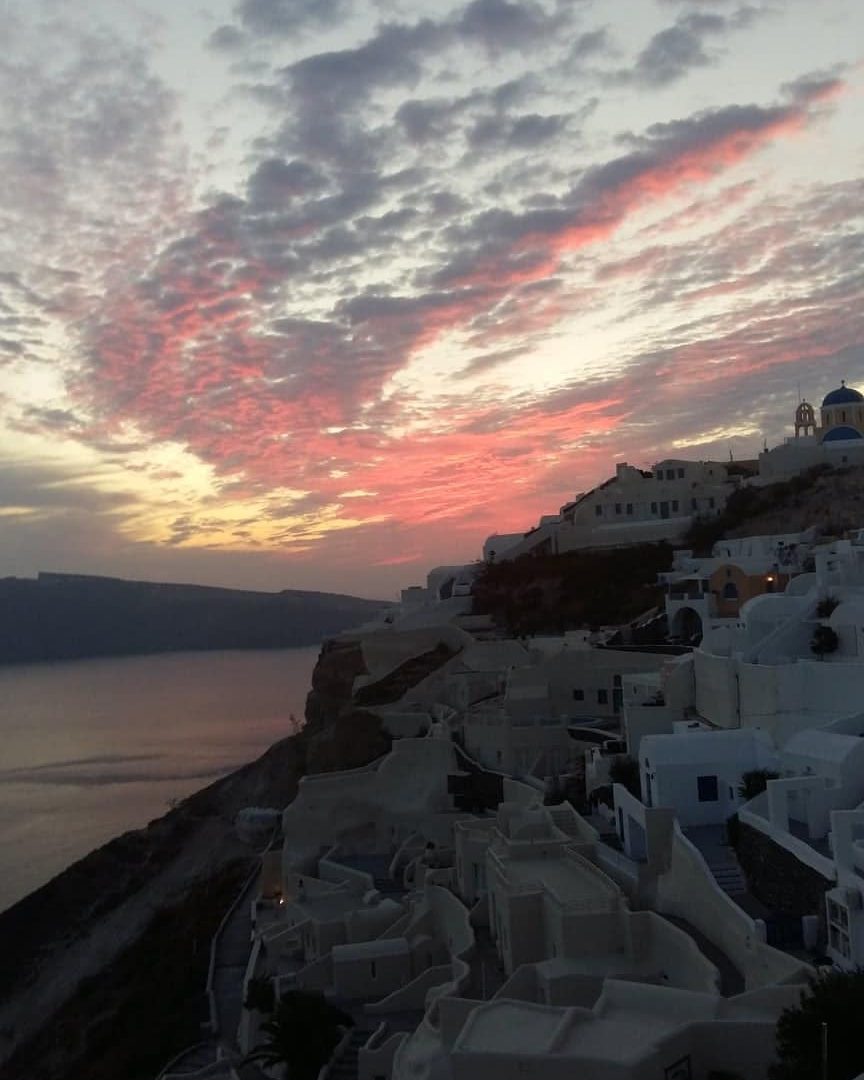
A volcanic island in the Cyclades whose distinctive shape is the rim of a collapsed caldera: the crescent of cliff you see from every terrace is what remains after an enormous Bronze Age eruption blew the centre of the island out. Villages sit along the top of that rim, 200 to 300 metres above the water, which is why Santorini looks like nowhere else in Greece.
The same eruption, in the 17th century BC, buried the settlement at Akrotiri under ash and pumice and preserved it — the reason the island matters archaeologically as well as scenically.
Why Visit
The caldera is the draw, and it delivers: cliffside villages, the sunset at Oia, cave hotels cut into the rim. But the island rewards anyone willing to look past that one view.
Akrotiri is the strongest argument. Systematic excavation began in 1967 and continues today, uncovering a Late Cycladic town that was a trading hub linked to Minoan Crete, Egypt and Syria, with origins reaching back to the Late Neolithic. It is now sheltered under a bioclimatic roof, so it is one of the few major sites in Greece you can visit comfortably in the middle of a hot afternoon.
The beaches are also genuinely unusual: black, red and white, all volcanic, and completely unlike the pale sand of the rest of the Cyclades.
Top Experiences
- Akrotiri. A Bronze Age town preserved by ash, under cover and walkable on raised walkways. Go here before the caldera villages if you want the island to make sense.
- The Fira to Oia caldera path. Roughly 10 km along the rim through Firostefani and Imerovigli, with the caldera on your left the whole way. Three to four hours at a normal pace. Start early — there is almost no shade.
- Sunset, but not from Oia's castle. The castle is the famous spot and is uncomfortably crowded. Imerovigli, the Oia windmills, or a boat on the water give the same sun and room to breathe.
- A caldera sail. Catamaran trips stop at the hot springs by the volcanic islets and at Red Beach, and put you at sea level looking up — the angle that shows you what the eruption actually did.
- The volcanic beaches. Perissa and Perivolos for long black sand and organised beach life; Red Beach for the colour, though access varies with rockfall conditions.
- Ancient Thera. A later Greek and Roman city on the ridge above Kamari, largely ignored by visitors, with views across the whole island.
- Pyrgos and the inland villages. Where the island looks like the Cyclades rather than like its own postcard, and where eating out costs noticeably less.
Map
Map data © OpenStreetMap contributors
Best Time to Visit
Late May–June and September for warm weather without peak-August crowds and prices.
Where to Stay
Oia is the most photographed and most expensive, and is overrun between late morning and sunset. Staying there means having it early and late, which is the best of it.
Fira is the island's hub: bus station, most services, the widest range of accommodation, and nightlife. Imerovigli sits at the caldera's highest point, quieter than both, with arguably the best views. Firostefani sits between Fira and Imerovigli and splits the difference.
For beaches rather than caldera, Kamari and Perissa are cheaper, flatter and far more practical with children. Inland villages like Pyrgos or Megalochori cost less again and need a vehicle or good bus timing.
One structural point: caldera accommodation means stairs, often many, and luggage is sometimes carried by porter or donkey. Check access before booking.
Getting There
Two routes. Flights serve Santorini (JTR) from Athens year-round in about 45 minutes, with seasonal direct services from across Europe in summer. Ferries from Piraeus take roughly five hours on a high-speed vessel and around eight on a conventional one; there are also frequent connections from Mykonos, Naxos, Paros and Crete.
Ferries dock at Athinios, a working port on the caldera wall with no town attached. Arrivals are met by buses, taxis and hotel transfers, and the scene is chaotic in peak season. Arrange your transfer in advance if you land there after dark.
Cruise ships anchor in the caldera and tender passengers to the old port below Fira, from where it is a cable car, a mule, or around 580 steps up. Cruise days concentrate crowds in Fira and Oia between roughly mid-morning and late afternoon.
Getting Around
Buses radiate from the central station in Fira to Oia, Akrotiri, Perissa, Kamari and Athinios. They are cheap and frequent in season, and packed at peak times.
ATVs and scooters are ubiquitous and widely rented. Be realistic: the roads are narrow, steep and busy, and many rentals require a licence category that visitors do not always hold. Check what your licence actually covers and what your insurance excludes.
Taxis are few — the island has a famously small fleet — so do not count on hailing one, especially late.
On foot within the caldera villages, which are pedestrian and built as stairways. Between Fira and Oia the rim path is a genuine transport option, not just a walk.
Food & Culture
Volcanic soil and almost no rainfall produce a distinctive local agriculture. Santorini tomatoes are small and intense; white aubergine, capers and fava — a yellow split-pea purée with protected designation — are the island staples. Tomatokeftedes, tomato fritters, are the dish to order first.
The wine is the serious attraction. Assyrtiko grown in kouloura, vines trained into low baskets that shelter the fruit from wind and trap moisture, gives a dry, mineral white found nowhere else in that form. Several wineries on the road between Fira and Akrotiri take visitors, and the inland tasting rooms are a good antidote to caldera-edge dining.
Budget
Santorini is the most expensive of the Greek islands, and the premium is almost entirely about the view. A caldera-facing room costs a multiple of an equivalent room in Kamari or Pyrgos, and restaurants on the rim charge accordingly.
The levers, in order of effect: sleep away from the caldera edge; travel in the shoulder season; eat inland; use buses rather than taxis and transfers. Ferries from Piraeus cost less than flights but consume most of a day. Akrotiri, Ancient Thera and the beaches are inexpensive; it is the view that is priced.
Important Notes
Crowding is the defining problem, and it is predictable. Cruise arrivals fill Fira and Oia from mid-morning to late afternoon. Visiting those villages early or in the evening, and doing Akrotiri, the wineries or the beaches in the middle of the day, transforms the experience.
July and August are hot, full and expensive. Late May, June and September give the same sea and light with much less pressure. Winter is quiet and many caldera businesses close.
Steps everywhere. The caldera villages are built vertically. This affects accommodation, luggage and anyone with mobility limits.
Water is scarce. Tap water is generally not for drinking; bottled or filtered water is the norm.
The mule rides up from the old port raise animal-welfare concerns that have been widely documented. The cable car is the alternative.
Itinerary Suggestions
Two days. Day one: Akrotiri, then a beach, then sunset from Imerovigli. Day two: the Fira to Oia rim path in the morning, Oia in the evening once the day-trippers leave.
Four days. Add a caldera sail and a wine afternoon, plus Ancient Thera and Pyrgos for the non-caldera side of the island.
Santorini within a Cyclades trip. Two to three nights here is enough for most people, combined with Naxos or Milos, which are larger, cheaper and less crowded. Santorini rewards a short, well-timed stay better than a long one.
Frequently Asked Questions
How many days do I need?
Two to four. Two covers Akrotiri, the rim path and a sunset; four adds a sail, the wineries and the inland villages. Longer stays tend to work better combined with another island.
When should I visit?
Late May, June and September give warm weather without the July–August crowds and prices. Winter is quiet but many caldera businesses close.
Where is the best place to watch the sunset?
Oia's castle is the famous spot and is badly overcrowded. Imerovigli, the Oia windmills or a boat give the same sunset with room to stand.
Should I stay in Oia or Fira?
Fira for connections, services and value; Oia for the setting, at a price and with heavy daytime crowds; Imerovigli for quiet and the best caldera views.
Is Akrotiri worth visiting?
Yes. It is a Bronze Age town buried by the eruption and excavated since 1967, now under a modern roof, which also makes it one of the few sites comfortable to visit at midday.
Can I rent an ATV?
They are widely available, but roads are narrow, steep and busy, and rentals often require a licence category visitors do not hold. Check your licence and your insurance before booking.
How do I get from the ferry port?
Athinios has no town and no facilities to speak of. Buses, taxis and hotel transfers meet arrivals, but it is chaotic in season — arrange a transfer in advance for a late arrival.
Sources
- Greek Ministry of Culture: Archaeological Site of Akrotiri, Thera
- Greek Ministry of Culture: Ancient Thera
Last reviewed: September 14, 2026