
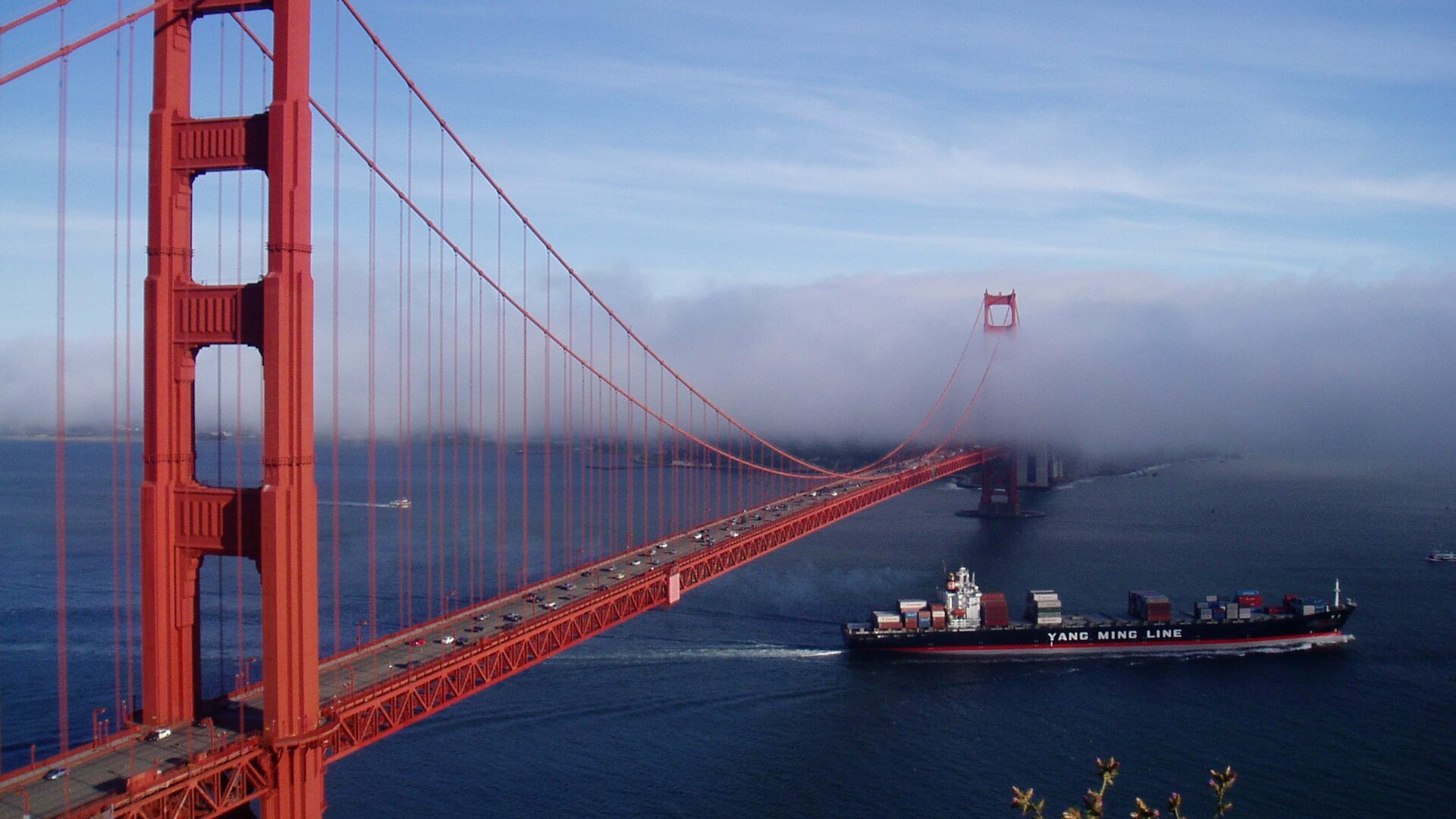
San Francisco
Overview
San Francisco occupies the tip of a peninsula between the Pacific and the bay, in about seven miles square: small enough to cross on foot in a long day, steep enough that you will not want to. The hills, the water on three sides and the fog are the three facts that shape everything here.
It is also a city of sharply defined neighbourhoods that change character within a block or two, and a place where the tourist core around Fisherman's Wharf bears little relation to the city residents actually use.
Why Visit
The setting is the draw: a bridge that is genuinely beautiful, a bay with an island prison in it, redwoods twenty minutes north, and Pacific surf at the western edge of the same city.
Beyond that, San Francisco has one of the most concentrated food scenes in the United States, the oldest and largest Chinatown in North America, and a civil rights history (particularly the Castro's role in the gay rights movement) that is visible on the ground rather than only in museums.
Best Things to Do
- Walk or cycle the Golden Gate Bridge. Free, and the walk from the southern car park to the first tower gives the view most people are after. Bring a windproof layer; it is cold and loud on the deck even in summer.
- Alcatraz. The audio tour, narrated partly by former inmates and guards, is among the best of its kind. Book weeks ahead: it regularly sells out, and tickets are only sold through the official concessionaire.
- Chinatown, away from Grant Avenue. Stockton Street is where the groceries, herbalists and dim sum are, and it is a working neighbourhood rather than a souvenir strip.
- The Mission. Murals along Balmy Alley and Clarion Alley, Latin American food, and Dolores Park with the skyline behind it. It is also the sunniest neighbourhood when the rest of the city is fogged in.
- Golden Gate Park. Larger than Central Park, holding the de Young Museum, the California Academy of Sciences, a Japanese Tea Garden and a bison paddock.
- A cable car, once. The Powell-Hyde line has the best views; the queues at the turnaround are long, so board at a stop further up the line.
- Lands End and the Sutro Baths ruins: a coastal trail on the city's northwest corner with the bridge appearing through cypress trees.
Map
Map data © OpenStreetMap contributors
Best Time to Visit
September and October are the warmest, clearest months of the year: the local summer, after the fog season has ended. This is the single best window.
June to August is famously not summer here. Cold Pacific water and inland heat pull fog over the western half of the city, often all day, with temperatures far below what visitors expect from California. Layers matter more than any other packing decision.
April, May and November are mild and pleasant. December to March is the rainy season: cool rather than cold, green, and the cheapest time.
Microclimates are real: the Mission can be sunny and warm while the Sunset district, three miles west, is in cold fog at the same hour.
Where to Stay
Union Square is the most central and best connected, with the widest hotel choice; the streets immediately west toward the Tenderloin change character sharply, which is worth knowing when choosing an address.
Nob Hill and Russian Hill are quieter, attractive and steep, with cable car access.
North Beach is walkable to Chinatown and the waterfront, full of Italian restaurants and bars.
The Mission is the liveliest for food and nightlife and the sunniest. Hayes Valley is central, calm and good for restaurants.
Fisherman's Wharf is convenient for Alcatraz and is the least characteristic part of the city; most residents avoid it.
Note that hotels commonly add a nightly facility fee and that city parking is expensive. A car is a liability here.
Neighborhoods
Chinatown: the oldest in North America, dense and residential behind the main tourist street.
North Beach: the Italian quarter and the Beat literary heritage, with City Lights bookstore.
The Mission: murals, Latin American food, bars, and Dolores Park.
The Castro: the historic centre of the gay rights movement, with the Rainbow Honor Walk and the GLBT Historical Society Museum.
Haight-Ashbury: the 1967 counterculture district, now record shops and Victorian houses, at the edge of Golden Gate Park.
SoMa: museums including SFMOMA, the ballpark, and tech offices.
Richmond and Sunset: residential, foggy, with excellent Chinese and Russian food and the ocean at the end.
Presidio: a former army base turned national park site, with trails, beaches and the bridge approach.
Transportation & Airports
The city is compact but very hilly, so plan routes with the gradient in mind. Muni runs buses, historic streetcars and the metro; BART is the regional rail connecting the airport, downtown and the East Bay. Contactless bank cards and phones work on both.
Cable cars are a separate, higher fare and are transport in name only. Treat them as an attraction.
Ride-hailing is ubiquitous. A hire car is a mistake for a city stay: parking is scarce and costly, and street parking rules are enforced aggressively. Hire one only for the day you leave the city for Muir Woods, Point Reyes or the coast.
From the airport, BART runs directly into downtown and is far cheaper than a taxi. Oakland airport connects via BART as well.
Food
San Francisco's reputation rests on ingredient-driven Californian cooking, and the Ferry Building farmers' market is where to see the raw material. But the everyday strength is immigrant food: Cantonese in Chinatown and the Richmond, Mexican in the Mission, Vietnamese, Burmese, Salvadoran and Filipino across the city.
Specific things that belong here: the Mission burrito, sourdough with a genuine local starter tradition, cioppino, Dungeness crab in season, and dim sum eaten at lunch.
Practical points: sales tax is added at the till, tipping is expected at around twenty per cent, and many restaurants add a separate local surcharge for employee healthcare, which is disclosed on the menu. Reservations matter at popular places and are released on a schedule.
Day Trips
Muir Woods and Sausalito: coast redwoods half an hour north across the bridge. Muir Woods requires an advance parking or shuttle reservation; you cannot simply turn up.
Point Reyes National Seashore: cliffs, a lighthouse, elephant seals and cattle ranches, about ninety minutes north.
Napa and Sonoma: the wine valleys an hour and a half northeast; most tastings are now by appointment and charged.
Berkeley and Oakland: reachable by BART: a university campus, a strong food scene and a different, less polished Bay Area.
Half Moon Bay and Highway 1 south: the coastal road toward Santa Cruz and, further on, Big Sur.
Budget
San Francisco is among the most expensive cities in the United States, with accommodation the dominant cost and restaurants close behind once tax, tip and surcharges are added.
The counterweight is how much is free: the Golden Gate Bridge walkway, Golden Gate Park's grounds, Lands End, the Presidio, Dolores Park, the murals, and the cable car museum. Several museums run free days monthly: check each institution's own site, as the schedules change.
Concrete savings: skip the hire car, use BART from the airport, eat in the Mission or the Richmond rather than downtown, and buy the Alcatraz ticket direct rather than in a package.
Travel Tips
Book Alcatraz as soon as your dates are fixed. It sells out weeks ahead and only the official operator has tickets.
Pack layers, including a windproof one, in every season. Summer here is the cold season, and the temperature difference between neighbourhoods on the same afternoon can be substantial.
Do not leave anything visible in a parked car. Smash-and-grab theft from vehicles is the city's most common crime against visitors, including in daylight at trailhead car parks.
Reserve Muir Woods parking in advance; arriving without one means being turned away.
Be aware of street conditions in parts of the Tenderloin and around Sixth Street and Market. Visible homelessness and drug use are a reality in specific blocks; they are not dangerous to walk past in daylight but are worth knowing about before booking a hotel there.
Prices are not final prices. Sales tax and tipping add roughly a third to a restaurant bill.
Other Cities in United States



Frequently Asked Questions
How many days do I need in San Francisco
Three full days covers the bridge, Alcatraz, two or three neighbourhoods and Golden Gate Park. A fourth allows Muir Woods, Point Reyes or the wine country.
Why is it so cold in summer
Cold Pacific water meets hot inland air and pulls fog over the city, mainly from June to August. September and October are the genuinely warm months. Dress in layers whatever the calendar says.
Do I need a car
Not for the city, parking is expensive and scarce and break-ins are common. Hire one only for a day trip to the coast or the wine country, and never leave belongings visible inside it.
How far ahead should I book Alcatraz
Several weeks in high season. Tickets are sold only by the official concessionaire, and third-party listings are either packages or resales at a markup.
Is it walkable
Within neighbourhoods, yes. Between them, the hills are serious, gradients here defeat a lot of visitors. Use Muni or ride-hailing for the climbs and walk the flat parts.
Plan your trip to San Francisco
Free tools for flight times, time differences, budget, money and plugs.
- Flight Duration CalculatorWork out real flight time across time zones.
- Time Zone ConverterFind the time in another city instantly.
- Trip Budget CalculatorEstimate your total trip cost, item by item.
- Currency ConverterConvert prices between currencies at indicative rates.
- Travel Plug & Voltage CheckerCheck if you need a plug adapter or voltage converter.
- Jet Lag CalculatorEstimate how many days you need to beat jet lag.