
Tokyo
Overview
Tokyo is not one city but a chain of dense sub-centres strung along a loop railway, each with its own skyline, crowd and character. Shinjuku, Shibuya, Ikebukuro, Ueno and Tokyo Station are all "downtown" in the sense that matters, and the distance between them is measured in train minutes rather than blocks.
That structure explains most of what surprises first-time visitors. There is no single historic core to walk around, the interesting streets are often one turn off the main road and three floors up, and the city rewards picking two or three districts a day rather than trying to cover a map.
Why Visit
Tokyo offers an unusual combination: a metropolis of over thirteen million people that is quiet, punctual and exceptionally easy to move around, with a food culture that operates at a very high standard at every price level.
It is also a city of contrasts that are genuinely close together: a Shinto shrine in a forest clearing, a ten-minute walk from one of the busiest pedestrian crossings on earth.
Best Things to Do
- Meiji Jingu and Yoyogi Park, early. The approach through the forest strips away the city noise completely. Arrive near opening and the shrine is a working place of worship rather than a photo stop.
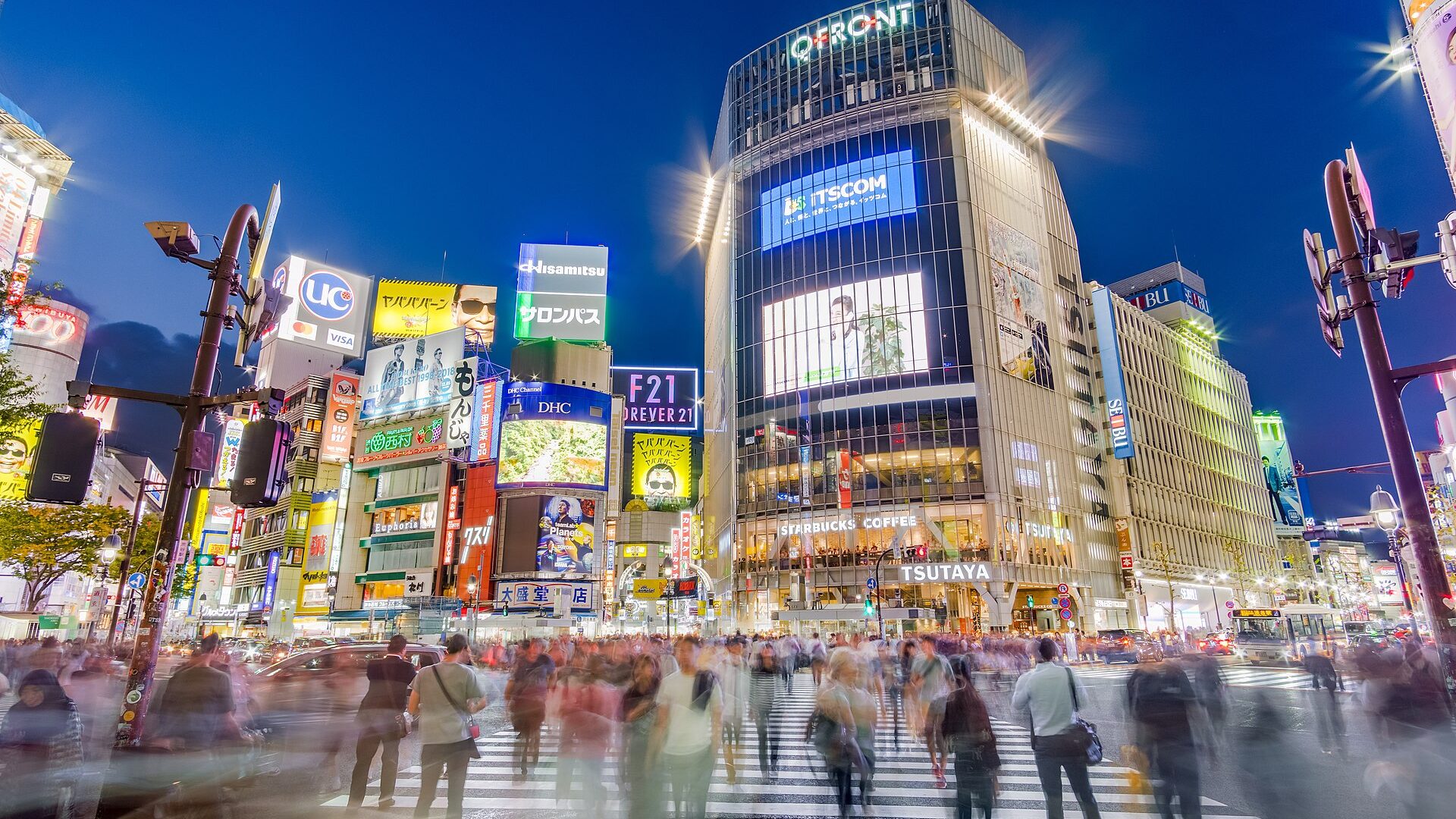
- The Shibuya Scramble, then above it. See the crossing at street level, then from a raised vantage point to understand the choreography. Evening, in rain, is the version worth waiting for.
- Tsukiji Outer Market for eating, Toyosu for the fish market itself. The wholesale auction moved to Toyosu; the outer market at Tsukiji remains a working street of stalls and knife shops.
- Yanaka and the old low city. Low buildings, a large cemetery, a shopping street and temples — the pre-war texture that most of Tokyo lost.
- A department-store food hall (depachika). The basement of any large department store is one of the best food displays anywhere, and requires no reservation or Japanese.
- Golden Gai and Omoide Yokocho after dark. Tiny bars and grill alleys in Shinjuku. Many bars seat six people and some charge a cover; read the door sign before entering.
- The Imperial Palace East Gardens. The stone foundations of the old castle keep, free to enter, and a rare piece of open green in the centre.
Map
Map data © OpenStreetMap contributors
Best Time to Visit
Late March to early April for cherry blossom and late October to early December for autumn colour and the clearest skies of the year. Both are peak periods for domestic travel as well as international, so accommodation books early.
May and early June are comfortable and less contested. The rainy season runs roughly through June into mid-July, and August is hot and humid in a way that reshapes a day's plans: indoor sights in the afternoon, walking in the morning and evening. September into early October falls within typhoon season; disruption is usually a lost day rather than a lost trip.
Where to Stay
Shinjuku is the most practical base: every train line, endless food, and hotels at every level. It is also loud and confusing to navigate at first — the station has a deserved reputation.
Shibuya suits a younger, later itinerary. Tokyo Station / Marunouchi is the choice for Shinkansen day trips and a calmer evening. Asakusa and Ueno are cheaper, with the old-city atmosphere and good museum access, but further from nightlife. Ginza and Nihonbashi are quiet and central at a price.
Business hotels are small, clean and reliable; capsule hotels are a real budget option and increasingly comfortable. Rooms are compact almost everywhere, so check the floor area rather than the star rating.
Neighborhoods
Shinjuku: transport hub, skyscrapers on one side, Golden Gai and Kabukicho on the other, Shinjuku Gyoen's gardens in the middle.
Shibuya: the crossing, youth fashion, and the hill districts of Daikanyama and Nakameguro just beyond, which are quieter and more interesting to walk.
Harajuku and Omotesando: Takeshita Street's teen culture on one side, architect-designed flagship stores along a boulevard on the other.
Asakusa: Senso-ji, the old temple town, craft shops and the river.
Yanaka, Nezu and Sendagi: low-rise streets that survived the war and the bubble, best explored on foot without a plan.
Ginza: luxury retail, galleries, and the traditional theatres; the main avenue closes to traffic at weekend afternoons.
Akihabara: electronics and anime retail, several floors deep.
Shimokitazawa and Koenji: second-hand clothes, small music venues, cheap bars, no towers.
Transportation & Airports
Trains do everything. The JR Yamanote loop connects the major sub-centres and the subway network fills in between; between them you rarely need anything else. Get a rechargeable IC card (Suica or PASMO, including the versions in a phone wallet) and stop thinking about individual fares.
Two things to know. First, the Japan Rail Pass covers JR lines only: it does not cover the Tokyo Metro or Toei subway lines, and for a trip spent mostly inside Tokyo it is usually not worth it. Second, services stop around midnight and restart early; the last train is a real constraint on an evening, and taxis after it are expensive.
From the airports: Narita is far out, served by the Narita Express and the Keisei Skyliner; Haneda is much closer to the centre and is the better arrival if you have a choice.
Food
Tokyo's strength is specialisation. A restaurant typically does one thing — tempura, unagi, soba, tonkatsu, ramen — and has done it for a long time. The best value is often at lunch, when serious kitchens serve a set menu at a fraction of the evening price.
Ticket machines at the door are normal at ramen and set-meal shops: choose, pay, hand the ticket over. Standing soba counters near stations are fast and cheap. Convenience stores are genuinely good for breakfast and late food, and department-store basements sell restaurant-quality prepared dishes.
Tipping is not practised and can cause confusion. Many small places are cash-only despite the city's reputation for technology, so carry some.
Day Trips
Nikko: Toshogu's carved shrine complex in cedar forest, plus waterfalls and a lake above it. Two hours north; worth a long day or an overnight.
Kamakura: the Great Buddha, coastal temples and hiking trails, under an hour south.
Hakone: hot springs, a lake and, on clear days, Mount Fuji; the loop of train, funicular, ropeway and boat is the attraction in itself.
Kawagoe: a preserved merchant district of clay-walled warehouses, half an hour out, the easiest of the four.
Mount Fuji is visible on clear winter days from parts of Tokyo; climbing it is a summer-season activity with its own rules and reservations, not a day trip.
Budget
Tokyo is cheaper than its reputation for everything except accommodation. Eating well is inexpensive: set lunches, ramen, standing soba and convenience-store food are all good. Transport is modest if you use an IC card. Many of the best experiences — shrines, parks, neighbourhood walking, the observation deck at the Metropolitan Government Building — cost nothing.
Where money goes: hotel rooms in the central wards, taxis after the trains stop, admission to the large themed attractions, and evening drinking in small bars where a seat charge is common.
Travel Tips
Learn the station, not the city. Navigating Tokyo means knowing which exit of which station you need. Shinjuku and Shibuya have dozens; leaving by the wrong one can mean a fifteen-minute correction.
Carry cash. Cards are widely accepted in chains and hotels, much less so in small restaurants, shrines and markets.
Keep your rubbish. Public bins are rare. People carry waste home, and so should you.
Stand on the correct side of the escalator and keep phone conversations off trains — quiet on public transport is the strongest social norm you will meet.
Tattoos can still bar entry to some public baths and onsen. Policies vary; check in advance if this affects you.
Book what needs booking. Shinkansen seats in peak weeks, the popular themed museums and high-end restaurants fill well ahead; most other things do not need planning at all.
Other Cities in Japan
Recommended Itineraries
Frequently Asked Questions
How many days do I need in Tokyo
Four full days is a workable minimum for a first visit, covering three or four districts properly with one day trip. A week lets you slow down and see the residential city, which is where most people's strongest memories come from.
Is the Japan Rail Pass worth it for a Tokyo trip
Usually not, if you are staying in and around Tokyo. The pass covers JR lines, not the Metro or Toei subway, and it only starts to pay off with long-distance Shinkansen travel. Price it against your actual planned routes before buying.
Do I need to speak Japanese
No. Station signage and major restaurant menus are commonly bilingual, ticket machines have English modes, and translation apps handle the rest. Learning a few courtesy phrases is appreciated and makes small shops easier.
Is Tokyo expensive
Accommodation is, food is not. You can eat extremely well at modest cost and travel cheaply; the hotel line is where a Tokyo budget is decided.
When is cherry blossom season
Typically late March into early April in Tokyo, but it shifts by a week or more year to year with the weather, and full bloom lasts only days. Follow the seasonal forecasts published in the weeks beforehand rather than booking on an assumed date.