
Kyoto
Overview
Kyoto was the imperial capital of Japan for over a thousand years, and it was spared the firebombing that destroyed most Japanese cities in 1945. That is why it holds what it holds: seventeen locations inscribed together as a UNESCO World Heritage site, and around two thousand temples and shrines.
The city sits in a basin ringed by mountains on three sides, laid out on a grid borrowed from Chinese imperial planning. The grid makes navigation easy; the mountains mean the best temples are at the edges, up against the slopes, rather than in the centre.
Why Visit
Nowhere else preserves the architecture, gardens and religious practice of pre-modern Japan at this density: Zen dry gardens, moss gardens, teahouses, and temples where the ritual is still performed rather than displayed.
Kyoto is also where many Japanese cultural forms were codified: the tea ceremony, kaiseki cooking, Noh theatre, and the geiko and maiko traditions that continue in the Gion district.
Best Things to Do
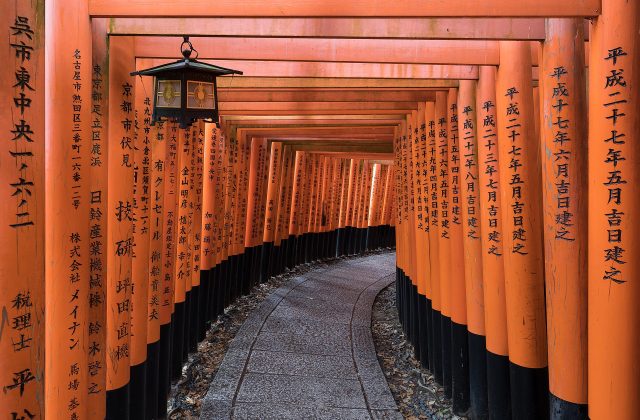
- Fushimi Inari at dawn. Thousands of vermilion torii gates climbing the mountain behind the shrine. It is open around the clock and free; at seven in the morning you will have long stretches of it alone, and by ten you will not.
- Kiyomizu-dera and the approach through Higashiyama. The wooden stage over the hillside, reached through the preserved lanes of Sannenzaka and Ninenzaka. Again, early.
- Ryoan-ji and Kinkaku-ji. The most famous dry rock garden and the golden pavilion, both in the northwest and usually combined.
- Nanzen-ji and the Philosopher's Path. A temple complex with a brick aqueduct running through it, and a canal-side walk north to Ginkaku-ji, best in cherry blossom or autumn colour.
- Arashiyama. The bamboo grove, the Togetsukyo bridge, and Tenryu-ji's garden, which is the reason to go, and which most people walk straight past on the way to the bamboo.
- Nishiki Market. Five covered blocks of food stalls and knife shops in the centre, and the best place to eat without a reservation.
- Gion in the early evening. Wooden machiya townhouses, teahouses, and Hanamikoji street. Photography of geiko and maiko in the private lanes is restricted and fines apply — watch from the public streets and do not follow anyone.
Map
Map data © OpenStreetMap contributors
Best Time to Visit
Late March to mid-April for cherry blossom and mid-November to early December for autumn colour are the two spectacular windows, and also the most crowded and expensive weeks of the year in Kyoto specifically. Book months ahead if you want them.
May and early June, and late September to October, give good weather without the peak. The rainy season runs roughly from early June into mid-July, which is when the moss gardens are at their best.
Summer in the basin is genuinely oppressive — the surrounding mountains trap heat and humidity — though the Gion Matsuri in July is one of Japan's great festivals. Winter is cold, quiet and cheap, and snow on a temple roof is worth the discomfort.
Where to Stay
Downtown, around Karasuma and Shijo, is the most practical base: both subway lines, buses in every direction, restaurants and Nishiki Market on the doorstep.
Near Kyoto Station is convenient for arriving, leaving and day trips, with the widest hotel choice and the least atmosphere.
Higashiyama and Gion put you among the temples and the traditional streets, at a price, with early mornings as the reward.
Arashiyama is beautiful and remote from the rest of the city.
Accommodation types worth considering: a ryokan with tatami, futon and kaiseki dinner, which is an experience rather than a room; a machiya, a restored wooden townhouse; and business hotels, which are small, clean and inexpensive.
Neighborhoods
Higashiyama: the eastern hills: Kiyomizu-dera, Kodai-ji, Chion-in, and the preserved lanes between them.
Gion: the entertainment district of teahouses and machiya, with Pontocho's narrow alley of restaurants nearby along the river.
Downtown (Kawaramachi, Karasuma, Shijo): shopping arcades, Nishiki Market, restaurants and nightlife.
Northwest: Kinkaku-ji, Ryoan-ji and Ninna-ji, on the bus routes toward the hills.
Arashiyama and Sagano: bamboo, temples, the monkey park and the river, on the western edge.
Fushimi: the Inari shrine, and a sake-brewing district along the canals south of it.
Northern Higashiyama: Ginkaku-ji, the Philosopher's Path, Nanzen-ji and Heian Shrine.
Transportation & Airports
Kyoto's public transport is weaker than Tokyo's. Two subway lines cross the city, and buses fill in everything else, which means the bus network carries most visitors, and in peak season it is slow and crowded.
Use a rechargeable IC card (ICOCA, Suica, PASMO and others are interoperable) on buses, subway and trains. Board city buses at the rear and pay on leaving at the front.
Cycling is the best way to see Kyoto. The city is flat, compact and on a grid, and a bicycle turns a slow bus journey into fifteen easy minutes. Rental is widespread; use designated parking, as bikes left on the street are impounded.
Private railways reach the edges: the Keihan line along the river, the Hankyu line to Arashiyama, and the JR line to Fushimi Inari and Nara. Kyoto Station is on the Shinkansen, putting Tokyo about two and a quarter hours away.
Food
Kyoto's cuisine grew out of the temples and the imperial court, and it is subtler and more vegetable-focused than the rest of Japan. Kaiseki, the multi-course seasonal meal, was formalised here, as was shojin ryori, the Buddhist vegetarian temple cooking still served at some temples by reservation.
Local specialities: yudofu, simmered tofu, particularly around Nanzen-ji; yuba, the tofu skin; Kyoto pickles (tsukemono), sold by the shop-full; matcha from Uji just south of the city; and obanzai, the everyday home-style small dishes.
Practical points: set lunches at serious restaurants cost a fraction of their dinner price, Nishiki Market is the easy no-reservation option, and the best kaiseki places book out well in advance and sometimes require an introduction. Many small restaurants are cash-only.
Day Trips
Nara: the capital before Kyoto: Todai-ji's great bronze Buddha, Kasuga Taisha's lanterns and a deer park, about forty-five minutes by train. The easiest and best day trip.
Uji: matcha and Byodo-in, the phoenix hall that appears on the ten-yen coin, twenty minutes south.
Osaka: fifteen minutes by Shinkansen or half an hour by local train, and a complete change of register: street food, neon and a much louder city.
Himeji: the finest surviving Japanese castle, a UNESCO World Heritage site, about an hour west.
Kurama and Kibune: a mountain temple, a hot spring and a hike between them, forty minutes north on the Eizan line.
Budget
Kyoto is moderately priced by Japanese standards, with accommodation the main variable — rates in blossom and autumn season can multiply several times over.
Temple admissions are individually small but add up quickly across a day of four or five; choosing fewer and spending longer at each is both cheaper and better.
Value: set lunches, Nishiki Market, convenience store breakfasts, and the many shrines that charge nothing at all — Fushimi Inari and Yasaka among them. A bicycle rental for the day costs less than a handful of bus rides and saves hours.
A ryokan night with kaiseki dinner and breakfast is expensive but is a meal and an experience as well as a room, which changes the arithmetic.
Travel Tips
Start at dawn. This matters more in Kyoto than almost anywhere. Fushimi Inari, Kiyomizu-dera and the bamboo grove are transformed before eight and unrecognisable after ten.
Respect the photography rules in Gion. Some private lanes prohibit photography entirely with posted fines, and following or stopping geiko and maiko is harassment, not a photo opportunity.
Temple etiquette: shoes off where indicated, no photography inside many halls, quiet in the gardens. Some temples close their gardens in winter or for ceremonies.
Rent a bicycle rather than relying on the buses, especially in peak season.
Book kaiseki and popular ryokan well ahead, and blossom or autumn accommodation months ahead.
Carry cash. Temple admissions, small restaurants and market stalls frequently do not take cards.
Other Cities in Japan

Frequently Asked Questions
How many days do I need in Kyoto
Three full days covers the eastern hills, the northwest temples and Arashiyama at a brisk pace. Four or five is much better, allowing a day trip to Nara and time to sit in a garden rather than walk past it.
When is cherry blossom season in Kyoto
Typically late March into mid-April, but it shifts by a week or more each year with the weather and full bloom lasts only days. Follow the seasonal forecasts published beforehand rather than booking on an assumed date.
How do I avoid the crowds
Timing more than location. Be at the famous sites by seven or eight in the morning, and visit the less-known temples — Tofuku-ji, Shoren-in, Daitoku-ji's subtemples — during the middle of the day.
Can I photograph geiko and maiko in Gion
Not in the private lanes, where photography is prohibited and fines are posted, and never by following or blocking someone. They are working professionals on their way to appointments. Observe from public streets.
Is a rail pass useful here
Not for Kyoto itself, which runs on subway, buses and private railways that most passes do not cover. A national pass only makes sense if your wider itinerary involves long Shinkansen legs.