
🇨🇷 Costa Rica
Rainforest, volcanoes, and beaches on two coasts.
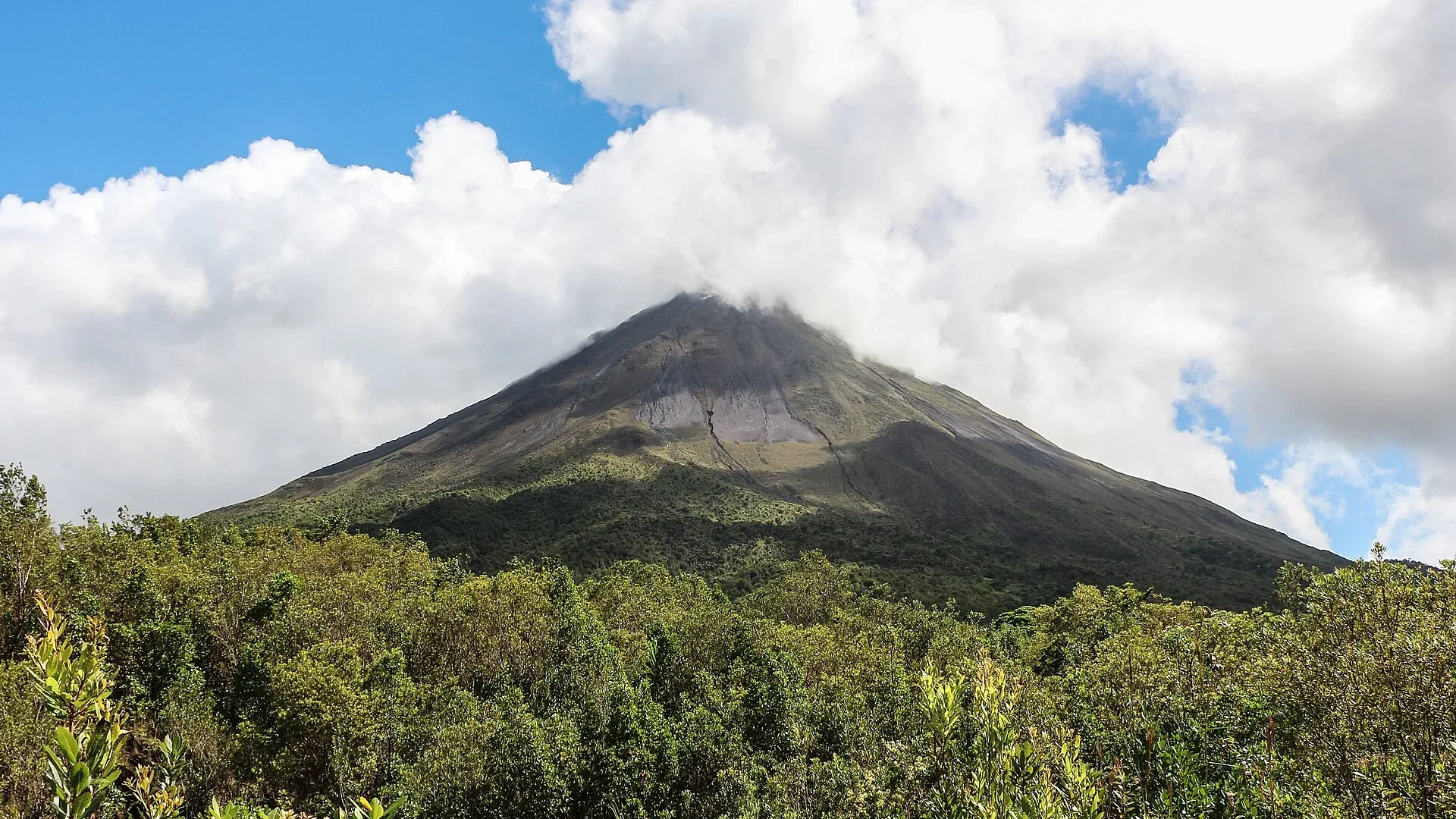
Costa Rica occupies a narrow isthmus between two oceans, and that geography is the whole point: you can be in Caribbean lowland rainforest in the morning and on a Pacific surf beach the same evening, with a volcano in between. The country holds an outsized share of the world’s biodiversity on a fraction of a per cent of its land area.
It is also the most developed ecotourism destination in Central America, which cuts both ways. The infrastructure is good and the prices are the highest in the region.
Best Time to Visit
Mid-December to April is the dry season and the peak: reliable sun, easier roads, and the highest prices. Christmas and Easter weeks book out months ahead.
May to mid-November is the green season. Rain usually comes as heavy afternoon downpours rather than all-day grey, the landscape is at its most spectacular, and prices drop substantially. September and October are the wettest on the Pacific side, and, unusually, the driest and best months on the Caribbean coast, which runs on its own calendar.
Wildlife has its own timings: turtle nesting at Tortuguero peaks roughly July to October, and humpback whale seasons on the Pacific fall broadly around December to March and July to October.
Weather & Climate
Costa Rica is tropical, but altitude does more than latitude here. The Central Valley around San José sits above 1,000 metres and stays temperate year-round, which is why most of the population lives there. The coasts are hot and humid at sea level.
The mountain spine splits the weather in two. The Pacific side has a clear dry and wet season; the Caribbean side is wet most of the year with a drier window around September and October. Cloud forest at Monteverde is cool, windy and damp even in the dry season. Visitors regularly arrive underdressed for it.
Map
Map data © OpenStreetMap contributors
Top Cities
Entry & Visa Guidance
Many nationalities visit without a visa for tourism. UK Foreign Office guidance states that visitors can enter under a tourist visa waiver for up to 180 days, and that the passport needs to be valid for at least one day beyond the planned departure date. An unusually relaxed rule by international standards.
There is a departure tax of 29 US dollars when leaving by air, which most airlines now include in the ticket price; check your fare breakdown rather than assuming either way.
Proof of yellow fever vaccination is required if you are arriving from a country listed as a transmission risk. Confirm your own nationality's position with the Costa Rican immigration authority before booking, as waivers differ.
Getting There & Around
Distances look short and take much longer than the map suggests. Mountain roads, single carriageways and unpaved final stretches mean a 150-kilometre transfer can be a four-hour drive.
A 4x4 is genuinely useful rather than a luxury for Monteverde, the Osa Peninsula, Nicoya's back roads and the Caribbean south. Several lodges are reached by track and some river crossings are unbridged. Ask your accommodation what the access road actually requires.
Public buses are cheap, comprehensive and slow. Tourist shuttles connecting the main destinations cost more and save hours. Domestic flights on small aircraft link San José with Quepos, Drake Bay, Tortuguero and the Osa, and are the sensible choice for the far south.
Tortuguero has no road access at all: it is reached by boat, or by plane.
Approximate Travel Budget
Costa Rica is the most expensive country in Central America and comparable to southern Europe for accommodation and food. Ecolodges, guided tours and national park fees are the main costs, and park entry is charged per person per day with a higher rate for non-residents.
What keeps costs down: sodas, small family-run restaurants serving a casado set plate, are very cheap and good; public buses instead of shuttles; and travelling in the green season, when lodge rates fall sharply.
Budget for guides at least once. In dense rainforest, a guide with a spotting scope is the difference between seeing a handful of birds and seeing the forest, and it is the best money most visitors spend here.
Local Customs & Culture
Costa Ricans call themselves ticos and use pura vida constantly: as a greeting, a thank-you, an answer to how are you, and a general philosophy. Using it back is welcomed rather than corny.
The social style is warm, indirect and conflict-avoidant. Direct complaints and raised voices land badly; a polite, patient approach gets much further. Punctuality is loose socially and firm for tours and transfers.
Costa Rica abolished its army in 1949 and is proud of it, along with its conservation record, around a quarter of the national territory is protected. Both come up in conversation and are genuine sources of national pride rather than tourist-brochure lines.
Tipping: a service charge is usually already added to restaurant bills. Extra is optional.
Food
Costa Rican cooking is mild, fresh and built around rice and beans. Gallo pinto: rice and beans cooked together, with egg, plantain and sour cream, is breakfast. The casado is the everyday lunch: rice, beans, salad, plantain and a protein, on one plate at a fixed price.
Other things worth finding: ceviche on both coasts, olla de carne beef stew, chifrijo as a bar snack, and Caribbean cooking in Puerto Viejo and Limón, rice cooked in coconut milk, rondón stew and jerk seasoning, a genuinely different cuisine within the same country.
Coffee is a serious agricultural product here and the Central Valley plantations offer tours. Fresh fruit juices, called naturales, are everywhere and are ordered either with water or with milk.
Safety & Travel Advice
Costa Rica is one of the safer countries in the region, with tourism-related crime mainly opportunistic theft. The recurring pattern is break-ins to parked hire cars at trailheads and beaches, and bags taken from beaches while people swim. Leave nothing visible in a vehicle, ever.
The bigger risks are natural. Rip currents cause most visitor deaths here; many beaches have no lifeguards and few warning signs, so ask locally before swimming. Riptides are strongest on the Pacific.
The country is seismically and volcanically active, with several volcanoes monitored and occasionally closed to visitors. Dengue is present in lowland areas; use repellent. Tap water is generally safe in most of the country but check locally in remote areas.
Useful Phrases
Spanish is the language; English is widely spoken in tourism areas and on the Caribbean coast, where an English-based creole is also spoken.
Pura vida - pure life; hello, thanks, all good, you're welcome. The national phrase.
Mucho gusto - the usual reply to nice to meet you, and also used for you're welcome.
Con mucho gusto - with much pleasure, the local alternative to de nada.
Tico / tica - a Costa Rican.
Casado - the set lunch plate.
Soda - a small family restaurant, not a fizzy drink.
Que tuanis - how cool (informal).
Donde esta el bano - where is the toilet.
Official Sources
Visa, entry, and safety information changes. Always verify with the official sources below before you travel.
Plan your trip to Costa Rica
Free tools for flight times, time differences, budget, money and plugs.
- Flight Duration CalculatorWork out real flight time across time zones.
- Time Zone ConverterFind the time in another city instantly.
- Trip Budget CalculatorEstimate your total trip cost, item by item.
- Currency ConverterConvert prices between currencies at indicative rates.
- Travel Plug & Voltage CheckerCheck if you need a plug adapter or voltage converter.
- Jet Lag CalculatorEstimate how many days you need to beat jet lag.