Dublin
Overview
Dublin sits where the River Liffey meets the Irish Sea, and the river still divides how the city is read: the south side holds Trinity College, the Georgian squares, the castle and the main museums; the north side has O'Connell Street, the Hugh Lane gallery, the writers' houses and a plainer, less polished feel.
It is a genuinely small capital. Most of what a visitor wants is inside a couple of square kilometres, and the useful skill is not transport planning but knowing which streets to turn down. The city rewards walking, and the coast is twenty minutes away by suburban train in either direction.
Why Visit
Dublin carries an unusual density of literary history, from Trinity's Long Room and the Book of Kells to the Museum of Literature and the streets Joyce mapped in Ulysses, and it is a city that still talks about its writers in the present tense.
It is also the most sociable capital in Northern Europe. The pub here is not a night out so much as a public room, and an evening of conversation and live music is the thing most visitors remember.
Best Things to Do
- Trinity College and the Book of Kells. The ninth-century illuminated gospel book, and the Long Room library above it. Tickets are timed and the early slots are much calmer.
- The National Museum of Ireland, Archaeology. Kildare Street, free entry, and home to the bog bodies and the Iron Age and early medieval gold.
- Kilmainham Gaol. The prison where the leaders of the 1916 Rising were held and executed, and the single best place to understand modern Irish history. Booking ahead is essential.
- The Georgian squares. Merrion Square and Fitzwilliam Square, with their doors and fanlights, and the National Gallery on the edge of the first.
- St Patrick's and Christ Church. Two medieval cathedrals a few minutes apart, unusual for a city this size.
- Phoenix Park. One of the largest enclosed city parks in Europe, with a resident deer herd, the presidential residence and Dublin Zoo.
- The coastal DART. The suburban line runs along the bay to Howth in the north and Dalkey and Bray in the south, both easy half-days.
Map
Map data © OpenStreetMap contributors
Best Time to Visit
May to September gives the longest days, and in midsummer it stays light late into the evening. It is also the busiest and most expensive stretch.
April and October are good compromises: fewer people, still workable daylight, and lower accommodation prices.
Rain is possible in any month and usually arrives in short bursts rather than all day, so the practical advice is a jacket rather than a season. St Patrick's Day in mid-March fills the city; book far ahead or avoid it deliberately.
Where to Stay
South of the Liffey, around Trinity, Grafton Street and Merrion Square, is the most convenient and the most expensive base, with everything walkable.
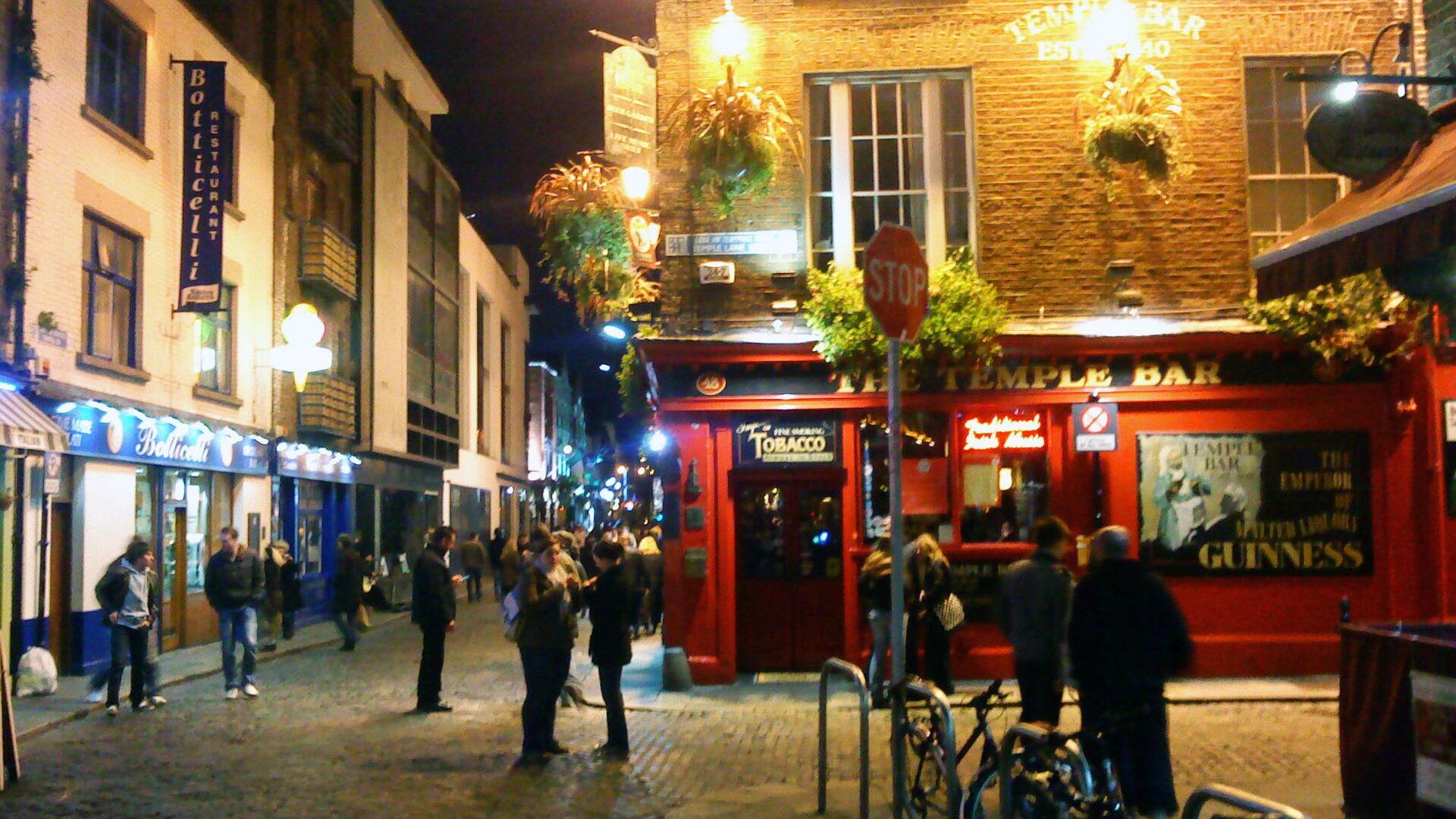
Temple Bar is central and very loud at night; it suits a short stay if noise is not an issue and suits almost nobody otherwise.
Portobello and Rathmines, south of the canal, are residential, full of cafés and a twenty-minute walk from the centre. Smithfield and Stoneybatter, north-west, are the equivalent on the other side of the river and generally better value.
Neighborhoods
Trinity and Grafton Street: the commercial and institutional heart, with the college, the shopping street and St Stephen's Green.
Temple Bar: cobbled riverside lanes between the two bridges, galleries and food market by day, the loudest part of the city by night.
The Georgian quarter: Merrion and Fitzwilliam squares, the national museums and the government buildings.
The Liberties: the oldest part of the city, around St Patrick's, with the distilleries and the Guinness brewery.
Stoneybatter and Smithfield: north of the river, terraced streets, independent coffee and the old distillery district.
Portobello: along the Grand Canal, small restaurants and a strong neighbourhood feel.
Transportation & Airports
The centre is walkable end to end. For everything else, the DART suburban rail line runs along the coast and is the most useful service for visitors, and the Luas tram has two lines crossing the city.
Buses cover the rest of the network. A rechargeable Leap card works across DART, Luas and bus and is cheaper than paying per journey.
The airport is north of the city and connected by frequent express coaches; there is no rail link. Heuston and Connolly stations serve the rest of Ireland, and the ferry port is at Dublin Port and Dún Laoghaire.
Food
Dublin's food has changed a great deal in twenty years, and the interesting eating is now in the neighbourhoods rather than the centre. Seafood is the strength, with oysters, mussels and smoked fish from the surrounding coast.
Traditional dishes still hold: coddle, a Dublin sausage and bacon stew, Irish stew, brown soda bread and a full Irish breakfast.
The pub is the other half of the picture. A traditional session, where musicians play informally around a table rather than on a stage, happens in a number of pubs on set nights and is free to sit in on.
Day Trips
Howth, at the northern end of the DART line, is a fishing harbour with a cliff path around the head, and the easiest half-day from the city.
Dalkey and Killiney, at the southern end, give a coastal walk, a small castle and a view over the bay from Killiney Hill.
Glendalough, in the Wicklow Mountains, has an early medieval monastic site between two lakes and walking trails of every length.
Brú na Bóinne, north of the city, holds the Neolithic passage tombs at Newgrange and Knowth, a UNESCO World Heritage site older than Stonehenge. Access is by timed tour from the visitor centre.
Budget
Dublin is expensive for its size, and accommodation is the main reason: hotel supply is tight and prices move sharply with events and season. Booking early matters more here than in most European capitals.
Against that, several of the best things are free: the National Museum and National Gallery, Phoenix Park, the Georgian streets and the cathedral exteriors. Eating in neighbourhood restaurants rather than the centre makes a noticeable difference, and a Leap card cuts transport costs.
Travel Tips
Book Kilmainham Gaol and the Book of Kells in advance. Both use timed entry and both sell out, particularly in summer.
Get a Leap card. It works on DART, Luas and buses and is cheaper than single fares.
Temple Bar is for one drink, not an evening. The pubs Dubliners use are a few streets away in any direction and cost less.
Take the DART at least once. The coastal stretch is one of the best things about the city and costs the price of a bus ticket.
Rain is intermittent. A light waterproof is more useful than an umbrella, which the wind off the bay tends to defeat.
Frequently Asked Questions
How many days do I need in Dublin
Two full days cover the main museums, Trinity, the Georgian quarter and an evening in the pubs. Three lets you add Kilmainham Gaol and a coastal or Wicklow day trip.
Is Dublin walkable
Yes. The centre is small and most of the main sights are within thirty minutes on foot of each other.
Do I need a car
Not for the city, and it is a liability in the centre. The DART and day-trip coaches cover most of what visitors want; a car only helps for touring further into Wicklow or the west.
When is the busiest time
Mid-March around St Patrick's Day, and the summer months. Both fill accommodation well in advance.
Plan your trip to Dublin
Free tools for flight times, time differences, budget, money and plugs.
- Flight Duration CalculatorWork out real flight time across time zones.
- Time Zone ConverterFind the time in another city instantly.
- Trip Budget CalculatorEstimate your total trip cost, item by item.
- Currency ConverterConvert prices between currencies at indicative rates.
- Travel Plug & Voltage CheckerCheck if you need a plug adapter or voltage converter.
- Jet Lag CalculatorEstimate how many days you need to beat jet lag.