
San José
Overview
San José sits in the Central Valley at around 1,170 metres, ringed by volcanoes and coffee slopes. It is a working Central American capital: busy, traffic-heavy and short on colonial architecture, most of which was lost to earthquakes and redevelopment.
What it does have is concentrated in a small central area (the National Theatre, the gold and jade museums, the central market) and a set of residential districts to the west and east, Escalante and Barrio Amón among them, where the city is at its most pleasant.
Most visitors treat San José as an arrival and departure point, which is reasonable, but a day here is better spent than skipped.
Why Visit
The Pre-Columbian Gold Museum and the Jade Museum together hold the best account of Costa Rica before the Spanish, including the stone spheres of the Diquís, which are a UNESCO World Heritage site.
The city is also the hub from which everything else is reached: the Pacific and Caribbean coasts, the cloud forests, and the volcanoes of the Central Valley, all within a few hours.
Best Things to Do
- Teatro Nacional. A late nineteenth-century opera house built with coffee money, and the most beautiful building in the city. Guided tours run during the day.
- Museo del Oro Precolombino. Underground beneath the Plaza de la Cultura, with thousands of gold objects and a clear account of the societies that made them.
- Museo del Jade. A modern building with the largest collection of pre-Columbian jade in the Americas, well laid out across several floors.
- Mercado Central. A covered market from 1880, with sodas (small canteens), spice stalls and coffee sellers.
- Barrio Amón. Early twentieth-century coffee-baron houses north of the centre, some now hotels and cafés.
- Barrio Escalante. The restaurant and craft-beer district, and where the city eats out.
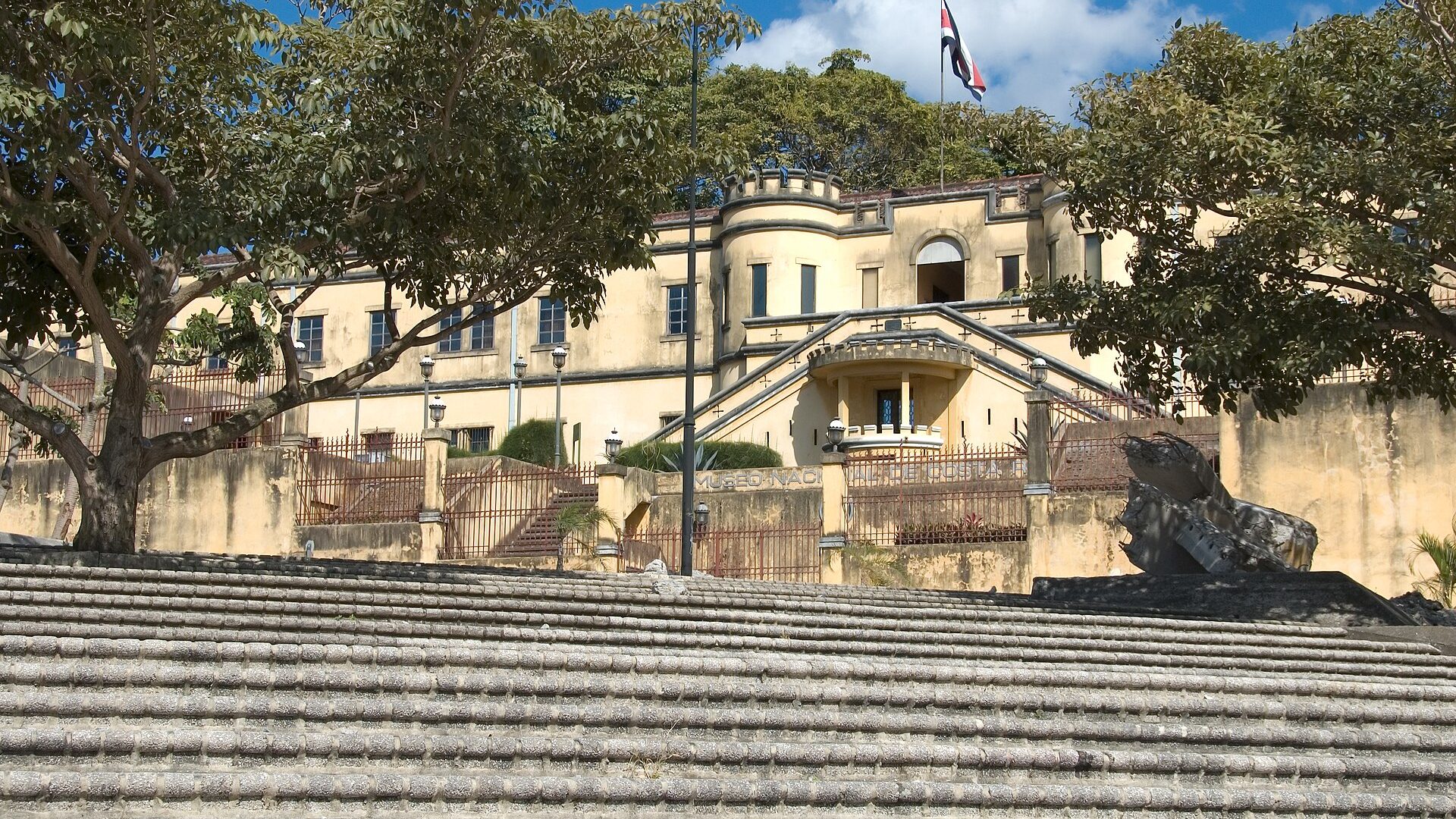
- Museo Nacional. In a former barracks with bullet holes still in the walls, covering the country's history and the 1948 abolition of its army.
Map
Map data © OpenStreetMap contributors
Best Time to Visit
December to April is the dry season across most of the country and the most reliable time to travel, with San José warm by day and cool at night.
May to November is the green season. Mornings are usually clear and rain arrives in the afternoon; September and October are the wettest on the Pacific side, though the Caribbean coast follows a different pattern.
The Central Valley's altitude keeps San José mild year-round, locals call it the land of eternal spring, so the difference between seasons is rain rather than temperature.
Where to Stay
Barrio Escalante is the best choice for a night or two: safe, walkable, with the city's best restaurants and a short ride to the centre.
Barrio Amón has historic houses converted to small hotels, close to the museums.
Downtown is convenient for the museums and bus terminals but is not pleasant after dark.
Alajuela, near the airport, is the practical choice for an early flight and is a calmer small city in its own right. Escazú and Santa Ana, west, are affluent suburbs with international hotels.
Neighborhoods
Centro: the theatre, the museums, the Plaza de la Cultura, the central market and the pedestrianised Avenida Central.
Barrio Amón: historic coffee-era houses, small hotels and galleries.
Barrio Escalante: restaurants, bars and cafés along Calle 33, the city's dining quarter.
La Sabana: the large western park on the old airport site, with the art museum at its entrance.
Escazú and Santa Ana: affluent western suburbs with malls and international restaurants.
Alajuela and Heredia: separate Central Valley towns, both easy bases near the airport and the coffee slopes.
Transportation & Airports
The central grid is walkable by day; avenues run east–west and streets north–south, numbered odd and even on either side of the centre.
Ride-hailing apps and official red taxis with meters (marías) are both used; agree that the meter will be used before setting off.
Public buses are cheap and reach the whole country, but each destination often has its own small terminal, which takes learning. Shared shuttle services aimed at visitors are more expensive and much simpler.
Juan Santamaría Airport (SJO) is near Alajuela, about thirty to sixty minutes from the centre depending on traffic.
Food
The casado is the everyday meal: rice, black beans, plantain, salad and a protein, served at a soda, a small family-run canteen, for very little.
Gallo pinto, rice and beans cooked together, is breakfast, usually with eggs and a sauce specific to the country.
Olla de carne, a beef and root vegetable stew, and chifrijo, a bar snack of rice, beans, pork and pico de gallo, are both worth trying.
Costa Rican coffee is the other reason to eat here; the surrounding valley grows it and the city has a strong specialist café scene.
Day Trips
Poás Volcano National Park, about ninety minutes north, has one of the largest active craters in the world. Access depends on volcanic and gas conditions and entry is by advance reservation with timed slots.
Irazú Volcano, east, is the highest in the country and reachable in a morning; the crater lake colour varies.
Cartago and the Orosi Valley combine the basilica, coffee country and the ruins at Ujarrás.
Coffee plantation tours in the surrounding hills are a short drive and explain the crop that built the city.
La Paz Waterfall Gardens and the cloud forest at Monteverde are a long day and a two-day trip respectively.
Budget
Costa Rica is more expensive than its Central American neighbours. San José itself is the cheapest part of a trip, particularly for food: a casado at a soda is excellent value.
Museums are modestly priced. The real costs are national park entries, shuttles and domestic flights, and accommodation at the coasts and in the cloud forest. Renting a car is common and adds up quickly, though it is the most flexible way to see the country.
Travel Tips
Book Poás in advance. Entry is by timed reservation and the park closes at short notice when gas levels rise.
Do not walk in the centre after dark. Use a taxi or an app; the city empties and petty crime rises.
Addresses are given by landmark, not street number, so many metres north or east of a known building. Have your destination written down.
Rain comes in the afternoon in the green season; plan outdoor activity for the morning.
Allow real time for airport transfers. Traffic in the Central Valley is unpredictable.
Frequently Asked Questions
How many days do I need in San José
One full day covers the theatre, the gold and jade museums and the central market. Most visitors use it as a transit point with a night either side.
Is San José worth visiting at all
For its museums and food, yes, for a day. It is not the reason to come to Costa Rica, but it is the best place to understand the country before heading out.
Do I need a car
Not in the city, where it is a liability. For the rest of the country a car or shared shuttles are needed, as public buses are slow and terminal-by-terminal.
Is San José safe
Daytime in the central and western districts is generally fine with normal precautions. Avoid walking downtown at night and check current official advice before travelling.
Plan your trip to San José
Free tools for flight times, time differences, budget, money and plugs.
- Flight Duration CalculatorWork out real flight time across time zones.
- Time Zone ConverterFind the time in another city instantly.
- Trip Budget CalculatorEstimate your total trip cost, item by item.
- Currency ConverterConvert prices between currencies at indicative rates.
- Travel Plug & Voltage CheckerCheck if you need a plug adapter or voltage converter.
- Jet Lag CalculatorEstimate how many days you need to beat jet lag.