Siem Reap
Overview
Few towns exist so completely for one neighbour. Just north of Siem Reap lies the Angkor Archaeological Park, a UNESCO World Heritage site since 1992, where more than fifty temples are covered by the main Angkor Pass, from the five lotus towers of Angkor Wat to the root-strangled corridors of Ta Prohm.
The town itself is easy-going and compact, strung along the Siem Reap River with shady lanes, the Old Market and a busy evening strip around Pub Street. It is the natural base for exploring northern Cambodia, including the great lake of the Tonle Sap and outlying temples such as Koh Ker, itself a World Heritage site since 2023.
Why Visit
Angkor is one of the world's great ensembles of religious architecture, and seeing it at dawn, with mist lifting off the moats, stays with most people for life. Beyond the monuments, Siem Reap offers village cycling, floating communities, Khmer cooking classes and a good choice of hotels at every budget, making it as comfortable for families as for backpackers.
Best Things to Do
- Angkor Wat at sunrise. Arrive before dawn to watch the towers emerge behind the reflecting pools, then explore the galleries of bas-reliefs once the crowds move on to breakfast.
- Angkor Thom and the Bayon. Enter the walled royal city through its monumental gates and wander among the serene stone faces of the Bayon, then walk the Terrace of the Elephants.
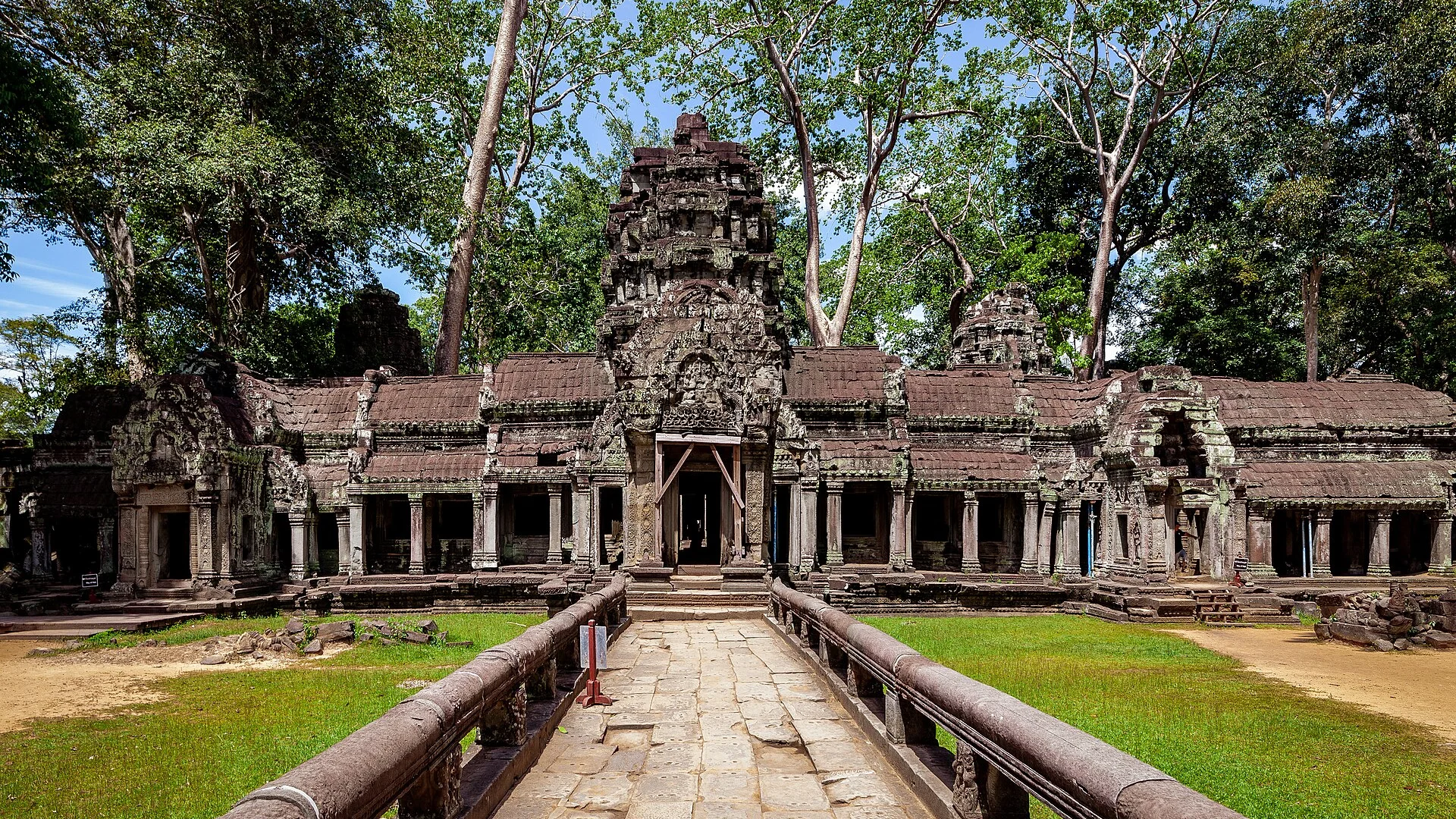
- Ta Prohm. Silk-cotton and strangler fig roots grip this partially restored monastery, the most atmospheric of the main temples.
- Banteay Srei. A small tenth-century temple in pinkish sandstone, famous for the finest carving at Angkor; combine it with Kbal Spean's riverbed carvings.
- Tonle Sap villages. Visit stilted and floating communities on the edge of Southeast Asia's largest lake; choose a responsible operator and check water levels, as access varies with the season.
- Cycle the countryside. Rent a bicycle or join a guided ride along paddy-field lanes and village temples, where Siem Reap feels a world away from the tour buses.
- Angkor National Museum. A useful primer before the temples, explaining Khmer history, religion and iconography.
- Old Market and night markets. Browse kramas (checked scarves), silverwork and pepper, then sit down for street food along the river.
Map
Map data © OpenStreetMap contributors
Best Time to Visit
November to February is the most comfortable time, with dry skies and cooler mornings, but also the busiest. March to May is very hot, so plan temple visits for dawn and late afternoon. The rainy season (roughly May/June to October) brings short downpours, lush jungle, fuller moats for reflections and fewer visitors.
The Angkor complex opens early for sunrise; Angkor Enterprise lists entry from 5:00 and closing at 18:30 for the main park (checked October 2026).
Where to Stay
Stay near the river and the Old Market to walk to restaurants and nightlife. For quiet, look at the leafy lanes of Wat Bo on the east bank or the boutique resorts along the road north towards Angkor, which shorten early-morning trips to the temples.
Budget guesthouses cluster around the centre, while many mid-range and luxury hotels come with pools, welcome after a hot day among the ruins.
Neighborhoods
Old Market and Pub Street: the compact centre, with markets, bars, massage parlours and plenty of restaurants; lively until late.
Wat Bo: on the east bank around one of the town's oldest pagodas, quieter, with boutique hotels and local cafés.
Riverside: shady paths along the Siem Reap River, pleasant for evening walks and easy tuk-tuk access to everything.
Road to Angkor: larger resorts and the museum, closest to the temple ticket office and park entrance.
Transportation & Airports
Flights land at Siem Reap–Angkor International Airport (SAI), about an hour's drive from town; arrange a hotel transfer, take a taxi or use the scheduled airport shuttle bus. Air travellers must complete the free Cambodia e-Arrival card before landing.
Buses and minivans connect Siem Reap with Phnom Penh and Battambang. Around town and the temples, hire a tuk-tuk with driver by the day, use ride-hailing apps, or cycle the flat roads of the park. Licensed guides can be booked through hotels or official channels. See our Cambodia guide for visas and border information.
Food
Siem Reap is a fine place to learn Khmer flavours. Try fish amok, samlor korko (a hearty vegetable soup), num banh chok noodles at a morning market stall and grilled river fish with green mango salad.
Several social-enterprise restaurants train disadvantaged young people in hospitality, and cooking classes often begin with a market tour. Keep to bottled or filtered water and busy stalls with high turnover.
Day Trips
Beng Mealea: a vast, collapsed jungle temple well beyond the main park, best done as a half-day or longer trip, with its own ticket (US$10, checked October 2026). Koh Ker: the tenth-century capital with its seven-tiered pyramid, usually combined with Beng Mealea on a long day (US$15 ticket, checked October 2026). Kbal Spean (US$5, checked October 2026): a jungle walk to lingas carved into a riverbed.
Phnom Kulen, a sacred plateau with waterfalls, and Battambang, with colonial streets and the bamboo train, make good overnight extensions. Avoid travel within 20 km of the Thai border, which the UK government currently advises against.
Budget
Siem Reap suits every budget. Street food, guesthouses and shared tuk-tuks keep costs low; boutique hotels and fine Khmer restaurants offer luxury at prices well below many Asian capitals.
Plan for the Angkor Pass: US$37 for one day, US$62 for three days within a week, US$72 for seven days within a month (prices checked October 2026). Buy only from official Angkor Enterprise ticket counters or its official online channels. US dollars are used everywhere, with change in riel.
Travel Tips
Dress for the temples. Shoulders and knees must be covered at Angkor's sacred sites; a light scarf and long trousers or skirt solve it.
Pace yourself. A three-day pass lets you visit at the cooler ends of the day and rest at noon.
Stay on the path. The main temples are well trodden, but landmines remain a risk in some remote areas, so keep to established trails.
Carry small notes. Clean, small dollar bills make tuk-tuk and market payments easier.
Hydrate. Carry plenty of water and sun protection; there is little shade between some temples.
Other Cities in Cambodia
Frequently Asked Questions
How many days do I need in Siem Reap?
Three days is a good minimum: two for the main temples and one for outlying sites, the Tonle Sap or the countryside. Keen temple lovers can easily use a seven-day pass.
How much is the Angkor Pass?
US$37 for one day, US$62 for three days (used within seven days) and US$72 for seven days (used within thirty days), according to Angkor Enterprise (checked October 2026).
How do I get from the airport to Siem Reap?
The new Siem Reap–Angkor International Airport is about an hour from town. Options include hotel transfers, taxis and a scheduled shuttle bus.
Is Siem Reap safe?
Generally yes, with ordinary precautions against bag snatching and road risks. Check your government's advice, especially regarding the Thai border area.
Is there a dress code at Angkor?
Yes. Cover shoulders and knees at the temples, and behave quietly in active places of worship.
Plan your trip to Siem Reap
Free tools for flight times, time differences, budget, money and plugs.
- Flight Duration CalculatorWork out real flight time across time zones.
- Time Zone ConverterFind the time in another city instantly.
- Trip Budget CalculatorEstimate your total trip cost, item by item.
- Currency ConverterConvert prices between currencies at indicative rates.
- Travel Plug & Voltage CheckerCheck if you need a plug adapter or voltage converter.
- Jet Lag CalculatorEstimate how many days you need to beat jet lag.