🇸🇬 Singapore
A hyper-efficient city-state and Southeast Asia’s food capital.
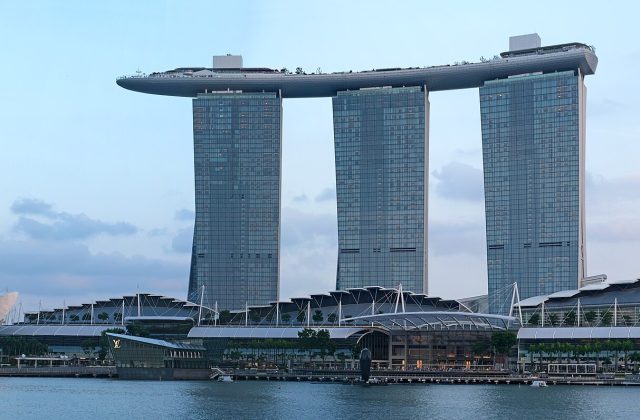
Singapore is a city, an island and a country at once: about 730 square kilometres at the tip of the Malay peninsula, with no hinterland and no countryside to speak of. Everything is within forty minutes of everything else, which makes it the easiest place in Asia to arrive first.
It is also a deliberate construction. The greenery, the public housing, the hawker centres and the transport network are all the product of policy, and understanding that explains why the city works the way it does, and why the rules are enforced the way they are.
Best Time to Visit
Singapore sits just north of the equator, so there is no real season: it is hot and humid every day of the year, with temperatures varying by only a few degrees between months.
February to April is marginally drier and is the nearest thing to a best time. The northeast monsoon, roughly November to January, brings the heaviest and most persistent rain; the southwest monsoon, June to September, brings shorter afternoon thunderstorms.
What actually shapes timing is the events calendar. Chinese New Year in January or February transforms Chinatown and closes many businesses for a few days; Ramadan and Hari Raya, Deepavali, the Mid-Autumn Festival and the Formula 1 night race in September all change prices and atmosphere significantly.
Haze from regional land fires has affected air quality in some years, generally between June and October. Readings are published officially.
Weather & Climate
Equatorial: consistently hot, consistently humid, with rain possible on any day and around two hundred millimetres or more falling in the wettest months. Afternoon thunderstorms are common and usually short.
The practical consequence is that outdoor sightseeing works best early and late, and that the city is designed around air conditioning: malls, MRT stations and underground walkways form a connected cool network that locals use to cross the centre without going outside.
There is no cool season to wait for, so pack for heat and carry a light layer for the fierce indoor air conditioning rather than for the weather.
Map
Map data © OpenStreetMap contributors
Top Cities
Entry & Visa Guidance
Many nationalities enter without a visa for tourism. UK Foreign Office guidance notes stays of typically 30 to 90 days granted at the discretion of the immigration officer, and requires the passport to be valid for at least six months beyond the arrival date.
All arrivals must complete an electronic SG Arrival Card within the three days before arriving, submitted online, including health declaration details. It is free through the official government channel.
Singapore's import rules are stricter than most visitors expect and are enforced. Official guidance lists prohibited items including vaporisers and e-cigarettes, chewing and injected tobacco products, chewing gum for sale, weapons and replica firearms. Bringing in a vape can result in confiscation and a fine. Controlled drugs carry the most severe penalties, up to and including the death penalty, and this is not theoretical.
Overstaying carries fines, imprisonment, caning and deportation depending on duration. Check the current rules for your nationality and any medication you carry with the Singapore authorities before travelling.
Getting There & Around
The MRT is fast, clean, cheap and reaches almost everywhere a visitor needs, including Changi Airport. Tap in and out with a contactless bank card or phone. There is no need for a separate travel card for a short trip.
Buses fill the gaps and are equally cheap. Taxis are metered and reasonably priced, and ride-hailing apps are widely used.
Changi is around twenty to thirty minutes from the centre by MRT and is itself worth arriving early for.
The city is walkable in sections but the heat limits it; plan routes that use the underground and mall networks between air-conditioned points. Cycling is possible on the extensive park connector network rather than on roads.
Eating and drinking on public transport is prohibited and fined, as is carrying durian.
Approximate Travel Budget
Singapore is expensive for accommodation and alcohol and remarkably cheap for food, which is the reverse of most expensive cities.
Hawker centres are the reason. These government-built food courts, recognised by UNESCO as intangible cultural heritage, serve excellent single-dish cooking at a fraction of restaurant prices, and they are where most Singaporeans actually eat. A hawker meal costs a small fraction of a mall restaurant.
Where money goes: hotels, particularly during the Formula 1 weekend and major conferences; alcohol, which carries heavy duty; and the ticketed attractions on Sentosa and at Marina Bay.
What is free: Gardens by the Bay's outdoor gardens and the Supertree light show, the Botanic Gardens (a UNESCO World Heritage site), the MacRitchie treetop walk, the neighbourhoods of Kampong Glam, Little India and Chinatown, and the whole Marina Bay waterfront.
Tipping is not customary; a service charge is usually added.
Local Customs & Culture
Singapore is multi-ethnic (Chinese, Malay, Indian and others) with four official languages and a calendar of public holidays drawn from several religions. That mix is the city's defining social fact and is treated with care; racial and religious harmony is a legal as well as social principle, and casual remarks on those subjects land badly.
At hawker centres, chope is the local practice of reserving a table by leaving a packet of tissues on it. It is respected absolutely, and taking such a seat is a genuine breach.
Remove shoes before entering a home, a mosque or a Hindu temple. Dress modestly at places of worship, shoulders and knees covered.
Queueing is orderly, punctuality is expected, and Singlish (the local English creole with Malay, Hokkien and Tamil borrowings) is the everyday register. Lah, can and shiok will all become clear within a day.
Food
Food is the reason many people come. The hawker centre is the institution: Chinese, Malay, Indian and Peranakan stalls side by side, each usually doing one dish for decades.
The dishes to find: Hainanese chicken rice, chilli crab, laksa, char kway teow, bak kut teh, roti prata, nasi lemak, and kaya toast with soft eggs and kopi for breakfast. Peranakan cooking, the Chinese-Malay fusion of the Straits, is distinctive to this region and worth seeking specifically.
Ordering at a hawker centre: find a seat first, order at each stall separately, pay there, and return the tray afterwards, which is now required and fined if ignored.
Coffee has its own vocabulary at the kopitiam: kopi is with condensed milk, kopi o is black with sugar, kopi c is with evaporated milk. Durian is banned on public transport for a reason that becomes obvious.
Safety & Travel Advice
Singapore is one of the safest cities in the world, with very low crime and streets that are comfortable at any hour. The risks here are legal and environmental rather than criminal.
The law is enforced consistently and visitors are not exempt. Fines apply to littering, jaywalking, eating on the MRT, smoking outside designated areas and importing prohibited items. Drug offences carry the most severe penalties in the world, including capital punishment, and this applies regardless of nationality or quantity in some cases.
Heat and humidity are the day-to-day hazard: heat exhaustion is common among visitors who try to walk a full itinerary in the afternoon. Drink constantly and use the indoor network.
Dengue is present and the authorities publish cluster information; use repellent. Tap water is safe to drink throughout the country.
Useful Phrases
English is an official language and the language of administration, so everything is accessible in English. Malay, Mandarin and Tamil are also official.
Singlish you will hear immediately:
Lah - a sentence-ending particle for emphasis; no translation.
Can / cannot - yes that works / no it doesn't, used as complete answers.
Shiok - delicious, excellent, deeply satisfying.
Chope - to reserve a seat, usually with a packet of tissues.
Makan - to eat (from Malay). Kopitiam - traditional coffee shop.
Alamak - expression of dismay.
Kiasu - afraid of missing out; a recognised local trait.
Terima kasih - thank you (Malay). Xie xie - thank you (Mandarin).
Official Sources
Visa, entry, and safety information changes. Always verify with the official sources below before you travel.
Plan your trip to Singapore
Free tools for flight times, time differences, budget, money and plugs.
- Flight Duration CalculatorWork out real flight time across time zones.
- Time Zone ConverterFind the time in another city instantly.
- Trip Budget CalculatorEstimate your total trip cost, item by item.
- Currency ConverterConvert prices between currencies at indicative rates.
- Travel Plug & Voltage CheckerCheck if you need a plug adapter or voltage converter.
- Jet Lag CalculatorEstimate how many days you need to beat jet lag.