Stockholm
Overview
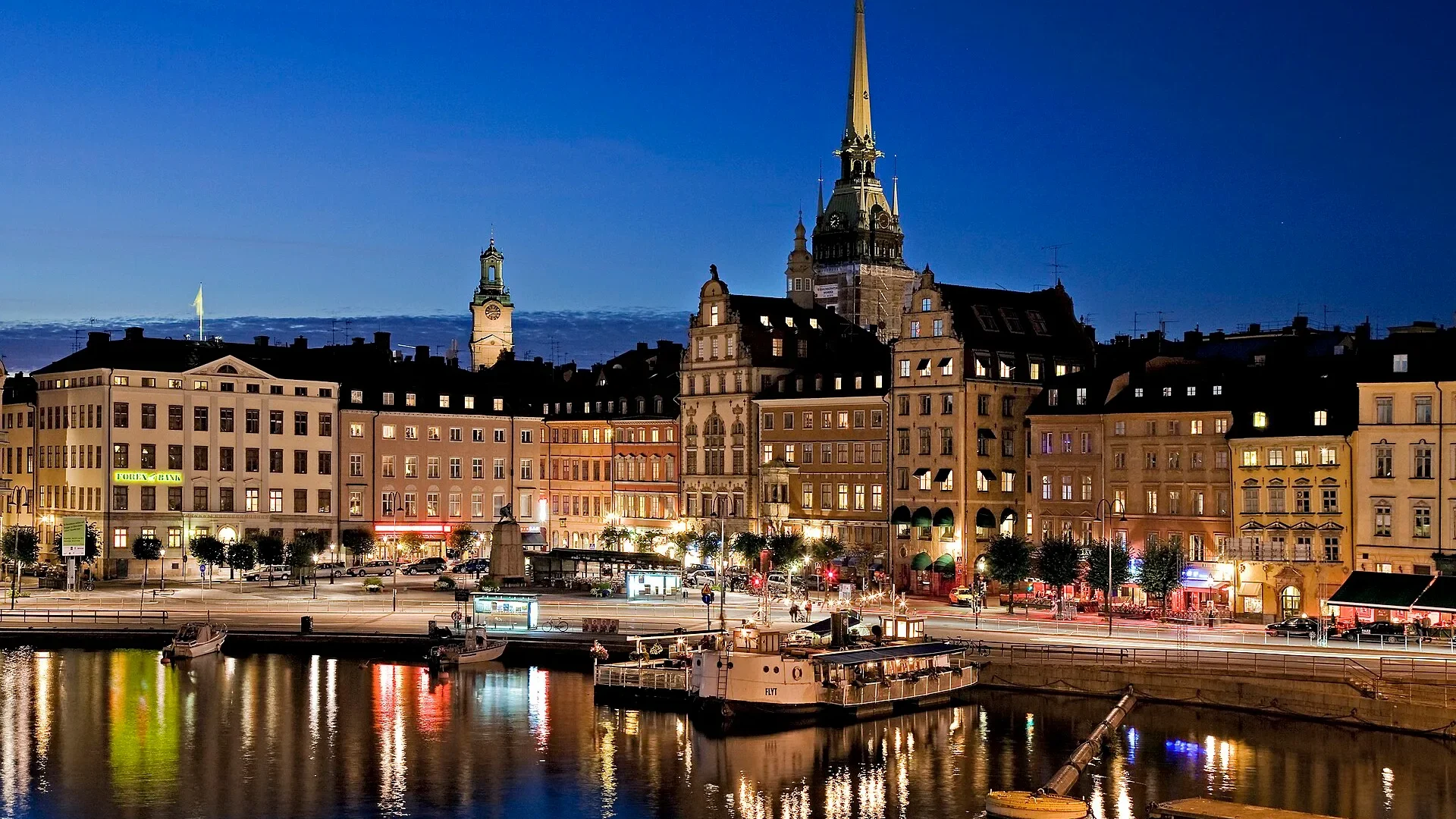
Stockholm sits at the point where a large inland lake drains into the Baltic, and the city has grown across the islands and channels that form there. Gamla Stan, the old town, occupies one of the central islands and keeps its medieval street plan; the nineteenth and twentieth-century city spreads north and south onto Norrmalm, Östermalm and Södermalm.
East of the centre the archipelago begins, tens of thousands of islands running out into the Baltic, reachable by scheduled boat from the middle of the city. That proximity is what distinguishes Stockholm from other Nordic capitals: the wild edge is not a day's drive away, it is a ferry from the quay.
Why Visit
Stockholm combines a well-preserved historic core with a design and food culture that has become one of the most confident in Europe, and it does so in a city that is unusually clean, orderly and easy to move around.
It also has two museums that justify a trip on their own: the Vasa, holding an intact seventeenth-century warship raised from the harbour, and Skansen, the world's first open-air museum.
Best Things to Do
- The Vasa Museum. A warship that sank on her maiden voyage in 1628 and was raised largely intact in 1961, now displayed almost whole in a purpose-built hall. There is nothing else like it.
- Gamla Stan. The old town island, with Stortorget square, the cathedral, the Royal Palace and lanes narrow enough to touch both walls.
- Skansen. An open-air museum on Djurgården, with historic buildings moved here from across Sweden and Nordic animals in large enclosures.
- Djurgården on foot. The green island holding Skansen, the Vasa, the Nordic Museum and long waterside paths.
- Södermalm viewpoints. The cliffs along Monteliusvägen and Fjällgatan look straight across the water to Gamla Stan and City Hall.
- The metro as a gallery. Many stations on the blue line are carved into bedrock and painted or sculpted, and a single ticket covers a self-guided tour.
- A boat into the archipelago. Scheduled ferries leave from the central quays; Vaxholm and Fjäderholmarna are the easiest short trips.
Map
Map data © OpenStreetMap contributors
Best Time to Visit
June to August is the obvious season: long days, very short nights at midsummer, outdoor swimming and the archipelago boats on full timetables.
May and September are quieter, still comfortable, and considerably cheaper. Autumn colour on Djurgården in late September is worth the trip by itself.
December has Christmas markets and long blue twilights, though daylight is down to a few hours. January to March can be genuinely cold, with ice in the channels, and is the cheapest time to come.
Where to Stay
Norrmalm, around the central station, is the practical base: transport, shops and a short walk to Gamla Stan.
Gamla Stan is atmospheric but small-roomed and busy by day; a night or two suits it better than a week.
Södermalm is where most repeat visitors stay: independent shops, cafés, viewpoints and a short metro ride or walk to the centre.
Östermalm is the upmarket residential district, calm and well placed for Djurgården.
Neighborhoods
Gamla Stan: the medieval island with the palace, cathedral and the narrowest lanes in the city.
Norrmalm: the modern centre, with the central station, shopping streets and the concert hall.
Östermalm: grand nineteenth-century apartment blocks, the market hall and the approach to Djurgården.
Södermalm: the large southern island, once working class, now the centre of independent retail, cafés and the best views back over the water.
Djurgården: the green island of museums and parkland, formerly royal hunting ground.
Kungsholmen: residential, with City Hall at its eastern tip and a swimmable waterfront path.
Transportation & Airports
The metro, buses, trams, commuter trains and several ferry routes run on one ticket system. A rechargeable travel card or the transport app covers all of them, and single tickets are valid for a period rather than a single ride.
Arlanda airport is connected by the fast Arlanda Express train and by cheaper buses and commuter trains. Stockholm Central handles domestic and international rail.
The city is very walkable between islands, and public ferries to Djurgården and the archipelago are part of the ordinary transport network rather than tourist services.
Food
The Swedish table runs on bread, fish and dairy. Smörgåsbord at its full scale is now mostly a Christmas tradition, but pickled herring, cured salmon and hard bread appear year-round.
Two everyday institutions matter more to a visitor. Fika is the coffee-and-pastry pause taken seriously enough to be a social obligation; the cinnamon bun is its standard companion. Dagens lunch is the weekday set lunch, served at a fixed price with bread, salad and coffee included, and is the cheapest good meal in the city.
The market halls at Östermalms Saluhall and Hötorgshallen are the best places to eat without booking.
Day Trips
The archipelago is the first choice. Vaxholm is the closest town of any size, Fjäderholmarna the shortest hop, and Sandhamn and Grinda give a fuller day on the water.
Drottningholm Palace, a UNESCO World Heritage site and the royal family's residence, is reachable by boat across Lake Mälaren in summer and by metro and bus year-round.
Uppsala, forty minutes by train, has a cathedral, a university founded in 1477 and the burial mounds at Gamla Uppsala. Birka, a Viking-age trading site on an island in the lake, is a summer boat trip and also UNESCO-listed.
Budget
Stockholm is expensive, though less so than its reputation suggests if you use the city the way residents do. The weekday set lunch, market halls and supermarket bakeries all cut food costs sharply, while dinner in a central restaurant does not.
Transport is good value on a multi-day card, and the public ferries are included. Several of the strongest experiences are free: the Södermalm viewpoints, Djurgården's paths, the metro art and swimming from the city's own waterfronts in summer.
Sweden is close to cashless; cards work everywhere and some places no longer take cash at all.
Travel Tips
Bring a card, not cash. Many museums, cafés and buses in Sweden are card-only.
Eat the set lunch. Between roughly 11:00 and 14:00 on weekdays, the same restaurants that are expensive at night serve a fixed-price meal.
Buy the transport card, not single tickets. It covers metro, bus, tram, commuter train and the inner-city ferries.
Book the Vasa Museum early in the day. It is the busiest museum in the country and calmest at opening.
Summer light is extreme. Around midsummer it barely gets dark; blackout curtains matter if you are a light sleeper.
Frequently Asked Questions
How many days do I need in Stockholm
Three full days cover Gamla Stan, Djurgården's museums and Södermalm. A fourth allows a proper archipelago trip, which is the thing most people wish they had made room for.
Is the archipelago worth a day
Yes, and it is the part of Stockholm that has no equivalent elsewhere. Even the short hop to Fjäderholmarna changes the shape of a visit.
Is Stockholm walkable
Between the central islands, yes. Distances are longer than they look on a map because you have to route via bridges, so pair walking with the metro and ferries.
Is winter a bad time to visit
It is cold and dark but not a bad time. Museums, food and design are all indoor attractions, prices are lower, and December has the markets and the light displays.
Plan your trip to Stockholm
Free tools for flight times, time differences, budget, money and plugs.
- Flight Duration CalculatorWork out real flight time across time zones.
- Time Zone ConverterFind the time in another city instantly.
- Trip Budget CalculatorEstimate your total trip cost, item by item.
- Currency ConverterConvert prices between currencies at indicative rates.
- Travel Plug & Voltage CheckerCheck if you need a plug adapter or voltage converter.
- Jet Lag CalculatorEstimate how many days you need to beat jet lag.