Amsterdam
Overview
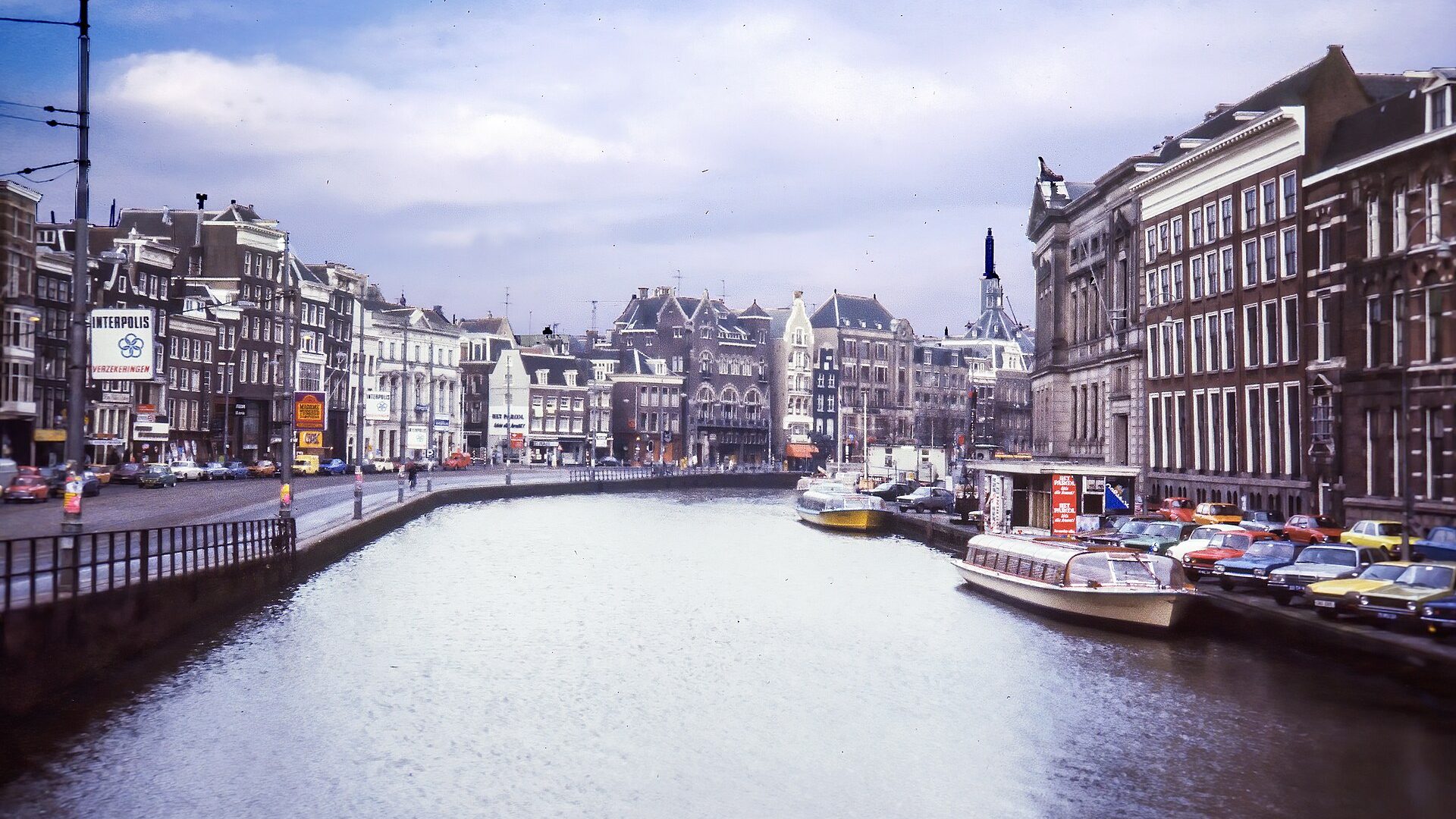
Amsterdam is built on a plan: four main canals dug in the seventeenth century in concentric arcs around the medieval core, lined with tall, narrow merchant houses whose width was set by the tax on frontage. That is why the buildings lean, why the staircases are vertical, and why every house has a hoisting beam at the top.
The city is small. You can cross the canal ring on foot in half an hour, and most residents cross it by bike in ten minutes. Understanding that the bicycle, not the car or the tram, is the default vehicle changes how you move through the place and how safely you cross a street.
Why Visit
Amsterdam packs an extraordinary amount into a very small area: the Rijksmuseum and the Van Gogh Museum within sight of each other, the Anne Frank House in a working canal street, and a UNESCO-listed canal ring that is still residential rather than preserved as a monument.
It is also a city with a long, argumentative tradition of tolerance and trade, visible in everything from the hidden Catholic church in an attic to the Portuguese Synagogue and the Jewish Historical Museum.
Best Things to Do
- The Rijksmuseum. Dutch Golden Age painting in the building designed for it: Vermeer, Hals, and Rembrandt's Night Watch in a hall of its own. Half a day, minimum.
- The Van Gogh Museum. The largest collection of his work anywhere, arranged chronologically so the change over a decade is unmistakable. Timed tickets, booked online only.
- The Anne Frank House. The secret annexe, left unfurnished at Otto Frank's request. Tickets are released online on a schedule and sell out immediately; there is no ticket office queue.
- Walk the canal ring. Herengracht, Keizersgracht and Prinsengracht between Brouwersgracht and the Amstel. Do it in the evening, when the houses are lit and the curtains are open.
- The Jordaan. Former working-class district of narrow lanes, hofjes (almshouse courtyards) and small bars; the Noordermarkt on Saturday morning.
- A brown café. Dark, wood-panelled, centuries old, and still the social institution of the city. Order a beer and a bitterbal and sit by the window.
- Amsterdam Noord by free ferry. Behind Centraal Station, ferries cross the IJ continuously at no cost, to a former shipyard now full of studios, a film museum and a viewing tower.
Map
Map data © OpenStreetMap contributors
Best Time to Visit
April to May is the classic window: mild, long days, and the bulb fields in bloom outside the city; the tulip season peaks around mid-April and is weather-dependent every year.
June to August is warmest and busiest, with terraces full and long evenings. September and October are quieter, cheaper and still pleasant. November to March is dark, damp and windy, but it is when the museums are comfortable and the brown cafés make sense; occasional hard freezes still bring out skates on the smaller canals.
King's Day, 27 April, turns the whole city into an orange street party and flea market. It is memorable and the single hardest day of the year to find a room.
Where to Stay
The Canal Ring (Grachtengordel) is the postcard base: central, beautiful, expensive, and often up steep stairs with no lift.
The Jordaan is quieter and just as central, with better neighbourhood restaurants. De Pijp is the liveliest place to eat, around the Albert Cuyp market, a short tram from the museums.
Oud-West and Oud-Zuid are residential, calm and good value, with the Vondelpark between them. Amsterdam Noord is cheapest and connects by free ferry, which is a pleasant commute rather than a compromise.
Avoid the immediate Red Light District and Leidseplein if you intend to sleep. Note that the city taxes accommodation as a percentage of the room rate, which is often added at checkout rather than shown in the booking price.
Neighborhoods
Centrum and De Wallen: the medieval core, the Oude Kerk and the Red Light District, busiest and most policed.
Grachtengordel: the seventeenth-century canal ring, the Nine Streets shopping lanes, the Anne Frank House.
Jordaan: narrow streets, hidden courtyards, galleries and small bars.
De Pijp: the market, the widest range of restaurants, and the Heineken brewery building.
Museumkwartier and Oud-Zuid: the three big museums, the Concertgebouw, the Vondelpark and the city's grandest housing.
Plantage and Jodenbuurt: the botanical garden, the zoo, the Portuguese Synagogue and the Resistance Museum.
Noord: post-industrial, creative, and reached by free ferry.
Oost: multicultural, with the Oosterpark and the Tropenmuseum.
Transportation & Airports
Walking covers the centre. Trams cover the rest, with contactless bank cards accepted directly at the readers: check in when boarding and check out when leaving, or you will be overcharged.
Cycling is the local way to move and bike hire is everywhere, but Amsterdam is not a gentle place to learn: the lanes are fast, crowded and governed by conventions locals follow instinctively. If you do ride, use lights after dark (legally required), never ride two abreast in traffic, and lock the bike to something fixed — bicycle theft is the city's most common crime.
As a pedestrian, the key habit is to look for bikes before stepping into any red-paved lane, including when leaving a tram.
Schiphol is fifteen to twenty minutes from Centraal Station by frequent train, which is by far the simplest airport link in this guide.
Food
Dutch everyday food is straightforward and good in its own register: cheese, herring eaten from a stall with onion and pickle, bitterballen with mustard in a café, stroopwafels pressed to order, and thick pea soup in winter.
Because of the colonial past, Indonesian food is effectively a national cuisine here, and a rijsttafel — a spread of many small dishes — is the classic Amsterdam dinner. Surinamese roti shops are the cheap, excellent everyday version of the same history.
Practical notes: many cafés and shops are card-only, and some do not accept credit cards, only Dutch debit; carry a contactless card and expect the occasional refusal. Tipping is modest — rounding up or around five to ten per cent.
Day Trips
Haarlem: fifteen minutes by train: a compact old centre, the Frans Hals Museum and the Grote Kerk, with a fraction of the crowds.
Zaanse Schans: working windmills and green wooden houses on the Zaan, twenty minutes north; touristed but genuinely instructive about how the mills worked.
Utrecht: half an hour away: a canal city with wharf-level cellars turned into cafés, and a cathedral tower you can climb.
Keukenhof and the bulb fields: open for roughly two months in spring only, with the surrounding fields best seen by bike from Lisse or Hillegom.
Rotterdam and Delft: modern architecture and a preserved Golden Age town respectively, both about an hour south.
Budget
Amsterdam is expensive for accommodation, which is worsened by the percentage-based tourist tax, and moderate for everything else. Museums are the next biggest line; the major ones are not cheap and the discount cards only pay off if you visit several in a few days.
What costs nothing: the canal ring itself, the Begijnhof courtyard, the free ferries to Noord, the Vondelpark, and the hofjes. Eating from a market stall or a Surinamese takeaway is a fraction of a restaurant bill. Canal cruises are heavily marketed and vary enormously in price for a similar route — the public ferries and simply walking give you the water for free.
Travel Tips
Book the Anne Frank House and Van Gogh Museum the moment your dates are fixed. Both are online-only with timed slots, and the Anne Frank House in particular is released in batches and gone within minutes.
Stay out of the bike lanes. Cyclists have right of way, move quickly and will not stop. This is the most common way visitors get hurt here.
Check in and check out on trams, buses and trains, including with a contactless card.
Do not photograph people in the Red Light District. It is prohibited, and enforcement is physical as well as legal.
Expect steep stairs. Canal houses were built around a hoist, not a staircase; if that is a problem, check for a lift before booking.
Carry a card that works. Some businesses are cashless, and others accept only local debit cards — having both options avoids an awkward counter.
Frequently Asked Questions
How many days do I need in Amsterdam
Two full days covers the canal ring and two major museums. Three lets you add the Jordaan, De Pijp and Noord properly; four supports a day trip to Haarlem or Utrecht.
How do I get Anne Frank House tickets
Only through the museum's own website, on a timed slot, released in advance on a published schedule. There are no tickets sold at the door, and they are taken very quickly after release.
Should I rent a bike
Only if you are a confident urban cyclist. The lanes are fast and busy and the etiquette is unforgiving. Walking and trams cover the centre comfortably without it.
When are the tulips out
Broadly late March to mid-May, with the peak usually around mid-April and shifting each year with the weather. Keukenhof opens for a limited season; check its published dates for your year.
Is a canal cruise worth it
A short one gives you the house facades from the angle they were designed to be seen from. Prices and quality vary widely, so compare before booking, and the free ferries across the IJ give you water views at no cost.