Berlin
Overview
Berlin is a city with a hole through the middle of it. The Wall ran for twenty-eight years through what had been the centre, and the empty lots, the mismatched architecture and the wide unresolved spaces around Potsdamer Platz and the Spree are the direct result. Rather than hide this, Berlin has made its twentieth century the thing it shows visitors.
It is also enormous — several times the area of Paris with a fraction of the density — so distances are real and the S-Bahn and U-Bahn do the work that walking does in other European capitals.
Why Visit
Nowhere else puts the Prussian empire, the Weimar years, the Third Reich, the Cold War division and the reunified present in front of you so directly, and with such willingness to confront the worst of it.
Berlin is also, for a western European capital, still relatively affordable, with an outsized music, art and nightlife culture that grew in the cheap space left after 1989.
Best Things to Do
- The Berlin Wall Memorial at Bernauer Strasse. The only place where the full depth of the border strip — outer wall, death strip, watchtower line — is preserved and explained. Start here, not at Checkpoint Charlie.
- The East Side Gallery. A long surviving stretch of the Wall painted by artists in 1990, along the Spree in Friedrichshain.
- Museum Island. Five museums on one island, a World Heritage site. The Pergamon has been undergoing a long phased closure, so check which parts are open before planning around it; the Neues Museum holds the bust of Nefertiti.
- The Reichstag dome. Norman Foster's glass dome over the parliamentary chamber. Free, but requires registration in advance with passport details.
- The Memorial to the Murdered Jews of Europe and the information centre beneath it, followed by the Topography of Terror on the site of the Gestapo headquarters.
- Tempelhofer Feld. A decommissioned airport whose runways are now a public park, kept open by a city referendum. Cycling down a runway is a very Berlin afternoon.
- A Sunday flea market: Mauerpark for the crowd and the outdoor karaoke, Boxhagener Platz for a calmer version.
Map
Map data © OpenStreetMap contributors
Best Time to Visit
May to September is when Berlin is at its best: beer gardens, lake swimming, outdoor cinema and long light evenings. June and July are the peak.
April and October are cool, changeable and much cheaper, with the museums comfortable. November to February is grey, dark by mid-afternoon and genuinely cold; it is also when the city's indoor culture — concert halls, galleries, clubs, Christmas markets in December — comes into its own.
Berlin's weather is continental rather than maritime: colder winters and warmer summers than the German average, and more sun in summer than its reputation suggests.
Where to Stay
Mitte is central and convenient to almost every historic site, with the widest hotel choice; parts of it are corporate and quiet at night.
Prenzlauer Berg is nineteenth-century apartment blocks, cafés and playgrounds: calm, attractive and good for families.
Kreuzberg and Neukölln are the best bases for food, bars and street life, with a large Turkish and Arab population and the most energetic nightlife. Friedrichshain is the club district and the loudest.
Charlottenburg, in the former West, is grander, greener and quieter, near the Kurfürstendamm and the palace.
Berlin is large: pick an area within a short walk of a U-Bahn or S-Bahn station and the rest follows.
Neighborhoods
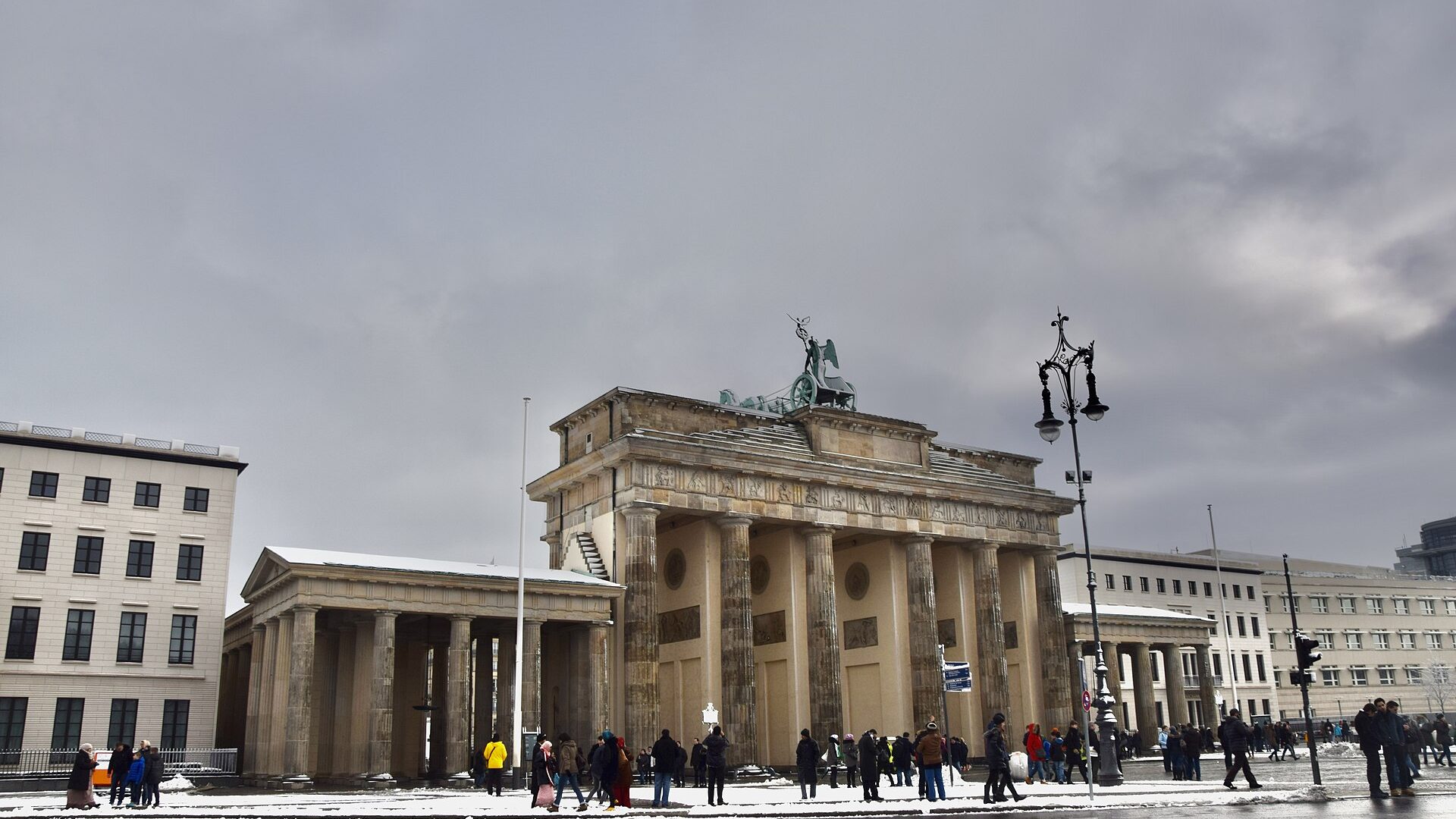
Mitte: Museum Island, Unter den Linden, the Brandenburg Gate, the government quarter and the Hackesche Höfe courtyards.
Prenzlauer Berg: restored tenements, Kollwitzplatz market, Mauerpark.
Kreuzberg: split between the older alternative quarter around Bergmannstrasse and the louder canal-side around Kottbusser Tor.
Neukölln: the most rapidly changing district, with the best cheap eating and a strong bar scene.
Friedrichshain: East Side Gallery, Karl-Marx-Allee's Stalinist boulevard, and the clubs.
Charlottenburg: the palace, the Kurfürstendamm, the memorial church left ruined as a war reminder.
Wedding and Moabit: working-class, under-visited, and where much of the city's everyday life happens.
Grunewald and Wannsee: forest and lakes inside the city limits, reachable by S-Bahn.
Transportation & Airports
The U-Bahn, S-Bahn, trams and buses operate as one network with one ticket. The city is divided into fare zones A, B and C: A and B cover almost everything a visitor needs, and C is required for Potsdam and for Schönefeld.
The critical detail: tickets bought as paper or from a machine must be validated in the small stamping box on the platform or on board before you travel. Nobody checks at a barrier — there are none — but inspectors board trains constantly and issue on-the-spot fines for unstamped tickets. App tickets activate at purchase and do not need stamping.
Night services run on weekends on the U-Bahn and S-Bahn, with night buses and trams filling in on weekdays. Cycling is easy and flat, with good infrastructure and plenty of rental.
Brandenburg Airport connects to the centre by regional and S-Bahn trains, and requires a zone ABC ticket.
Food
Berlin's own contributions are cheap and specific: currywurst, the Turkish-German döner that was invented in this city in the 1970s, and Berliner Weisse, a sour wheat beer usually served with syrup.
The wider food culture is migrant-driven and excellent: Turkish, Vietnamese, Syrian, Lebanese and Korean, with Kreuzberg, Neukölln and Wedding the strongest areas. The Turkish market on the Maybachufer canal on Tuesdays and Fridays is the best single food outing in the city.
Sunday brunch is an institution, often served as a long buffet. Note that most shops, including supermarkets, close entirely on Sundays: restaurants, bakeries and station shops stay open, but plan your groceries. Tipping is by rounding up, told to the server as you pay rather than left on the table.
Day Trips
Potsdam: Sanssouci and its park, the Dutch Quarter and the Cecilienhof where the 1945 conference was held. Half an hour by S-Bahn with a zone C ticket, and the single best trip from Berlin.
Sachsenhausen Memorial at Oranienburg: a concentration camp site preserved as a memorial and museum, about an hour north. Demanding, and important.
Wannsee and the Havel lakes: swimming, boats and forest walks, all within the city's own transport network.
Spreewald: a biosphere reserve of canals navigated by punt, an hour or so southeast, best in summer.
Dresden or Leipzig: both reachable in around an hour and a half by train for a long day.
Budget
Berlin remains cheaper than Paris, London or Amsterdam for accommodation, eating and drinking, though the gap has narrowed. Public transport is good value, particularly with a day or multi-day ticket.
A great deal of the important sightseeing is free: the Wall memorial and the East Side Gallery, the Holocaust memorial, the Topography of Terror, the Reichstag dome with registration, Tempelhofer Feld and the parks. The paid sights are mainly the state museums, which sell a combined day pass covering several — worth it only if you will actually visit more than two.
Where money goes: nothing dramatic. Berlin is the least expensive capital in this guide for a comparable day out.
Travel Tips
Stamp your ticket. An unvalidated paper ticket counts as no ticket, and inspectors are in plain clothes.
Register for the Reichstag dome in advance. It is free but requires names and passport details submitted ahead of the visit.
Carry cash. Berlin is noticeably less card-friendly than other European capitals; plenty of bars, bakeries and small restaurants remain cash-only.
Shops close on Sundays. Plan food shopping for Saturday.
Do not expect to walk between districts. Berlin's scale defeats it; use the trains and walk within a neighbourhood.
Club entry is selective and phones are often taped over. Go later than you think, go in a small group, and accept the door decision if it goes against you.
Frequently Asked Questions
How many days should I spend in Berlin
Three full days covers the twentieth-century sites, Museum Island and one residential district. Four or five allows Potsdam or Sachsenhausen and time in Kreuzberg and Neukölln, which is where the living city is.
Do I need to validate my transport ticket
Yes, if it is a paper or machine-printed ticket — stamp it in the box on the platform or on board before travelling. Tickets bought in an app are activated at purchase and need nothing further.
Which zones do I need
Zones A and B cover the city including most sights. Add zone C for Potsdam, Sachsenhausen at Oranienburg and Brandenburg Airport.
Is the Pergamon Museum open
It has been undergoing a long, phased renovation with parts closed for extended periods. Check the Staatliche Museen zu Berlin website for the current status before building a day around it.
Is Checkpoint Charlie worth visiting
Only briefly. The current installation is a reconstruction surrounded by commercial attractions. For the actual history of the border, the Wall Memorial at Bernauer Strasse is far better and is free.