Kuala Lumpur
Overview
Kuala Lumpur sits where the Klang and Gombak rivers meet, the name means muddy confluence, and grew from a nineteenth-century tin-mining camp. The result is a city with no single historic core but several: the colonial buildings around Merdeka Square, the Chinatown grid at Petaling Street, Little India at Brickfields, and the Malay quarter of Kampung Baru, which sits in low wooden houses directly beneath the Petronas Towers.
The modern city is organised around the Golden Triangle, where the towers, the malls and most hotels are, and it is hot, humid and green, with rainforest visible from the upper floors.
Why Visit
Kuala Lumpur is the easiest large city in Southeast Asia to eat your way through, with Malay, Chinese and Indian cooking side by side and all of it cheap.
It is also a well-connected and inexpensive hub, with Malacca, Penang and the Cameron Highlands within a few hours, and it holds one of the best Islamic art museums in the world.
Best Things to Do
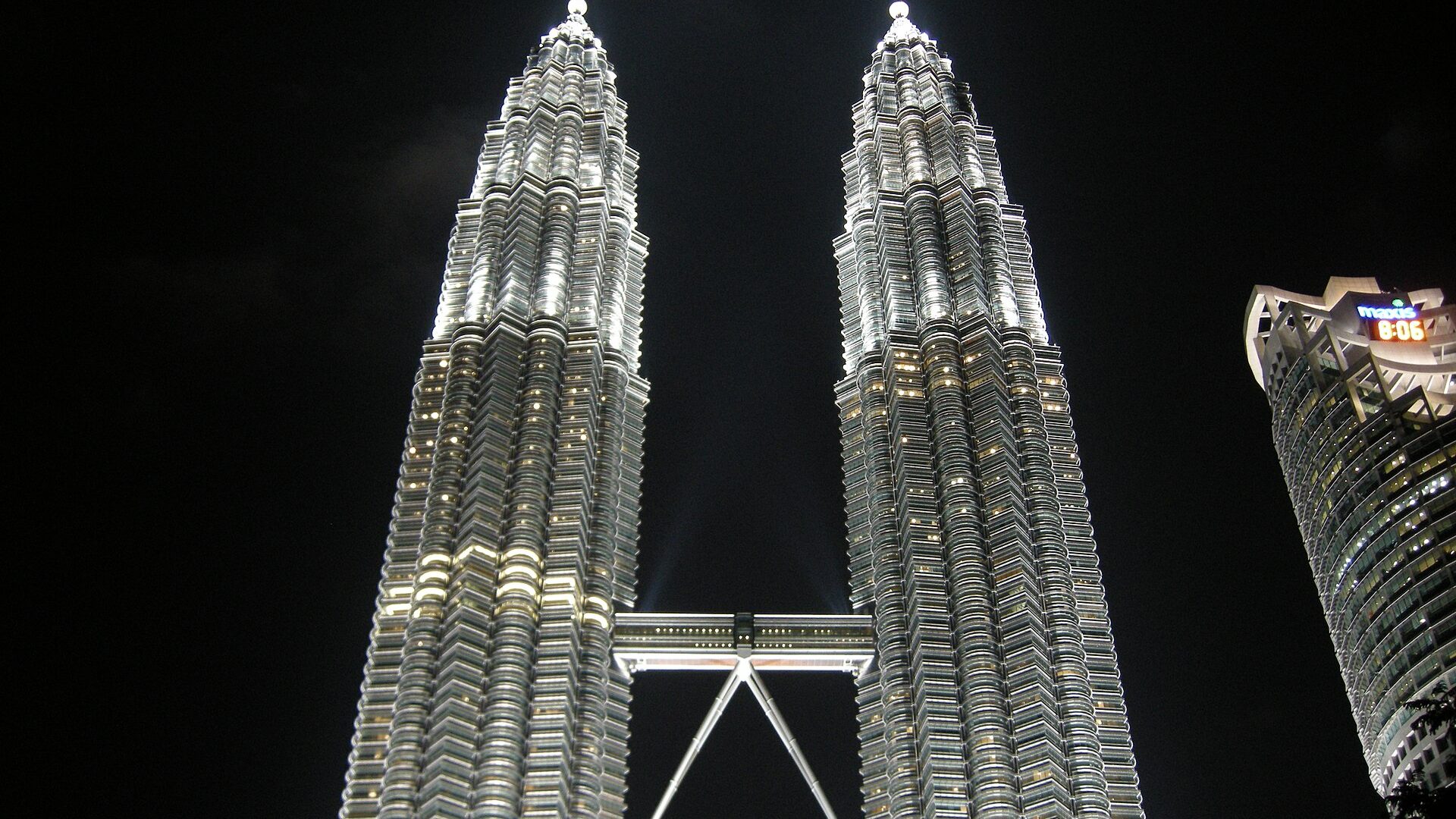
- Petronas Twin Towers. The skybridge and observation deck require timed tickets booked in advance; the park below, with its fountains, is free and best at dusk.
- Batu Caves. A limestone hill north of the city with a Hindu temple in a cavern at the top of 272 painted steps, beneath a large golden statue of Murugan. Reachable by commuter train.
- Islamic Arts Museum Malaysia. Exceptional collection of manuscripts, textiles, ceramics and architectural models, in the Lake Gardens.
- Merdeka Square and the colonial quarter. The Sultan Abdul Samad building, the old railway station and the confluence itself at Masjid Jamek.
- Chinatown and Petaling Street. Markets, temples and food, with the covered market at the centre and the Sri Mahamariamman temple nearby.
- Kampung Baru. A surviving Malay village of stilt houses in the middle of the modern city, best visited for breakfast or a night market on Saturdays.
- KL Forest Eco Park. A pocket of primary rainforest beside the KL Tower, with a canopy walkway.
Map
Map data © OpenStreetMap contributors
Best Time to Visit
Kuala Lumpur is hot and humid year-round, with temperatures that barely vary. The difference between months is rainfall.
June to August and December to February are the relatively drier periods, and the most comfortable.
March to April and September to November see more rain, usually as heavy late-afternoon thunderstorms rather than all-day drizzle.
Haze from regional land fires can affect air quality, most often between June and September. Ramadan and Hari Raya change opening hours and fill transport; Chinese New Year and Deepavali do the same.
Where to Stay
Bukit Bintang is the most convenient base: hotels at every price, the monorail, endless food and the malls.
KLCC, around the Petronas Towers, is more upmarket and quieter, with the park and the best shopping.
Chinatown and Merdeka put you among the older streets and the best street food, with the LRT close by.
Bangsar is a residential district with good restaurants and bars, popular with expatriates, a short ride from the centre. Brickfields, near KL Sentral, is convenient for transport and airport trains.
Neighborhoods
KLCC: the Petronas Towers, the park, the aquarium and the largest malls.
Bukit Bintang: hotels, shopping and Jalan Alor's night food street.
Chinatown (Petaling Street): markets, temples, old shophouses and coffee shops.
Merdeka and the colonial quarter: the square, the Sultan Abdul Samad building and the river confluence.
Brickfields (Little India): temples, sari shops, banana leaf restaurants and KL Sentral.
Kampung Baru: the Malay village of wooden houses beneath the towers.
Bangsar: residential, with independent restaurants and bars.
Transportation & Airports
The rail network (LRT, MRT, monorail and KTM Komuter) is cheap, air-conditioned and the best way to avoid traffic. A Touch 'n Go card covers all of it.
Grab, the regional ride-hailing app, is inexpensive and widely used. Walking is possible but often unpleasant: pavements are intermittent and the heat is severe, though covered walkways connect parts of the centre.
KL Sentral is the transport hub. The KLIA Ekspres runs from there to Kuala Lumpur International Airport in about half an hour; the cheaper KLIA Transit and buses take longer.
Food
Kuala Lumpur's food is the point. Nasi lemak (coconut rice with sambal, anchovies, peanut and egg) is the national breakfast. Char kway teow, hokkien mee and bak kut teh come from the Chinese kitchens; roti canai, banana leaf rice and teh tarik from the Indian ones.
Satay, rendang and laksa in several regional forms complete the picture, and durian is available for those who want it.
The best eating is in hawker centres and kopitiams rather than restaurants: Jalan Alor at night, the Chinatown market stalls, and the Kampung Baru stands in the morning.
Day Trips
Batu Caves is technically a day trip but takes only a morning, thirty minutes by commuter train.
Malacca (Melaka), about two hours south by coach, is a UNESCO World Heritage city of Dutch and Portuguese buildings, Peranakan shophouses and a strong food tradition.
Putrajaya, the administrative capital, is a planned city of modern Islamic architecture around a lake, easily reached by train.
The Genting Highlands, an hour north by road and cable car, offer cool air and a resort complex.
The Cameron Highlands, with tea plantations and walking trails, are around four hours and better as an overnight.
Budget
Kuala Lumpur is one of the best-value major cities in the region. Hawker meals cost very little, the rail network is cheap, and Grab rides are inexpensive.
Accommodation spans hostels to international luxury with strong mid-range value. The main fixed costs are the Petronas skybridge ticket and museum entries, both modest. Alcohol is the exception: it is taxed heavily in Malaysia and is expensive relative to everything else.
Travel Tips
Book Petronas tickets in advance. Daily numbers are limited and same-day availability is rare.
Dress modestly at religious sites. Mosques provide robes; at Batu Caves shoulders and knees should be covered and shoes removed at the temple.
Get a Touch 'n Go card for all the rail lines and many other payments.
Carry a layer for indoors. Air conditioning in malls, trains and restaurants is aggressive.
Watch for macaques at Batu Caves. They snatch food, bottles and phones; keep bags closed.
Frequently Asked Questions
How many days do I need in Kuala Lumpur
Two full days cover the towers, Batu Caves, Chinatown and the colonial quarter. A third allows the Islamic Arts Museum and Kampung Baru properly, or a trip to Malacca.
Is Kuala Lumpur walkable
In parts, but heat, humidity and interrupted pavements make the rail network and Grab the practical choices for anything beyond a few hundred metres.
Is Malacca a day trip
Yes, around two hours each way by coach, though an overnight lets you see the old town in the evening when it is at its best.
When is the rainy season
Rain falls year-round; the wettest stretches are roughly March to April and September to November, usually as short heavy afternoon storms.
Plan your trip to Kuala Lumpur
Free tools for flight times, time differences, budget, money and plugs.
- Flight Duration CalculatorWork out real flight time across time zones.
- Time Zone ConverterFind the time in another city instantly.
- Trip Budget CalculatorEstimate your total trip cost, item by item.
- Currency ConverterConvert prices between currencies at indicative rates.
- Travel Plug & Voltage CheckerCheck if you need a plug adapter or voltage converter.
- Jet Lag CalculatorEstimate how many days you need to beat jet lag.