Lisbon
Overview
Lisbon is built on hills above a tidal estuary, and the gradient governs everything: the funiculars, the tram routes, the miradouros where the city stops to look at itself, and the fact that a short walk on a map can be twenty minutes of climbing.
The 1755 earthquake and the tsunami and fire that followed destroyed the lower city, which was rebuilt as the Baixa: a rigid grid of identical blocks, one of the first examples of planned seismic-resistant construction in Europe. The medieval Alfama survived above it, which is why the two districts look nothing alike.
Why Visit
Lisbon offers a southern European capital with an Atlantic light, a maritime history that reached Brazil, Africa and Asia, and a food culture built on that history: at prices still below Paris, Rome or Amsterdam.
It is also a city with an unusual amount of decorative surface: azulejo tiles on ordinary apartment blocks, calçada pavement laid in patterns, and a Manueline architectural style that exists nowhere else.
Best Things to Do
- The Jerónimos Monastery in Belém. The high point of Manueline architecture, built with the wealth of the spice route, with Vasco da Gama's tomb in the church. UNESCO-listed, along with the Belém Tower nearby.
- Alfama on foot. The oldest quarter, a maze of stepped lanes below the castle, with laundry lines, tiled facades and fado drifting out of doorways in the evening.
- São Jorge Castle. Moorish walls over the whole city, and the best single overview of how Lisbon is laid out.
- The miradouros. Santa Luzia, Graça, Senhora do Monte and São Pedro de Alcântara: terraces built specifically as viewpoints, usually with a kiosk selling a drink.
- The National Tile Museum. Five centuries of azulejos in a former convent, including a long panorama of the city as it was before the earthquake.
- A fado house in Alfama or Mouraria. The urban song form born in these streets, now on the UNESCO intangible heritage list. Smaller venues where people fall silent when the singing starts are the ones worth finding.
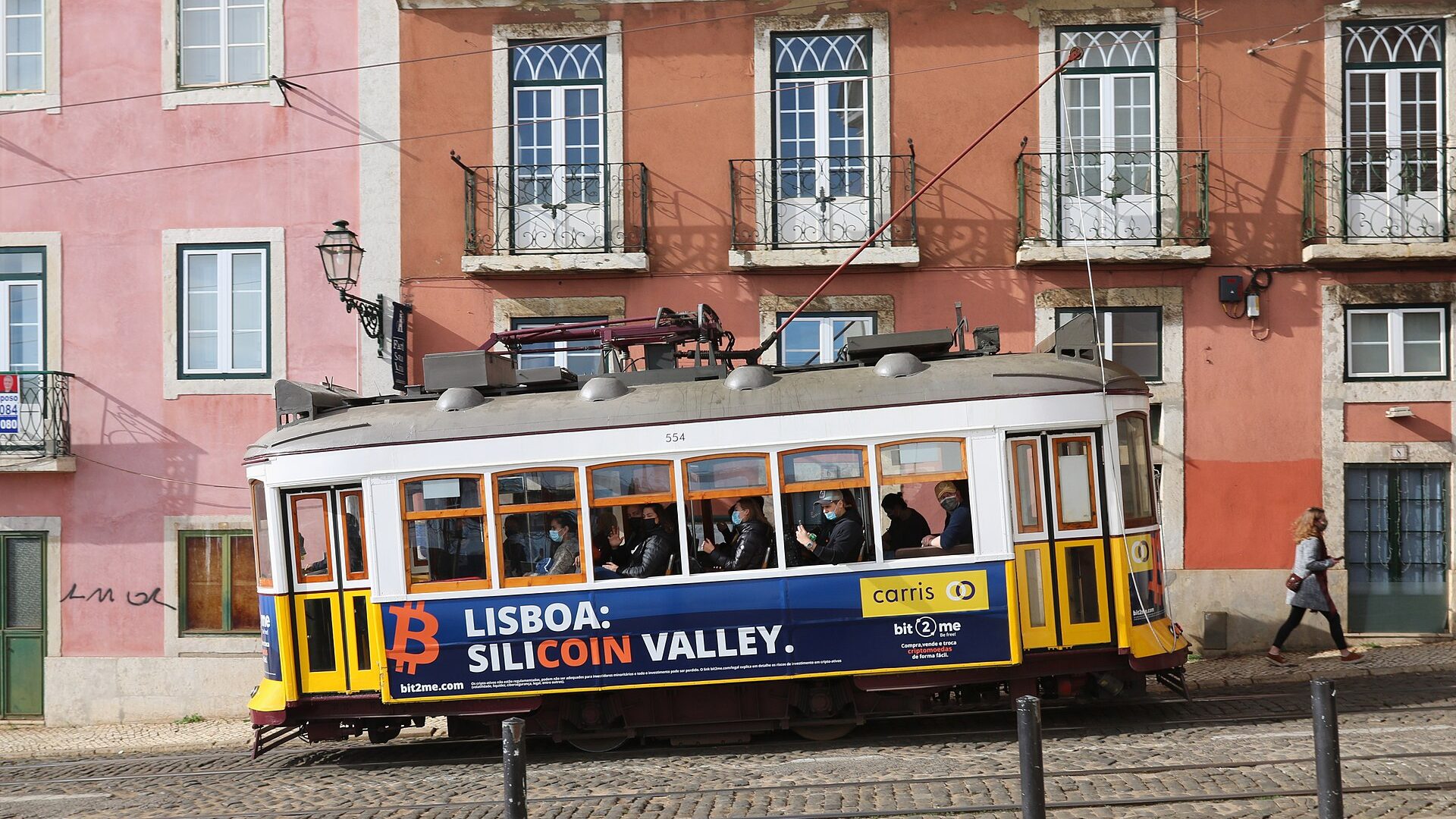
- Tram 28: the historic route through the old quarters. Famously pickpocketed and often full; ride it early in the morning from the terminus or take tram 12 for a shorter version.
Map
Map data © OpenStreetMap contributors
Best Time to Visit
March to June and September to October are the best periods: warm, bright, and without the summer press. Spring is when the jacarandas flower and the light is at its clearest.
July and August are hot and very busy, though the Atlantic keeps Lisbon cooler than inland Spain. June brings the Festas de Lisboa, and the night of 12 to 13 June — Santo António — fills Alfama and Graça with grilled sardines, street decorations and dancing until dawn.
Winter is mild and often sunny with periods of Atlantic rain, and it is by far the cheapest time. The city works perfectly well in January; the beaches do not.
Where to Stay
Baixa and Chiado are the most convenient: flat, central, well connected, and walking distance to almost everything. Chiado is the more pleasant of the two.
Alfama is the most atmospheric and the hardest work: steps, no vehicle access, and luggage that must be carried. Wonderful if you are mobile and travelling light.
Príncipe Real is elegant, leafy and full of good restaurants, uphill from the centre. Bairro Alto is the nightlife quarter and extremely loud until the small hours.
Avenida da Liberdade holds the larger hotels along a boulevard. Belém is quiet and monument-focused but a tram ride from the action.
Neighborhoods
Baixa: the post-earthquake grid, from Rossio down to the great riverside square of Praça do Comércio.
Alfama and Mouraria: the medieval hillside below the castle, the birthplace of fado and the most tightly woven part of the city.
Chiado: bookshops, cafés, theatres and the old commercial elegance; the literary quarter.
Bairro Alto: quiet by day, entirely given over to bars at night.
Príncipe Real and Estrela: nineteenth-century mansions, gardens, antique shops and some of the best eating.
Belém: the monastery, the tower, the discoveries monument and several museums, strung along the river to the west.
Parque das Nações: the Expo 98 district: modern architecture, the oceanarium and a cable car along the water.
LX Factory and Alcântara: industrial buildings under the bridge, now studios, bookshops and restaurants.
Transportation & Airports
The metro is modern and covers the main axes; buses, trams and funiculars fill in the hills. Buy a rechargeable Viva Viagem card at any station and load it: single fares bought from the tram driver cost several times the card fare, which is the most common way visitors overpay here.
The funiculars (Glória, Bica, Lavra) and the Santa Justa lift are public transport as well as attractions, and are included on the transport card, which avoids the long ticket queue at Santa Justa.
Suburban trains run west along the river to Belém, Cascais and Estoril, and north to Sintra, all on the same card.
The airport is on the metro's red line, about twenty minutes from the centre. Taxis and ride-hailing are inexpensive by western European standards.
Wear shoes with grip: the polished limestone calçada is genuinely slippery when wet.
Food
Portuguese cooking here is built on the Atlantic: grilled sardines in summer, bacalhau (salt cod) in a large number of preparations, octopus, and a strong tradition of pork and offal in the tascas. Bifana — a marinated pork sandwich — is the everyday street food.
The pastel de nata is from Belém, where the original bakery still sells them warm with cinnamon and icing sugar on the side; versions across the city are excellent too.
Points worth knowing: the bread, olives and cheese placed on your table at the start are the couvert and are charged if you eat them — send them back if you do not want them. Lunch runs from around one, dinner from eight. Ginjinha, a sour-cherry liqueur, is drunk standing at tiny bars near Rossio.
The Time Out Market at Cais do Sodré is convenient and expensive; the market hall on the other side of the same building is the working one.
Day Trips
Sintra: palaces and gardens in a wooded microclimate: the Pena Palace, the Moorish castle, and the well and tunnels of Quinta da Regaleira. Forty minutes by train, extremely busy, and best started at opening with tickets booked ahead.
Cascais and Estoril: seaside towns at the end of the coastal railway, with beaches and a promenade walk between them.
Setúbal and Arrábida: a natural park of limestone cliffs and clear water south of the river, with dolphin-watching in the Sado estuary.
Évora: a walled Roman and medieval town in the Alentejo, about an hour and a half away, with a temple and a bone chapel.
Costa da Caparica: long Atlantic surf beaches across the bridge, reachable by bus or ferry and bus.
Budget
Lisbon is one of the better-value capitals in western Europe, though accommodation has risen sharply in recent years. Food, transport and wine remain inexpensive: a tasca lunch, a glass of vinho verde or a pastel de nata all cost little.
The big saving is the transport card — never buy tram tickets on board. Viewpoints, churches, Alfama's streets and the riverside are free; the ticketed sites are mainly the monastery, the castle, the tower and the Sintra palaces, which do add up over a few days.
Belém's queues are for the monastery and the bakery, not for the free riverfront, and the same view of the bridge and the statue costs nothing from the promenade.
Travel Tips
Get a Viva Viagem card at the first station you use. Onboard tram fares are several times the card price.
Pickpockets work tram 28 and the funiculars. Keep bags closed and in front on crowded vehicles; this is the one consistent complaint from visitors.
Book Sintra's palaces in advance and go early. Pena in particular operates timed entry and the queues in high season are long.
Send back the couvert if you do not want the bread and olives, or expect to pay for them.
Expect hills. Plan routes so that the funiculars and lifts do the climbing, and walk down rather than up where you can.
Be wary of anyone offering drugs in the Baixa. It is a persistent street hustle aimed at visitors, and what is sold is generally not what is claimed.
Frequently Asked Questions
How many days do I need in Lisbon
Three full days covers the central districts, Belém and an evening of fado. Four or five allows Sintra and the coast without making either feel rushed.
Is tram 28 worth riding
Yes, but early. From mid-morning it is packed, slow and heavily pickpocketed. Boarding at a terminus at opening time gives you the same route with a seat.
Do I need to book Sintra tickets
For the Pena Palace, yes — it uses timed entry and sells out. Quinta da Regaleira and the Moorish castle are easier, but advance tickets still save a queue.
What is the couvert on my bill
The bread, olives, cheese or pâté brought to the table before you order. It is optional and charged only if you eat it; declining it is normal and causes no offence.
Is Lisbon walkable
The flat Baixa is, but the city is built on hills and the gradients are steep. Use the funiculars, lifts and trams for the climbs and save your legs for Alfama's lanes.