Nairobi
Overview
Nairobi sits at around 1,795 metres on the edge of the Kenyan highlands, which gives it a mild climate despite being close to the equator. It began as a railway depot in the 1890s and is now the largest city in East Africa and the region's centre for business, aid organisations and aviation.
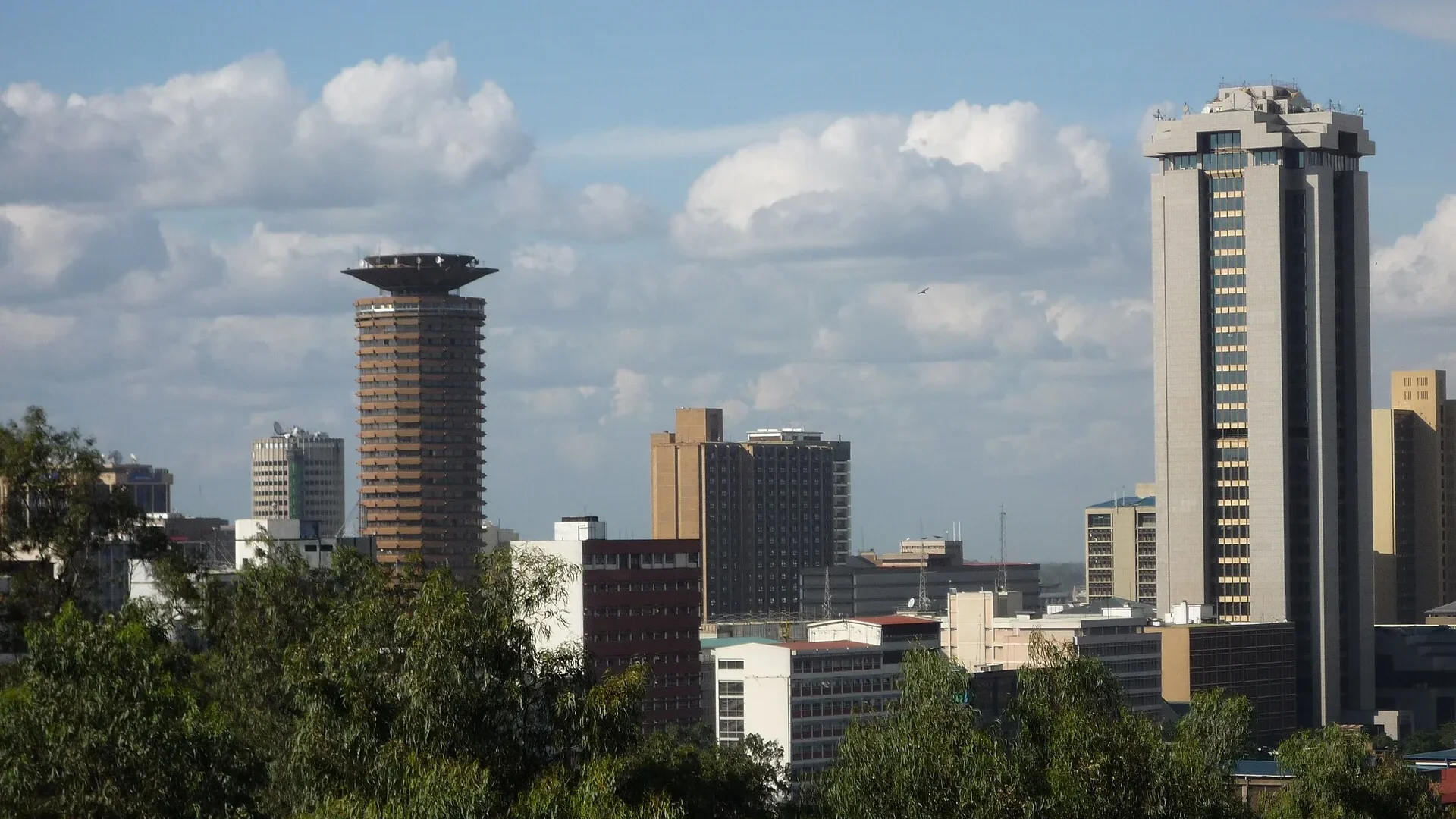
The centre is a compact grid of office towers and colonial-era buildings. Around it, districts vary widely: Westlands and Kilimani for restaurants and nightlife, Karen and Langata for the green suburbs and the wildlife attractions, and Eastlands for the dense residential city.
Nairobi National Park begins a few kilometres from downtown and is unfenced on its southern side, where wildlife moves in and out.
Why Visit
Nairobi is the only city where you can see rhino, lion, giraffe and buffalo against a skyline of office towers, in a national park reachable in half an hour.
It is also the gateway for Kenyan safari travel, with the Masai Mara, Amboseli and the coast all reached from here, and it has the region's best museums, food and music scene.
Best Things to Do
- Nairobi National Park. Black and white rhino, lions, giraffe, buffalo and plains game, with the city visible behind them. Best at dawn; half-day game drives are standard.
- Sheldrick Wildlife Trust. An elephant orphanage on the park's edge, open to visitors for a short window each day. Booking is required and numbers are limited.
- Giraffe Centre. A conservation centre in Langata where you can feed endangered Rothschild's giraffes from a raised platform.
- Karen Blixen Museum. The farmhouse of the author of Out of Africa, at the foot of the Ngong Hills.
- Nairobi National Museum. Kenyan history, ethnography and a significant collection of early hominin fossils from the Rift Valley.
- Kazuri Beads. A ceramic bead workshop in Karen employing single mothers, with tours of the process.
- Maasai Market. A rotating craft market that sets up in different locations on different days of the week; bargaining is expected.
Map
Map data © OpenStreetMap contributors
Best Time to Visit
January and February and June to October are the driest and the best for wildlife, with June to October also the Masai Mara's peak season.
The long rains fall roughly from March to May, the short rains in November and December. Rain generally arrives as heavy afternoon storms rather than all-day drizzle.
Altitude keeps Nairobi mild all year (warm days, cool evenings) and a jacket is needed at night in any month.
Where to Stay
Westlands is the most convenient base for most visitors: restaurants, bars, malls and hotels at every level, with good access to the centre.
Kilimani and Lavington are leafy residential districts with guesthouses and a quieter feel.
Karen and Langata are the green outer suburbs, closest to the giraffe centre, the Sheldrick trust and the national park gates. The choice if wildlife is your focus, at the cost of long drives into town.
The CBD has business hotels and is convenient by day; it is not a place to walk at night.
Neighborhoods
CBD: the office grid, with the Kenyatta International Convention Centre, the national archives and the city market.
Westlands: restaurants, bars, malls and hotels, the main visitor and expatriate district.
Kilimani and Lavington: leafy residential, with cafés and guesthouses.
Karen and Langata: large-plot suburbs near the Ngong Hills, the giraffe centre, the Blixen museum and the park gates.
Gigiri: the diplomatic quarter and the UN complex, with the Karura urban forest nearby.
Eastlands: the dense residential east, the heart of the city's music and matatu culture.
Transportation & Airports
Traffic is the defining feature of Nairobi and journey times are unpredictable; allow far more time than the distance suggests.
Ride-hailing apps are widely used, cheap and the simplest option for visitors. Matatus (privately run minibuses, often elaborately decorated) are the local transport and are cheap but confusing and crowded.
The Nairobi Expressway is a toll road that bypasses much of the congestion between the airport and Westlands.
Jomo Kenyatta International Airport is south-east of the city. The SGR railway runs from Nairobi Terminus to Mombasa in around five hours and is comfortable and popular; book ahead.
Food
Nyama choma (roast meat, usually goat, eaten with the hands and served with kachumbari salad and ugali) is the national institution and best experienced at a busy weekend joint.
Ugali, a stiff maize porridge, is the staple; sukuma wiki (collard greens) and githeri accompany it.
Nairobi has a substantial South Asian population, so the Indian food is genuinely good, and Ethiopian restaurants are common. Kenyan coffee and tea are world-class and cheap at source.
Mandazi and samosas handle snacking, and the city has a strong contemporary restaurant scene in Westlands and Kilimani.
Day Trips
Karura Forest barely counts as a trip, an urban forest inside the city with waterfalls, caves and walking and cycling trails.
The Ngong Hills, south-west, offer a ridge walk with views over the Rift Valley on one side and the city on the other; guides and rangers are recommended.
Lake Naivasha and Hell's Gate, about two hours north-west in the Rift Valley, allow walking and cycling among wildlife and a boat trip among hippos.
Lake Nakuru National Park is around three hours away, known for rhino and, when water levels suit, flamingo. Amboseli and the Masai Mara are overnight destinations rather than day trips.
Budget
Nairobi is moderate: local food, matatus and ride-hailing are inexpensive, while hotels, safari lodges and park fees are not.
National park entry, the Sheldrick trust and the giraffe centre each carry separate fees, generally higher for non-residents. Safari packages beyond the city are the dominant cost of a Kenyan trip; Nairobi itself can be done cheaply if you eat locally and use apps for transport.
Travel Tips
Allow for traffic. A journey that looks like twenty minutes can take well over an hour at peak times.
Book the Sheldrick visit in advance. It admits a limited number of visitors in a short daily window.
Use ride-hailing rather than walking at night, and avoid displaying phones and valuables in the CBD and at matatu stages.
Check health advice before travelling. Nairobi is above the main malaria zone but many safari destinations are not; consult a travel clinic about prophylaxis and yellow fever requirements.
M-Pesa is everywhere. Mobile money is the normal way to pay for small things; carry some cash as well, and note that cards are accepted in hotels and larger restaurants.
Frequently Asked Questions
How many days do I need in Nairobi
Two days cover the national park, the giraffe centre, the Sheldrick trust and a museum. Most visitors use the city as a start or end to a safari.
Can I really see wildlife in the city
Yes. Nairobi National Park holds rhino, lion, giraffe and buffalo and its northern boundary is a short drive from downtown.
Is Nairobi safe
It requires normal big-city caution taken seriously: use apps at night, keep valuables out of sight, and check current official travel advice before going.
Do I need malaria precautions
Nairobi's altitude puts it above the main transmission zone, but most safari areas and the coast do not. Seek medical advice for your specific itinerary.
Plan your trip to Nairobi
Free tools for flight times, time differences, budget, money and plugs.
- Flight Duration CalculatorWork out real flight time across time zones.
- Time Zone ConverterFind the time in another city instantly.
- Trip Budget CalculatorEstimate your total trip cost, item by item.
- Currency ConverterConvert prices between currencies at indicative rates.
- Travel Plug & Voltage CheckerCheck if you need a plug adapter or voltage converter.
- Jet Lag CalculatorEstimate how many days you need to beat jet lag.