Rome
Overview
Rome is a city where three thousand years of building sit on top of each other rather than side by side. A medieval church stands on a Roman temple, a Baroque fountain drinks from an aqueduct that still works, and the modern street level is several metres above the one Caesar walked on. Very little of this is signposted, which is why Rome repays a small amount of reading before arriving.
The historic centre is compact and almost entirely walkable, bounded roughly by the Tiber, the Vatican, the Colosseum and the Villa Borghese. Almost everything most visitors come for is inside that ring.
Why Visit
No other city gives you the ancient world, the Renaissance and the Baroque within a single afternoon's walk, still in use and still in the open air rather than behind museum glass.
It is also a city of ordinary pleasures (an espresso standing at a bar, a plate of cacio e pepe in a back street, a piazza at dusk) that cost little and are the part most people miss while queueing for the famous sites.
Best Things to Do
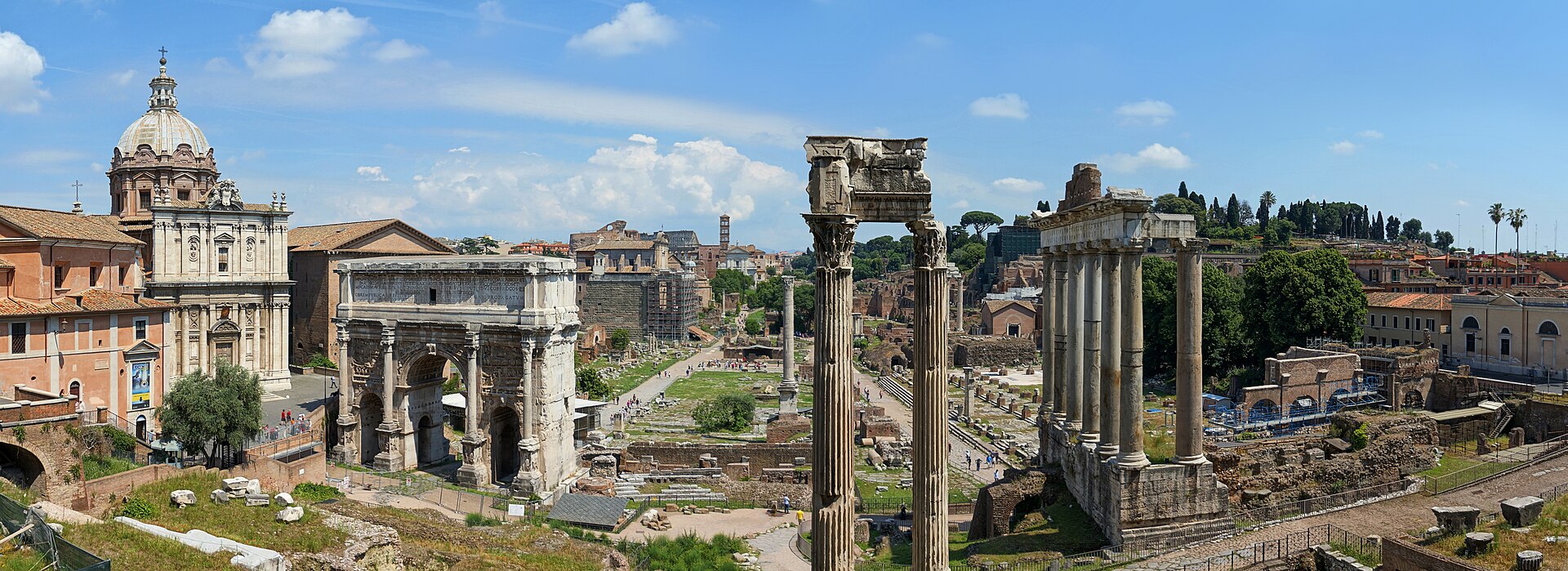
- The Colosseum, Roman Forum and Palatine Hill. Sold as one combined ticket with timed entry. Start at the Palatine rather than the Colosseum: the entrance queue is shorter and you descend into the Forum with the layout already in your head.
- The Pantheon. The best-preserved building of ancient Rome, in continuous use for nearly two thousand years, with the oculus still open to the sky. Entry is now ticketed; check the current arrangement before going.
- The Vatican Museums and the Sistine Chapel. Enormous and crowded. Book a timed slot, go at opening or late, and accept that the route to the chapel is one-way and long.
- St Peter's Basilica and the dome climb. The basilica is free to enter with a security queue and a dress code; the dome is ticketed and is the best view in Rome.
- Galleria Borghese. Bernini's sculptures in the rooms they were made for. Strictly limited numbers by two-hour slot, so it must be booked in advance, and it is the most rewarding museum in the city because of it.
- Trastevere in the evening. Cobbled lanes, ivy, and the mosaics of Santa Maria in Trastevere; across the river and worth the walk.
- The Appian Way on a Sunday, when the old road is closed to traffic: tombs, catacombs and countryside inside the city.
Map
Map data © OpenStreetMap contributors
Best Time to Visit
April to early June and late September to October are the two good windows: warm, long evenings, and the streets usable all day.
July and August are hot enough to reorganise a day around (sightseeing early and late, indoors in the afternoon) and many family-run restaurants close for part of August. November to February is mild by northern European standards, wet in bursts, and by far the cheapest and least crowded time; the light in winter is exceptional. Easter and the days around it are the single busiest period, particularly around the Vatican.
Where to Stay
Centro Storico: around the Pantheon, Piazza Navona and Campo de' Fiori, is the most walkable base and priced for it. You will not need transport at all.
Monti sits between the Colosseum and Termini: central, characterful, full of small restaurants and wine bars, and generally better value.
Trastevere is atmospheric and lively at night, at the cost of a river crossing and some noise. Prati, near the Vatican, is orderly, residential and well served by metro. Termini is the cheapest and the most convenient for trains, and the least pleasant to come home to.
Lifts are not guaranteed in historic buildings and rooms facing a piazza are loud; both are worth checking before booking.
Neighborhoods
Centro Storico: the Pantheon, Navona, Campo de' Fiori; the postcard Rome, best early in the morning.
Monti: the old Suburra, now small shops, wine bars and a village feel minutes from the Forum.
Trastevere: narrow lanes and nightlife on the west bank, with the Gianicolo hill above it for the panorama.
Testaccio: the food neighbourhood: a covered market, traditional trattorie, and the Protestant Cemetery.
Prati: Belle Époque apartment blocks, good shopping and calm streets beside the Vatican.
Esquilino: around Termini, the city's most mixed quarter, with African and Asian groceries and the basilica of Santa Maria Maggiore.
EUR: the rationalist district built under Mussolini in the south; architecturally striking and completely unlike the rest of the city.
Transportation & Airports
Walk. The centre is small, and the metro (only three lines, limited by the archaeology under the city) does not reach most of what you want. Buses and trams fill the gaps; a single ticket covers a time window with transfers, and daily and multi-day passes exist.
Validate paper tickets in the machine on board or at the metro gate. Inspectors do check, and fines are issued to visitors regularly.
Taxis are metered, should be taken from a rank rather than hailed, and charge fixed rates between the airports and the centre. From Fiumicino, the Leonardo Express runs to Termini in around half an hour; Ciampino is served by shuttle buses.
Cobblestones are the real transport story: bring shoes with some sole, and be aware that a wheeled suitcase is hard work in the old centre.
Food
Roman cooking is short on ingredients and long on technique. The four canonical pastas (cacio e pepe, carbonara, amatriciana and gricia) are all built from pork, cheese, pepper and pasta water, and a kitchen is judged on them. Beyond that: artichokes in two styles in spring, offal dishes from the old slaughterhouse quarter of Testaccio, and pizza al taglio sold by weight from a counter.
Habits that save money and embarrassment: coffee is drunk standing at the bar and costs more at a table; a cover charge per person is normal and legal; house wine by the carafe is usually fine. Dinner starts late, rarely before eight.
Avoid restaurants with photographic menus and a person outside inviting you in, especially within sight of a monument. Walk three streets away and the quality changes completely.
Day Trips
Ostia Antica: the port city of ancient Rome, far quieter than Pompeii and reachable in half an hour on a suburban train. The best-value trip from the city.
Tivoli: Hadrian's Villa and the water gardens of the Villa d'Este, both World Heritage sites, an hour east.
Orvieto: a hill town on a tufa plateau with a striped cathedral, about an hour by train.
Naples and Pompeii: just over an hour on the high-speed line; a long but entirely feasible day.
Castelli Romani: the wine villages and lakes in the hills south of the city, best on a weekend.
Budget
Rome is moderate by western European standards, with the money concentrated in accommodation and in the ticketed archaeology. Pasta, pizza al taglio and standing coffee are cheap; the churches are free and hold an extraordinary amount of the art.
Real levers: eat away from the monuments, drink coffee at the bar, walk instead of taxis, and book the big sites directly rather than through resellers. The combined archaeological ticket and the free-entry days that some state museums run are worth checking against your dates on the official sites, as the schemes change.
Travel Tips
Book the Borghese, the Vatican and the Colosseum in advance. Borghese is capped and sells out; the other two mean hours of queueing without a slot.
Dress for the churches. Shoulders and knees covered is enforced at St Peter's and at many other basilicas, for everyone.
Carry a water bottle. The nasoni, cast-iron street fountains, run continuously with clean drinking water all over the city.
Validate your bus ticket and keep it until you get off.
Watch your bag on the 64 bus and around Termini; pickpocketing is the main petty crime and is organised around tourist routes.
Check closing days. Many museums close on Mondays, and some churches shut for several hours in the middle of the day.
Other Cities in Italy

Recommended Itineraries
Frequently Asked Questions
How many days do I need in Rome
Three full days covers ancient Rome, the Vatican and the Baroque centre at a brisk pace. Four or five lets you add Borghese, Testaccio or Ostia Antica and still sit down for lunch.
Do I need to book tickets in advance
For the Vatican Museums, the Colosseum complex and the Galleria Borghese, yes: Borghese cannot be entered without a booked slot. Most churches, including St Peter's Basilica itself, need no ticket at all.
Is the Roma Pass worth it
It depends entirely on how many paid sites you plan to enter and whether you will use public transport much. Add up the individual admissions for your actual itinerary before buying; for a walking trip focused on churches and piazzas it usually is not.
Can I drink the water from the street fountains
Yes. The nasoni are fed by the municipal supply and are used by residents constantly. Refilling a bottle from them is normal.
What is the cover charge on my restaurant bill
The coperto, a fixed per-person charge for the table and bread. It is standard, must be displayed on the menu, and is not a tip. Service is sometimes added separately.
Plan your trip to Rome
Free tools for flight times, time differences, budget, money and plugs.
- Flight Duration CalculatorWork out real flight time across time zones.
- Time Zone ConverterFind the time in another city instantly.
- Trip Budget CalculatorEstimate your total trip cost, item by item.
- Currency ConverterConvert prices between currencies at indicative rates.
- Travel Plug & Voltage CheckerCheck if you need a plug adapter or voltage converter.
- Jet Lag CalculatorEstimate how many days you need to beat jet lag.