Amalfi Coast
Overview
A dramatic stretch of Italy's southern coastline below the Sorrentine Peninsula, where towns are built into near-vertical cliffs above the Tyrrhenian Sea. UNESCO inscribed it in 1997: not as scenery, but as a cultural landscape: 11,231 hectares across 15 municipalities in the province of Salerno, recognised for how people adapted farming and settlement to almost impossible terrain.
That framing is useful for a visitor. The terraced lemon groves and vineyards stacked up the slopes are the listed heritage as much as the churches are, and the Lattari Mountains behind the coast are what forced everything into the shape it has.
Why Visit
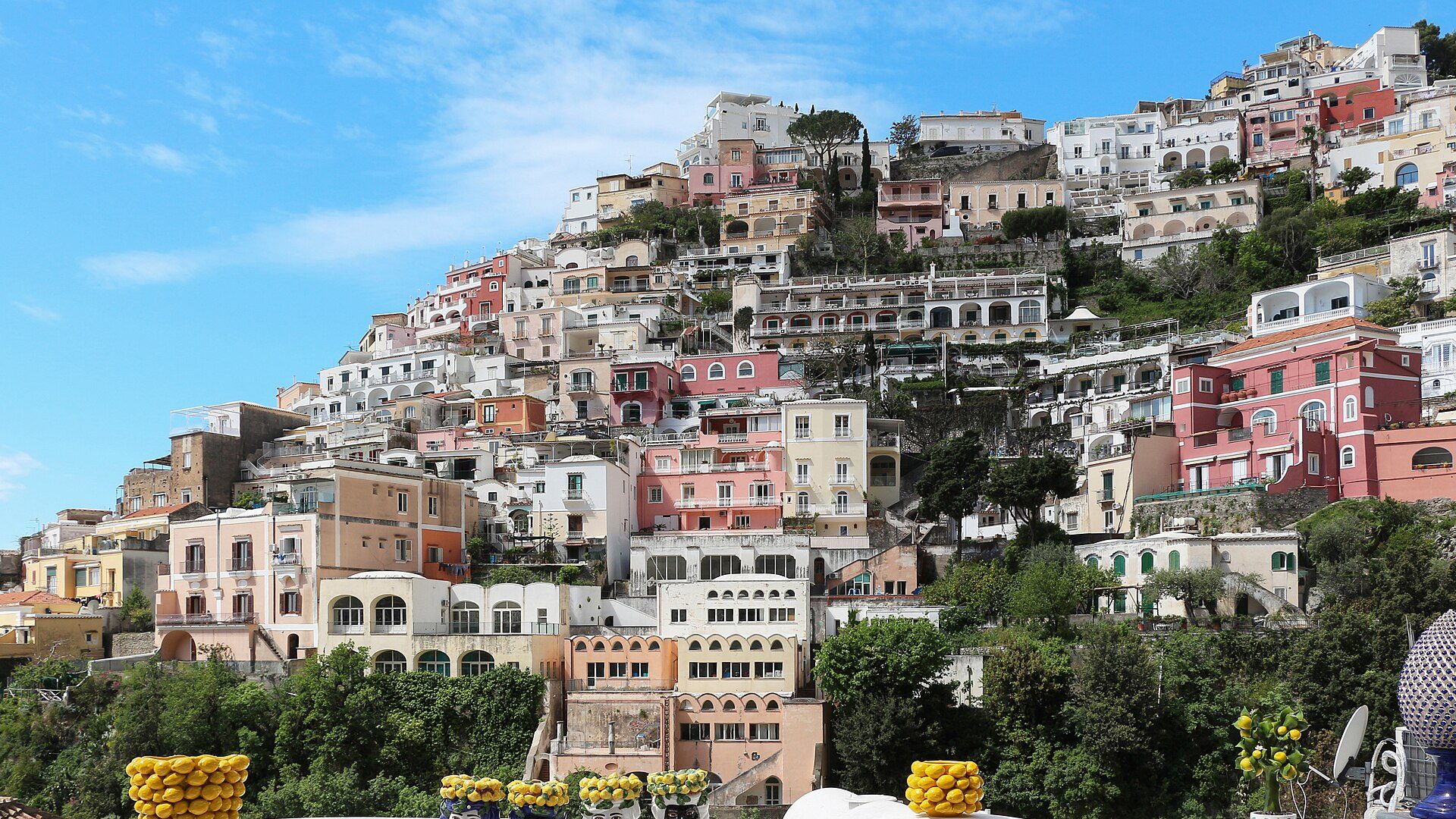
The obvious answer is the townscape: Positano falling down its ravine in ochre and pink, Amalfi's cathedral steps, Ravello's gardens 350 metres above the sea. The less obvious one is the cultural mix. Amalfi was a maritime republic trading across the Mediterranean, and UNESCO cites the resulting "fusion of eastern and western influences": visible in the Arabic-Norman architecture of Amalfi and Ravello, and in a ceramics tradition shaped by Arab contact.
It is also a coast for walking, which surprises people who know it only from photographs. The paths that connect the villages above the road were the original transport network, and they remain the best way to see the terraces up close.
Top Experiences
- Ravello's villa gardens. Villa Rufolo and Villa Cimbrone sit high above the coast with the best views on it, and Ravello is calmer than the seafront towns because the crowds go where the boats dock.
- The Sentiero degli Dei (Path of the Gods). A high path between Bomerano and Nocelle, above Positano, looking down on the whole coast. Most walkers go east to west to keep the views ahead and finish on the descent.
- Amalfi's cathedral and cloister. The Duomo di Sant'Andrea and its Chiostro del Paradiso are the clearest expression of the Arabic-Norman blend that got the coast listed.
- A boat along the coast. The towns were built to be seen from the water, and a boat also skips the road. Capri is the standard day trip; the smaller coves between Praiano and Conca dei Marini are the quieter option.
- The terraces and the lemons. The stepped groves are the landscape UNESCO listed. Several farms above Amalfi and Tramonti open to visitors, which is the only way to understand how the terracing actually works.
- Atrani. A few minutes' walk from Amalfi and almost always overlooked, despite being the most intact small town on the coast.
Map
Map data © OpenStreetMap contributors
Best Time to Visit
May–June and September, when the weather is warm but the coast road isn't as jammed as it gets in July and August.
Where to Stay
Positano is the most photogenic and the most expensive, and everything involves stairs. A serious consideration with luggage or limited mobility. Amalfi is flatter, better connected by bus and ferry, and cheaper for the same standard; it makes the most practical base.
Ravello trades sea access for quiet and views, and is the choice if you want evenings without day-trippers. Praiano sits between Positano and Amalfi with lower prices and good bus access. Salerno and Sorrento are outside the listed coast but much better connected and considerably cheaper, at the cost of a commute each day.
Getting There
Naples is the gateway. From Naples airport or the central station, the usual routes are: the Circumvesuviana train to Sorrento then a bus or ferry along the coast; a direct bus to Amalfi or Positano; or a ferry in season, which is slower on paper and far pleasanter in practice.
Salerno, at the eastern end, is the underrated entry point: it has mainline rail connections and ferries west along the coast, and approaching from that side avoids the worst of the Sorrento bottleneck.
Do not plan to drive unless you have a specific reason. The SS163 coast road is narrow, relentlessly winding and heavily congested in summer; parking in the towns is scarce and expensive; and some sections operate alternating traffic restrictions in peak months. Arriving by ferry or bus and moving by boat is both faster and less stressful.
Getting Around
Three options, and the right one changes by day.
Ferries run between Salerno, Amalfi, Positano, Sorrento and Capri from roughly spring to autumn. They are the fastest and most comfortable way to move along the coast, and they stop when the sea is rough.
SITA buses run year-round along the coast road and go where the ferries do not, including Ravello and the inland villages. They are cheap and frequent and can be extremely crowded; buy tickets before boarding and expect to stand.
On foot. Within towns there is no alternative: Positano is essentially a staircase, and Ravello is pedestrian at its centre. Between villages, the old mule paths are well signed. Nothing here is flat: budget for steps everywhere, and pack shoes accordingly.
Food & Culture
The coast's cooking is Campanian and built on what the terraces and the sea provide: lemons above all, but also anchovies from Cetara (where colatura di alici, a fermented anchovy sauce with Roman ancestry, is still made) and the buffalo mozzarella of the plains inland. Scialatielli, a short fresh pasta, is local to the area. Naples is close enough that pizza is taken seriously everywhere.
Ceramics are the other tradition, concentrated in Vietri sul Mare at the eastern end, and UNESCO explicitly links the craft to Arab influence during the maritime republic. Buying there rather than in the resort towns gets you the real thing at a better price.
Budget
This is one of Italy's most expensive stretches of coast, and the premium is concentrated in accommodation in Positano and in beachfront dining. The cost drivers, in order: where you sleep, which town you sleep in, and the season.
The levers that work: base in Amalfi, Praiano or Salerno rather than Positano; travel in the shoulder months; use SITA buses rather than taxis and boat transfers; and eat away from the waterfront, where the same kitchen often charges noticeably less a street back. Ferry and bus tickets are minor costs by comparison.
Important Notes
Season decides the experience. July and August bring heat, full ferries and a coast road that can take hours to travel. May, June and September give much the same weather with a fraction of the pressure. In winter many hotels, restaurants and all the ferries shut down: the coast is genuinely seasonal, not merely quieter.
Steps are the defining physical feature. Positano has hundreds between the top of town and the beach, and most accommodation is reached on foot. If stairs are a problem, base yourself in Amalfi or Ravello and check with the property before booking.
Beaches are pebble, and mostly private. Free public sections exist but are small and fill early. Sun loungers are rented by the day.
Ferries are weather-dependent. Build a fallback into any plan that depends on one, particularly for a departure day.
Itinerary Suggestions
Three days. Base in Amalfi. Day one: Amalfi and Atrani on foot. Day two: Ravello and its gardens. Day three: ferry to Positano, returning by bus or boat.
Five days. Add the Sentiero degli Dei and a boat day to Capri or the smaller coves. Five days is the length at which the coast stops feeling rushed.
A week, with the region. Combine with Pompeii and Herculaneum, or Naples itself, both under two hours away. Vietri sul Mare for ceramics fits neatly on the way to or from Salerno.
A practical note on pacing: one town per day is the realistic maximum in high season. The distances look trivial on a map and are not, because the road and the ferries both throttle movement.
Frequently Asked Questions
Should I rent a car?
Generally no. The SS163 coast road is narrow and heavily congested in summer, parking is scarce and expensive, and some sections restrict traffic in peak months. Ferries and SITA buses are faster and far less stressful.
Which town should I base myself in?
Amalfi is the most practical, flatter, well connected by bus and ferry, and cheaper than Positano. Positano is the most beautiful and the most demanding, with stairs everywhere. Ravello is quietest.
When should I go?
May, June and September give warm weather without the July and August crush. In winter much of the coast closes, including the ferries.
How many days do I need?
Three at minimum, five to do it without rushing. In high season, plan one town per day, movement along the coast is slower than the map suggests.
Is it suitable if I have trouble with stairs?
Positano is difficult. Amalfi and Ravello are manageable. Check with your accommodation about access before booking, since many properties are reached only on foot.
Are the beaches sandy?
No, they are pebble, and largely operated as private concessions with loungers for hire. Free public sections are small and fill early.
Sources
Last reviewed: September 14, 2026
Plan your trip to Amalfi Coast
Free tools for flight times, time differences, budget, money and plugs.
- Flight Duration CalculatorWork out real flight time across time zones.
- Time Zone ConverterFind the time in another city instantly.
- Trip Budget CalculatorEstimate your total trip cost, item by item.
- Currency ConverterConvert prices between currencies at indicative rates.
- Travel Plug & Voltage CheckerCheck if you need a plug adapter or voltage converter.
- Jet Lag CalculatorEstimate how many days you need to beat jet lag.