Overview
The trek runs up the Khumbu valley in north-eastern Nepal, through the homeland of the Sherpa people and inside Sagarmatha National Park, a UNESCO World Heritage site. Almost everyone starts by flying to Lukla and walking north through Namche Bazaar, Tengboche, Dingboche and Lobuche to Gorak Shep, with Base Camp and the viewpoint of Kala Patthar at the top.
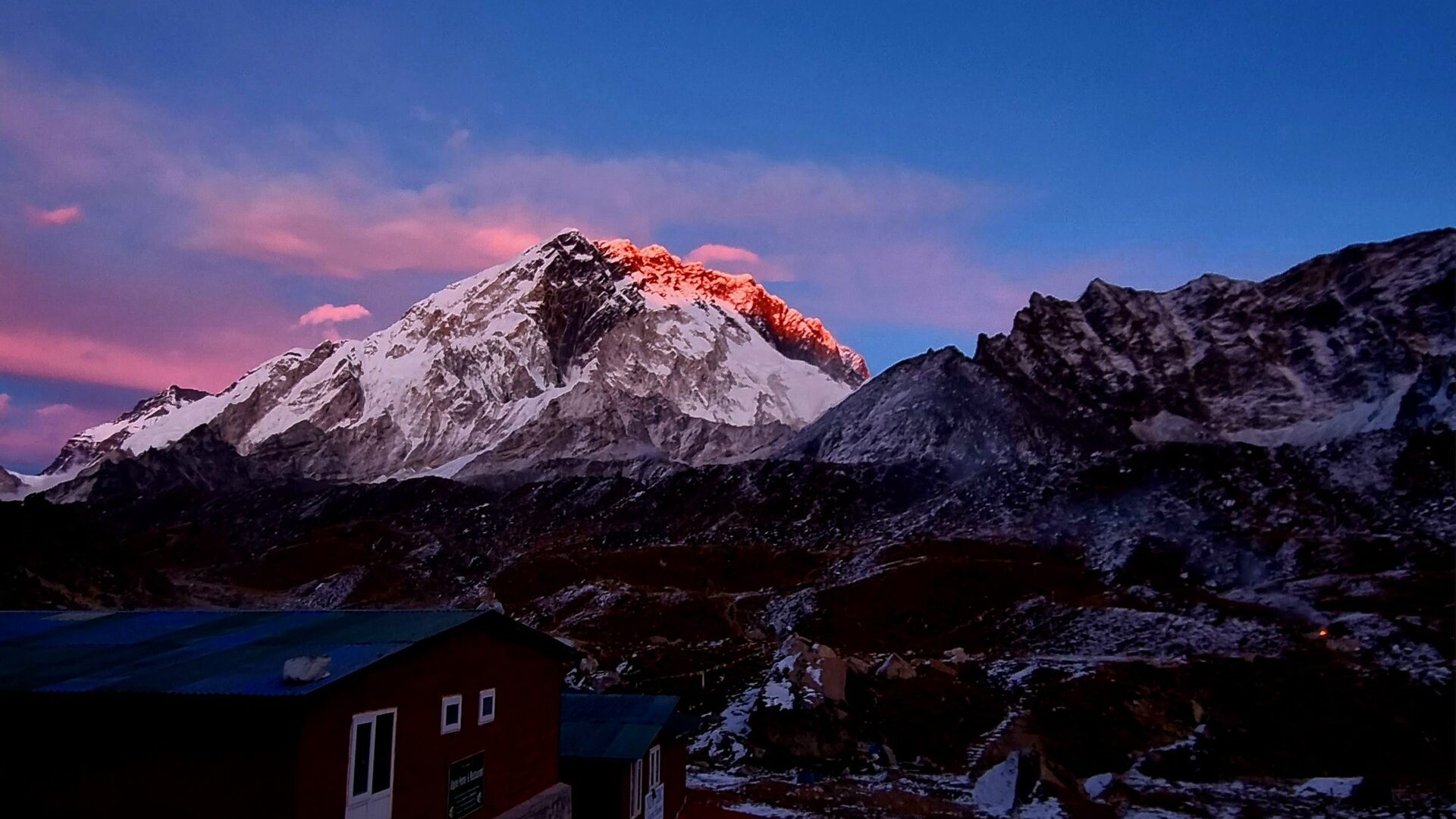
Base Camp itself is unremarkable to look at outside the spring climbing season, a moraine field of rock and ice at the mouth of the Khumbu Icefall. The reason people go is the walk: the valley, the monasteries, the villages, and a horizon of eight-thousand-metre peaks including Everest, Lhotse, Nuptse and Ama Dablam.
Accommodation is in teahouses (family-run lodges with simple rooms and a heated dining room) rather than tents. This is a supported trek through inhabited country, not an expedition.
Why Visit
It is the most accessible way for a reasonably fit person with no mountaineering experience to spend two weeks in the highest mountain landscape on earth, sleeping in villages and eating hot food every night.
The cultural side is as substantial as the scenery. The Khumbu is Sherpa country with a Tibetan Buddhist tradition (Tengboche monastery, mani walls, prayer flags and chortens along the trail) and the trek passes through working villages rather than around them.
Top Experiences
- Kala Patthar at sunrise. A rocky hill above Gorak Shep at about 5,545 metres and the best accessible viewpoint of Everest's summit pyramid, which is largely hidden from Base Camp itself. Cold, steep and short.
- Tengboche monastery. The largest gompa in the Khumbu, set on a ridge with Ama Dablam behind it. Visitors may attend the morning or evening puja.
- Namche Bazaar. A horseshoe of buildings on a hillside at about 3,440 metres, the trading centre of the region, with a Saturday market and the acclimatisation day almost everyone spends there.
- The Hotel Everest View acclimatisation walk above Namche: a climb of a few hundred metres and back down, which is both the best way to adapt and a first clear sight of Everest.
- The suspension bridges over the Dudh Koshi, strung with prayer flags high above the river; the Hillary Bridge is the one people remember.
- Base Camp in April or May, when the expedition tents are up and the Icefall doctors are working the route; outside that window the site is empty.
- Gokyo and the Cho La pass, for those with more time: turquoise lakes and a higher, quieter alternative loop.
Map
Map data © OpenStreetMap contributors
Best Time to Visit
There are two seasons, and they are not interchangeable.
Pre-monsoon, roughly March to May, is the warmer of the two, with rhododendron flowering lower down and the expedition camps active at Base Camp. It is the busiest period and haze can build later in the season.
Post-monsoon, roughly late September to November, has the clearest air and the sharpest mountain views of the year, with colder nights as the season progresses. Many experienced trekkers consider October the best month overall.
The monsoon, June to August, brings rain, cloud, leeches at lower altitudes and frequent Lukla flight cancellations. December to February is clear but severely cold at altitude, with some teahouses closed and passes potentially blocked.
Where to Stay
Teahouses the whole way. These are family-run lodges with basic twin rooms, shared bathrooms, and a communal dining room heated in the evening, usually the only warm space in the building.
Standards fall as you go higher: Namche has hot showers, wifi and bakeries; Gorak Shep has thin walls, no heating in rooms and intermittent everything. Bring a sleeping bag rated well below freezing regardless of what the lodge provides.
In peak season the higher lodges fill, and independent trekkers arriving late in the day can struggle for a bed. Charging devices, hot water and wifi are generally paid extras that increase in price with altitude.
Getting There
Almost all treks start with a flight from Kathmandu to Lukla, one of the shortest and most weather-dependent airstrips in commercial use. In the busy spring and autumn seasons these flights often operate from Ramechhap, a four to five hour drive east of Kathmandu, instead of from Kathmandu itself: confirm the departure point with your operator, as it changes the day before the trek.
Flights are cancelled frequently for cloud and wind. Helicopter transfers are the expensive alternative and are also weather-limited.
The overland option is to drive to Jiri or Salleri and walk in, adding several days and a considerable amount of ascent and descent; it is the original route and is far quieter.
Getting Around
On foot. There are no roads in the Khumbu above Lukla: supplies move by porter, yak and dzo, and everything you see in a teahouse arrived on someone's back or an animal's.
Standing aside for loaded animals on the uphill side of the trail is a safety rule rather than a courtesy; being pushed off the outer edge by a yak's load is a real hazard on narrow sections.
Porters and guides are hired in Kathmandu or Lukla. Beyond the practical help, a porter's load limit and insurance are an ethical issue worth asking your operator about directly.
Top Attractions
Sagarmatha National Park: UNESCO-listed, covering the Nepalese side of Everest and the valleys below it.
Kala Patthar: the viewpoint, and the highest point most trekkers reach.
Tengboche and Pangboche monasteries: the religious centres of the Khumbu.
The Sherpa villages: Namche, Khumjung, Khunde, Pangboche and Dingboche, each with a distinct setting and altitude.
The memorials at Thukla Pass: stone chortens for climbers who died on Everest, including Scott Fischer and Babu Chiri Sherpa; a sober place on the climb toward Lobuche.
The Khumbu Icefall: visible from Base Camp, and the most dangerous section of the standard climbing route.
Food & Culture
Dal bhat (lentil soup, rice and vegetable curry) is the staple, is usually refillable, and is the sensible choice at altitude because it is cooked fresh in volume. Menus also carry noodles, soups, potatoes, pancakes and Tibetan bread; the higher you go, the higher the prices and the narrower the range.
Meat is best avoided above Namche: it is carried up unrefrigerated over several days, and the park's Buddhist tradition means animals are not slaughtered in the valley. Alcohol at altitude worsens acclimatisation and dehydration.
The Khumbu is Sherpa country with a Tibetan Buddhist culture. Walk clockwise around chortens, mani walls and prayer wheels, keeping them on your right. Ask before photographing people or inside monasteries. The word Sherpa is an ethnic group, not a job title, which is worth remembering when talking about the people carrying loads.
Budget
The cost splits into permits, flights, guides and porters, and daily teahouse expenses. Nepal is inexpensive generally, but the Khumbu is not: everything above Lukla has been carried there, and prices rise steadily with altitude.
Daily costs that add up beyond food and bed: device charging, hot showers, wifi, bottled or treated water, and the extra blankets or heated dining room at the top of the valley.
The two ways people reduce the total are trekking in the shoulder weeks of a season and carrying their own pack rather than hiring a porter. The second of which is a genuine trade-off at altitude and not recommended for a first high-altitude trek. Booking through a Nepali operator directly rather than an international agency generally costs less; verifying their insurance for staff matters more than the saving.
Entry, Tickets & Permits
A visa is required for Nepal and is commonly obtained on arrival at Kathmandu airport or in advance; check the current arrangement and fees with the Department of Immigration before travelling.
For the trek itself, permits are required and the system has changed in recent years. In the Khumbu this normally means the Sagarmatha National Park entry permit and a local rural municipality permit issued for the Khumbu area, rather than the TIMS card used in other regions. Requirements are adjusted periodically, so confirm the current position with the Nepal Tourism Board or your operator rather than relying on an older account.
The UK Foreign Office states that all foreign independent trekkers must use a local guide or porter in Nepal's national parks and protected areas, and that a valid permit is needed to enter the main trekking regions; trekking without the correct documents can result in fines or removal from the area.
Insurance is the other requirement in practice rather than in law. It must cover trekking to at least 5,600 metres and, specifically, helicopter evacuation, standard travel policies routinely exclude both.
Important Notes
Altitude is the real risk. Acute mountain sickness can affect anyone regardless of fitness, age or experience. The rules that matter: ascend slowly, take the scheduled rest days, sleep no more than a few hundred metres higher each night above 3,000 metres, drink far more water than feels necessary, and descend immediately if symptoms worsen. High-altitude cerebral and pulmonary oedema are life-threatening and descent is the only reliable treatment.
Do not shorten the itinerary. Most serious incidents on this trek involve people who went up too fast, often on a compressed schedule sold as a shorter package.
Be alert to helicopter rescue fraud. The UK Foreign Office warns of isolated reports of guides taking inexperienced trekkers too high too quickly and then calling expensive helicopter evacuations from which they take a cut, and advises caution with unusually cheap trekking packages.
Lukla flights will probably disrupt your plans. Treat cancellation as likely rather than possible and build in spare days.
Cash only above Lukla. Draw what you need in Kathmandu or Namche; ATMs above Namche are unreliable and cards are not accepted in most lodges.
Water. Buying bottled water up the valley creates a waste problem the region cannot handle; a filter or purification tablets with refills from lodges is both cheaper and better practice.
Itinerary Suggestions
The standard fourteen-day pattern: fly to Lukla and walk to Phakding; on to Namche Bazaar; acclimatisation day at Namche with a walk higher; Tengboche; Dingboche; acclimatisation day at Dingboche; Lobuche; Gorak Shep, Base Camp and back; Kala Patthar at dawn, then descend to Pheriche; Namche; Lukla; fly out.
With more time: add the Gokyo lakes and cross the Cho La pass, which turns it into an eighteen to twenty-day circuit and avoids retracing the main trail.
Build in buffer days. Lukla flights are cancelled routinely for weather, sometimes for several consecutive days. Plan at least two spare days in Kathmandu before any onward international flight.
Do not compress the schedule. The acclimatisation days at Namche and Dingboche are the reason the itinerary works, and removing them is the most common cause of a failed or dangerous trek.
Frequently Asked Questions
Do I need climbing experience for Everest Base Camp
No. It is a walking route on trails with no technical sections, no ropes and no ice climbing. What it requires is endurance over two weeks and the ability to cope with altitude, which is a different kind of difficulty.
How high is Base Camp and how high do trekkers go
Base Camp sits at roughly 5,364 metres. Most trekkers also climb Kala Patthar at around 5,545 metres, which is the highest point of the standard route and the better viewpoint of Everest itself.
Can I trek without a guide
The UK Foreign Office states that foreign independent trekkers must use a local guide or porter in Nepal's national parks and protected areas. Rules have changed more than once, so confirm the current position with the Nepal Tourism Board or a registered operator before planning a solo trek.
What permits do I need
In the Khumbu, normally the Sagarmatha National Park entry permit plus a local rural municipality permit, rather than the TIMS card used elsewhere in Nepal. Because the system has been revised in recent years, verify the current requirement with the Nepal Tourism Board or your operator.
When is the best time to go
Late September to November for the clearest views and October in particular, or March to May for warmer weather and an active Base Camp during the climbing season. Avoid the June to August monsoon and be prepared for severe cold in midwinter.
What does my insurance need to cover
Trekking up to at least 5,600 metres and helicopter evacuation, both of which are commonly excluded from standard travel policies. Check the altitude limit in the policy wording specifically, not just the activities list.
Sources
- UNESCO World Heritage Centre: Sagarmatha National Park
- Nepal Tourism Board: trekking permits and information
- UK Foreign Office: Nepal travel advice, safety and security
- Department of Immigration, Nepal: visa information
- Himalayan Rescue Association: altitude sickness guidance
Last reviewed: September 15, 2026
Plan your trip to Everest Base Camp Trek
Free tools for flight times, time differences, budget, money and plugs.
- Flight Duration CalculatorWork out real flight time across time zones.
- Time Zone ConverterFind the time in another city instantly.
- Trip Budget CalculatorEstimate your total trip cost, item by item.
- Currency ConverterConvert prices between currencies at indicative rates.
- Travel Plug & Voltage CheckerCheck if you need a plug adapter or voltage converter.
- Jet Lag CalculatorEstimate how many days you need to beat jet lag.