
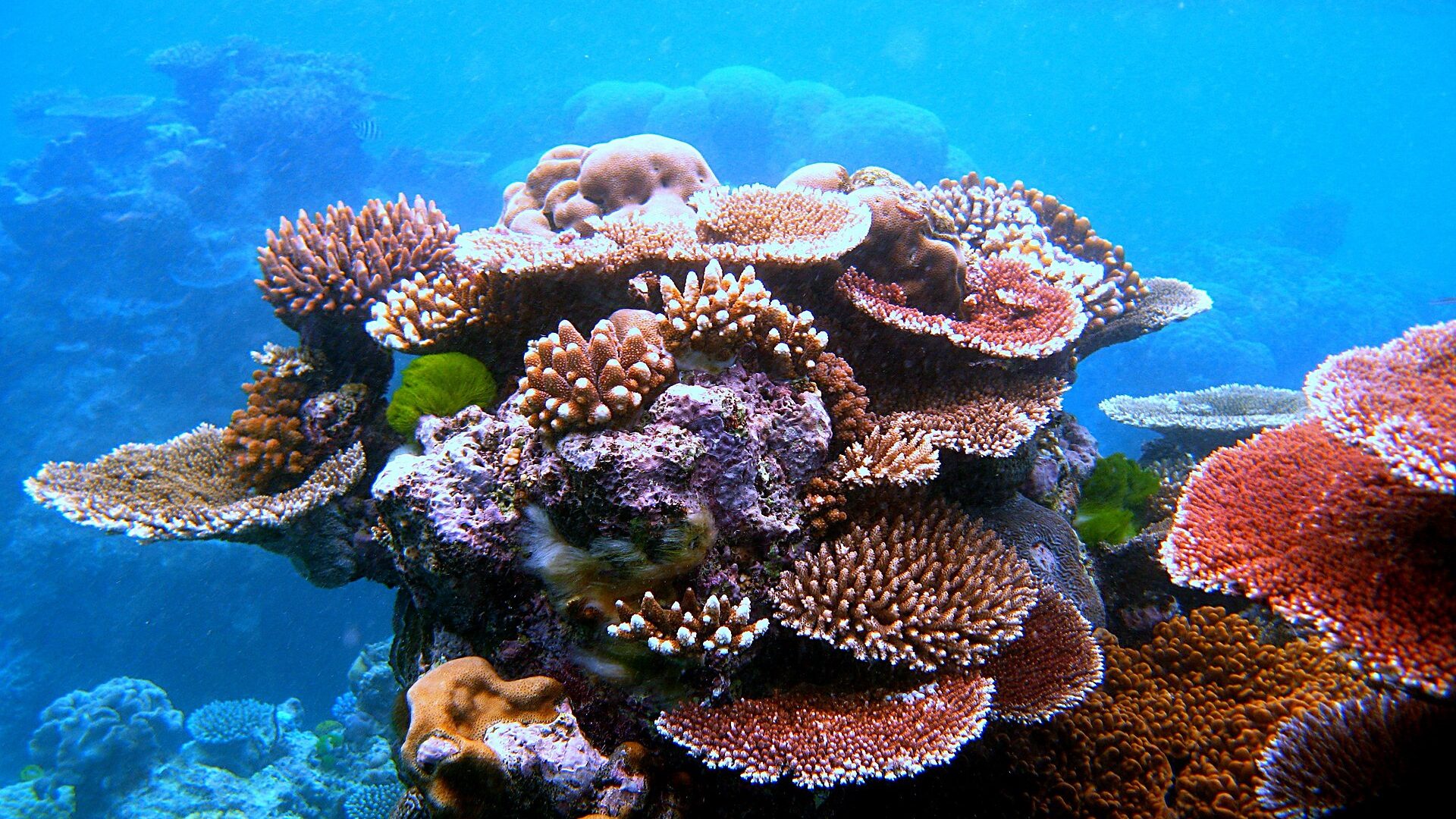
Great Barrier Reef
Overview
The world's largest coral reef system, running roughly 2,000 km along the Queensland coast and covering about 348,000 km², an area larger than Italy. UNESCO inscribed it in 1981, and the scale is the thing most visitors underestimate: it is not a single reef but around 2,500 individual reefs and more than 900 islands, spread across 14 degrees of latitude and reaching up to 250 km offshore.
That size matters practically. There is no one place called "the reef" to visit. Where you go from, how far offshore you get, and which operator you choose determine what you actually see far more than the season does.
Why Visit
The biodiversity figures are genuinely unusual: some 400 types of coral, 1,500 fish species, 4,000 mollusc species and 242 recorded bird species, plus dugongs and six of the world's seven marine turtle species. Few places let a non-diver see that much life with a mask and a few hours.
The reef is also under visible pressure from bleaching events and water quality, which has changed the character of a visit. Reputable operators now explain what you are seeing, including the damaged sections, rather than steering around them. That candour is worth seeking out. It makes for a better trip than a sanitised one.
Top Experiences
- A full-day outer reef trip. The outer reef sits well offshore and generally has clearer water and healthier coral than inshore sites. It means a longer boat ride, often two hours or more each way, and it is almost always worth it.
- Snorkelling rather than diving, if you are undecided. Most of the colour and fish life on the reef sits in the top few metres. Snorkellers see a great deal; certification is not a prerequisite for a good day.
- An introductory dive for the uncertified, offered by many operators under instructor supervision. A reasonable way to find out whether diving is for you, in exceptionally good conditions.
- A liveaboard for certified divers, reaching sites that day boats cannot, including the Ribbon Reefs and Coral Sea sites north of Cairns.
- A scenic flight over the reef. The structure only makes sense from the air: the ribbon reefs, the lagoons, the sheer extent of it.
- Island time in the Whitsundays. A different proposition from the reef trips out of Cairns: sailing, beaches and fringing reef rather than outer-reef diving.
Map
Map data © OpenStreetMap contributors
Best Time to Visit
June to October for the best underwater visibility and cooler, more comfortable air temperatures.
Where to Stay
Cairns has the broadest range and the most operators to choose from; the city itself is functional rather than scenic, with an artificial lagoon in place of a beach. Palm Cove and the northern beaches are quieter and still within easy reach of Cairns departures.
Port Douglas is smaller, more polished and closer to the Agincourt reefs. Airlie Beach serves the Whitsundays. Island resorts: Lizard, Hayman, Heron and others: put you on the reef itself, with fringing reef often accessible straight off the beach, at a price that reflects it.
Getting There
Access is from the Queensland coast, and the choice of base shapes the trip.
Cairns is the main gateway, with the widest range of day boats and liveaboards and the shortest run to outer-reef sites. Port Douglas, about an hour north, is quieter and sits closer to the Agincourt ribbon reefs. Airlie Beach and the Whitsundays are the base for sailing and island-hopping. Townsville is the departure point for wreck diving on the SS Yongala.
All have airports or are a short transfer from one, with domestic connections from Brisbane, Sydney and Melbourne. There is no way to reach the reef itself except with a licensed operator by boat, seaplane or helicopter.
Getting Around
Everything happens by boat. Day trips run to fixed sites, often a pontoon moored on the outer reef, which suits families and non-swimmers because there is a stable platform, a glass-bottom boat and usually a semi-submersible. Smaller vessels visit two or three reef sites with no pontoon, which means fewer people in the water and a more variable but often better experience.
On land, the coastal strip between Cairns and Port Douglas is served by shuttles and is easy without a car. A car becomes useful if you want to combine the reef with the Daintree or the Atherton Tablelands inland.
Food & Culture
Queensland's coastal food is built around seafood: barramundi, mud crab, Moreton Bay bugs and prawns, usually cooked simply. Cairns and Port Douglas both have good markets worth a morning.
The reef and its coast are the Sea Country of Aboriginal and Torres Strait Islander peoples, whose connection to it long predates the marine park. A number of operators are Indigenous-owned or run trips with Indigenous guides, and they read the reef and the coastline differently from a standard marine-biology briefing. If that interests you, it is worth choosing the operator deliberately.
Budget
The reef trip itself is the main cost, and it varies with distance offshore, boat size and whether diving is included. Pontoon-based day trips and small-boat trips occupy different price points for good reasons rather than arbitrary ones.
Beyond that, the environmental management charge is a modest per-person amount collected by the operator, and domestic flights to Cairns are usually the second-largest line. Accommodation and food in Queensland are comparable to the rest of Australia. A liveaboard concentrates the whole budget into one item but removes most other costs for its duration.
Entry, Tickets & Permits
You do not need a permit as an individual visitor. Tourism operators hold the permits, and an environmental management charge is levied per visitor for most commercial trips into the Marine Park. It is usually collected by the operator and often shown separately on your booking.
What does apply to you directly is zoning. The Marine Park is divided into zones that determine what is allowed where. Collecting of any kind is prohibited in Marine National Park (green), Buffer (olive), Scientific Research (orange) and Preservation (pink) zones. Limited collecting is permitted in General Use (light blue), Habitat Protection (dark blue) and Conservation Park (yellow) zones. If you are on a commercial trip, the operator handles this; if you take a private boat out, the zoning maps are your responsibility.
Important Notes
The Reef Authority publishes responsible reef practices. The ones that matter most to a snorkeller or diver:
- Do not lean on, hold onto or touch any part of the reef. This is singled out as especially important when taking underwater photographs, the commonest cause of accidental damage.
- Stay more than one metre from giant clams.
- Keep at least two metres from nesting turtles and from nests where hatchlings are emerging.
- Do not feed fish.
- If you are boating: avoid no-anchoring areas marked by white pyramid buoys, anchor in sand or mud rather than coral, and never wrap anchor rope around coral.
Two practical hazards. Marine stingers are present in coastal waters roughly from November to May, when operators supply stinger suits. Wear them. And the reef is genuinely offshore: if you are prone to seasickness, take something before boarding rather than once you feel it.
Itinerary Suggestions
Three days, Cairns. One full-day outer reef trip, one day in the Daintree or the Tablelands, one flexible day, kept in reserve because reef trips are cancelled in bad weather and you want a second chance at the main event.
Five days, Cairns and Port Douglas. Two reef days from different ports, so you see different reef systems rather than the same one twice, plus rainforest and a scenic flight.
Seven days, reef and islands. Cairns for outer-reef diving, then a flight south to the Whitsundays for sailing and beaches. Two distinct experiences rather than a repeat.
The single most useful planning habit: book your reef day early in the trip, not on your last day. Weather cancellations are routine, and you want the slack.
Frequently Asked Questions
Do I need to dive?
No. Most of the reef's colour and fish life is in the top few metres, and snorkellers see a great deal. Operators also offer supervised introductory dives for the uncertified.
Is the inner or outer reef better?
The outer reef generally has clearer water and healthier coral, at the cost of a longer boat trip, often two hours or more each way.
Do I need a permit?
Not as an individual. Operators hold the permits, and an environmental management charge is collected per visitor for most commercial trips into the Marine Park.
Can I touch the coral?
No. The Reef Authority asks visitors not to lean on, hold onto or touch any part of the reef, and singles this out as especially important when taking photographs.
What about stingers?
Marine stingers are present in coastal waters roughly November to May. Operators provide stinger suits in that season and you should wear them.
How many days do I need?
Three to five, and book the reef trip early in your stay, bad weather cancels trips and you want a second chance.
Sources
- UNESCO World Heritage Centre: Great Barrier Reef
- Great Barrier Reef Marine Park Authority: Responsible Reef Practices
- Great Barrier Reef Marine Park Authority: Environmental management charge
Last reviewed: September 14, 2026
Plan your trip to Great Barrier Reef
Free tools for flight times, time differences, budget, money and plugs.
- Flight Duration CalculatorWork out real flight time across time zones.
- Time Zone ConverterFind the time in another city instantly.
- Trip Budget CalculatorEstimate your total trip cost, item by item.
- Currency ConverterConvert prices between currencies at indicative rates.
- Travel Plug & Voltage CheckerCheck if you need a plug adapter or voltage converter.
- Jet Lag CalculatorEstimate how many days you need to beat jet lag.