
Mexico City
Overview
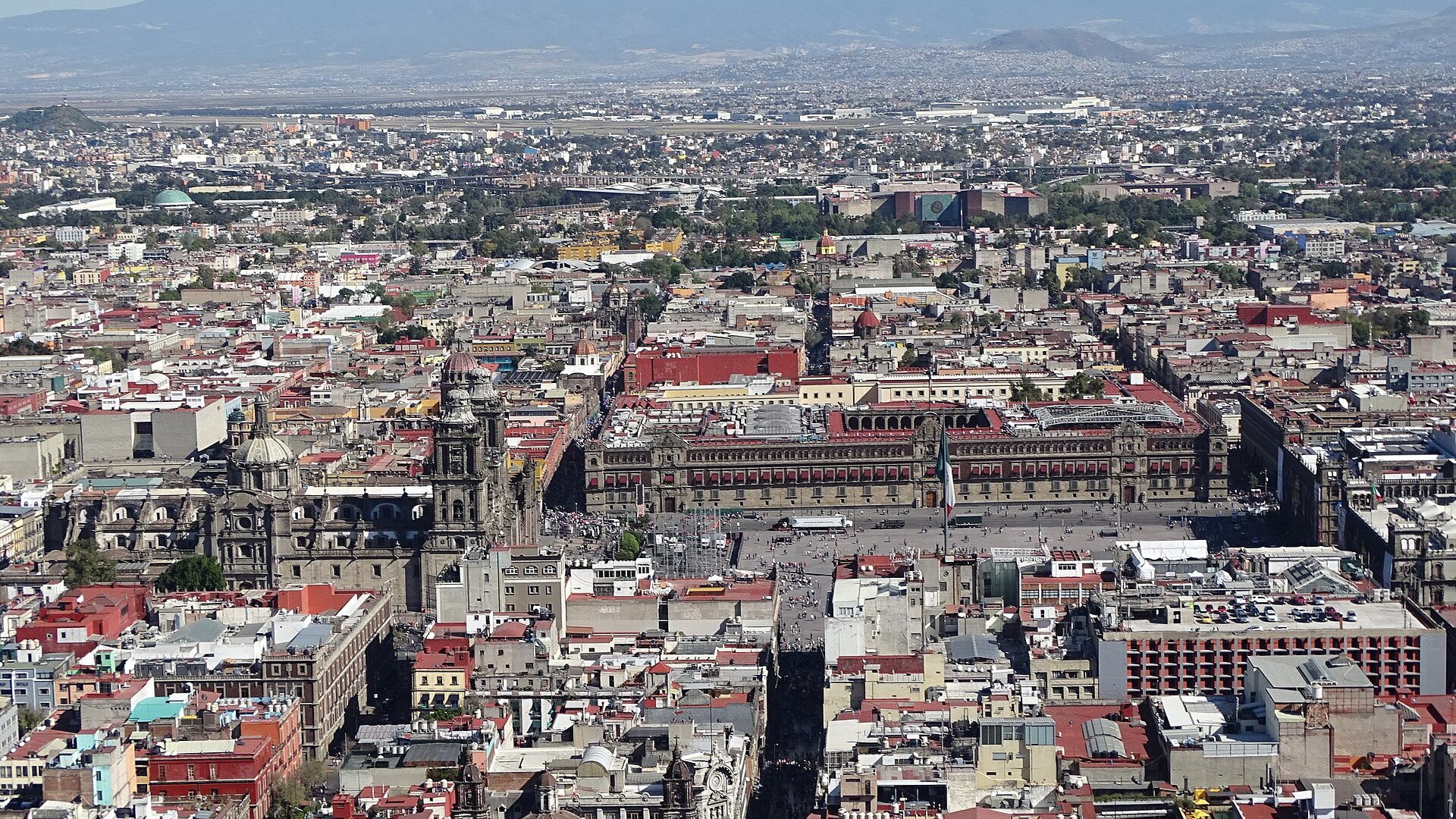
Mexico City sits in a high valley at around 2,240 metres, on the site of Tenochtitlan, the Mexica capital that stood on an island in a lake. The Spanish built their city directly on top of it, which is why the ruins of the Templo Mayor sit beside the cathedral on the main square.
The historic centre and the canals of Xochimilco are together a UNESCO World Heritage site, and the campus of the national university is separately listed. Beyond the centre, the city is a collection of distinct colonias (Roma, Condesa, Coyoacán, Polanco) each with its own character, parks and food.
Why Visit
Few cities offer this depth: a pre-Hispanic capital, a colonial core, twentieth-century muralism and modernist architecture, and one of the world's great food cultures, all within one metropolitan area.
The National Museum of Anthropology alone justifies a trip, and the Teotihuacan pyramids are an hour away.
Best Things to Do
- The National Museum of Anthropology. In Chapultepec park, and one of the finest museums in the world for pre-Hispanic civilisations. Allow half a day at minimum.
- The Zócalo and Templo Mayor. The vast main square, the cathedral, the National Palace with Diego Rivera's murals, and the excavated Mexica temple beside them.
- Frida Kahlo Museum (Casa Azul). Her house in Coyoacán, kept much as she left it. Tickets are timed and must be booked well ahead.
- Chapultepec. One of the largest city parks in the Americas, with the castle on the hill, several museums and long walking routes.
- Xochimilco. The surviving canals and chinampas of the lake system in the south, visited on flat-bottomed trajineras. Busiest and most festive on Sundays.
- Coyoacán and San Ángel. Colonial neighbourhoods in the south with cobbled streets, markets and, at San Ángel, a Saturday art bazaar.
- The murals. Rivera, Orozco and Siqueiros across the Palacio de Bellas Artes, the National Palace and the Secretaría de Educación Pública.
Destinations & Attractions
Map
Map data © OpenStreetMap contributors
Best Time to Visit
March to May is the warmest and driest stretch, though April and May can be hazy.
The rainy season runs roughly from June to September, with heavy but usually short afternoon storms. Mornings are generally clear and the city is green.
October to February is dry and mild, with cool nights at altitude. Late October and early November bring Día de Muertos, which is the busiest and most atmospheric time of year and needs booking well ahead.
Where to Stay
Roma Norte and Condesa are the most popular bases for visitors: tree-lined streets, parks, restaurants and cafés, and good transport.
Centro Histórico puts you among the major monuments and is excellent by day; it is quieter and less lively at night.
Juárez, between the two, is central and increasingly well served for eating.
Polanco is the upmarket district beside Chapultepec, with the anthropology museum and the best-known restaurants. Coyoacán is charming but far from the centre.
Neighborhoods
Centro Histórico: the Zócalo, the cathedral, Bellas Artes, the murals and the oldest streets.
Roma Norte and Roma Sur: early twentieth-century townhouses, galleries, restaurants and bookshops.
Condesa: art deco apartment blocks around two oval parks, cafés and a slower pace.
Polanco: embassies, luxury retail, Chapultepec and the anthropology museum.
Coyoacán: colonial squares, the Kahlo and Trotsky houses, a lively market.
San Ángel: cobbled colonial streets and the Saturday art market.
Xochimilco: the canals and floating gardens in the far south.
Transportation & Airports
The Metro is extensive and very cheap, with stations marked by pictograms as well as names. It is crowded at peak hours, and some lines have women-and-children-only carriages at the front.
The Metrobús runs in dedicated lanes along the main avenues and is often faster than driving. Both use a rechargeable card.
Ride-hailing apps are widely used, inexpensive and generally preferred to hailing taxis on the street. Traffic is heavy, so allow time.
The two airports are Benito Juárez, close to the centre, and Felipe Ángeles, considerably further north; check which one your flight uses.
Food
Mexico City eats at every hour and at every price. Tacos al pastor, pork carved from a vertical spit with pineapple, are the city's own; tacos de canasta, quesadillas and tlacoyos fill the rest of the street.
Markets are the best introduction: Mercado de San Juan, Mercado de Coyoacán and Mercado Medellín each have kitchens serving all day.
To drink: mezcal, pulque in the surviving pulquerías, and aguas frescas. Traditional Mexican cuisine is on UNESCO's intangible heritage list, and the city is the easiest place to eat across the country's regions.
Day Trips
Teotihuacan, about an hour north-east, is the enormous pre-Aztec city with the Pyramids of the Sun and Moon, a UNESCO World Heritage site. Go early for heat and crowds; climbing rules vary, so check on arrival.
Puebla and Cholula, around two hours east, offer a colonial centre famous for tiles and mole, and the largest pyramid by volume in the world, with a church on top of it.
Tepoztlán, in Morelos, is a small town under a cliff with a pyramid on the ridge above and a good weekend market.
Taxco, a silver-mining town in the mountains, is a longer day or an overnight.
Budget
Mexico City is inexpensive relative to North American and European capitals. Street food and market kitchens cost very little, and the Metro is among the cheapest in the world.
Accommodation in Roma and Condesa has risen sharply in recent years but remains reasonable. Many major museums are free on Sundays for Mexican nationals and residents and modestly priced otherwise; the anthropology museum is worth any amount of it.
Travel Tips
Altitude is real. At 2,240 metres you may feel short of breath for a day or two, and alcohol has a stronger effect. Take the first day gently.
Book Casa Azul in advance. It is timed-entry and sells out days ahead.
Use ride-hailing apps rather than street taxis, and keep valuables out of sight on crowded Metro carriages.
Rain arrives in the afternoon during the wet season; schedule outdoor sites for the morning.
Earthquake drills are routine. If the seismic alert sounds, follow the instructions of the people around you rather than improvising.
Frequently Asked Questions
How many days do I need in Mexico City
Four full days is a workable minimum for the centre, the anthropology museum, Coyoacán and one day trip. A week is easily filled.
Is Mexico City safe for visitors
The neighbourhoods most visitors use are busy and generally fine with normal city precautions. Use ride-hailing apps at night, avoid displaying valuables, and check current official travel advice before you go.
Is Teotihuacan a day trip
Yes, about an hour each way, and best started early. It combines well with the Basilica of Guadalupe on the way back.
Does altitude affect visitors
Some people feel breathless or tired for the first day or two. Drinking water, eating lightly and going easy on alcohol helps.
Plan your trip to Mexico City
Free tools for flight times, time differences, budget, money and plugs.
- Flight Duration CalculatorWork out real flight time across time zones.
- Time Zone ConverterFind the time in another city instantly.
- Trip Budget CalculatorEstimate your total trip cost, item by item.
- Currency ConverterConvert prices between currencies at indicative rates.
- Travel Plug & Voltage CheckerCheck if you need a plug adapter or voltage converter.
- Jet Lag CalculatorEstimate how many days you need to beat jet lag.