
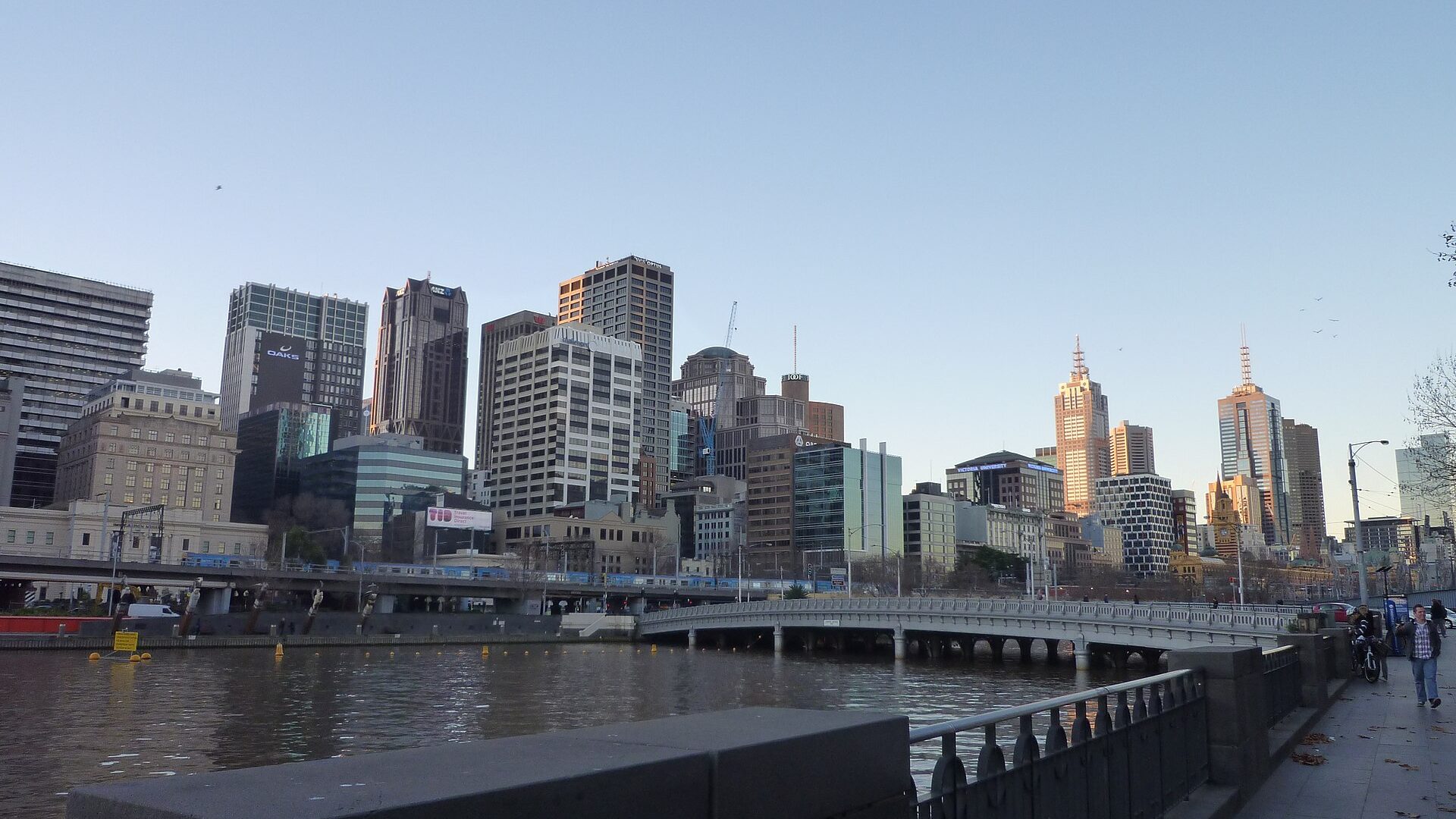
Melbourne
Overview
Melbourne sits at the head of Port Phillip Bay in the south-east of Australia, built on a rectangular colonial grid beside the Yarra River. What makes it distinctive is what happened inside that grid: a dense network of laneways and covered arcades, originally service alleys, now full of cafés, small bars and murals.
Around the centre, a ring of inner suburbs each has its own main street and character, and the tram network, the largest in the world, ties them together. Beyond that the city reaches the bay beaches at one end and the ranges at the other.
Why Visit
Melbourne has the strongest coffee and small-bar culture in Australia and a calendar of major events (tennis, motor racing, an arts festival, a comedy festival and a football season that dominates winter) that gives almost any month a reason to be there.
It is also the base for two of the country's best drives, the Great Ocean Road and the Mornington Peninsula, and for the wine country of the Yarra Valley.
Best Things to Do
- The laneways. Degraves Street, Centre Place, Hosier Lane and the Block and Royal arcades. Hosier Lane is the best known for street art, which is repainted constantly.
- Queen Victoria Market. A nineteenth-century market covering several blocks, with produce, deli halls and, in summer, night markets.
- NGV and the arts precinct. The National Gallery of Victoria has two sites, the international collection on St Kilda Road and Australian art at Federation Square.
- The MCG. The Melbourne Cricket Ground, the largest stadium in the southern hemisphere, and the centre of the city's sporting identity. Tours run when there is no match.
- The free City Circle tram. A heritage tram running a loop of the centre at no charge, and the whole central grid is inside a free tram zone.
- The Royal Botanic Gardens. On the south bank of the Yarra, with the Tan running track around them.
- St Kilda. A bayside suburb at the end of a tram line, with a pier, a beach, and a little penguin colony on the breakwater at dusk.
Map
Map data © OpenStreetMap contributors
Best Time to Visit
March to May and September to November are the most pleasant: mild days, clear light, and the autumn and spring event calendars.
December to February is summer, warm to hot, with beach weather at the bay and long evenings, though heat waves do happen.
June to August is cold and grey by Australian standards, and the season for football, galleries and the small bars that the city is built for.
Melbourne's weather changes quickly in any season, which is a standing local joke and a genuine packing instruction.
Where to Stay
The CBD is the obvious base: the laneways, the free tram zone and the stations are all there. The southern end near Flinders Street is the most atmospheric.
Southbank is across the river, with the arts precinct and the casino, and quieter at night.
Fitzroy and Collingwood, north-east, are where the independent shops, live music and best restaurants are, ten minutes from the centre by tram.
St Kilda suits a beach-led stay and is about twenty minutes from the centre. Carlton, next to the university, is close in and full of Italian restaurants on Lygon Street.
Neighborhoods
CBD: the grid, the laneways, the arcades, Chinatown and the main stations.
Fitzroy and Collingwood: Brunswick and Smith streets, independent retail, live music, street art and restaurants.
Carlton: the university, the Royal Exhibition Building and Carlton Gardens, a UNESCO World Heritage site, and Lygon Street.
Richmond: Victoria Street's Vietnamese restaurants and Bridge Road.
South Yarra and Prahran: Chapel Street, shopping and the Prahran Market.
St Kilda: the bay, the pier, Acland Street's cake shops and the Esplanade.
Footscray: west of the river, the most concentrated Vietnamese and East African food in the city.
Transportation & Airports
Trams are the defining service: the network is the world's largest, and the whole central grid plus Docklands is a free tram zone with no ticket required.
Beyond that you need a myki card, which covers trams, trains and buses. Trains radiate from the City Loop under the centre to the suburbs and the bay.
Melbourne Airport is served by the SkyBus coach and by taxis and ride-hailing; there is no train link. Southern Cross station handles regional and interstate trains and coaches.
Food
Melbourne's food is its migration history: Italian on Lygon Street, Greek around Lonsdale, Vietnamese in Richmond and Footscray, Chinese along Little Bourke Street in one of the oldest continuously occupied Chinatowns in the western world.
Coffee is taken seriously and the terms are local: a flat white, a long black, a magic. Brunch is a defining meal rather than a weekend indulgence.
The small bar (often up a staircase or down a laneway, with no sign) is the city's particular institution, a response to licensing changes that made tiny venues viable.
Day Trips
The Great Ocean Road runs west along the coast past surf beaches to the limestone stacks of the Twelve Apostles. A full day from Melbourne is long; two days with a night at Apollo Bay or Port Campbell is far better.
The Yarra Valley, an hour east, is cool-climate wine country with cellar doors and the Healesville Sanctuary for Australian wildlife.
The Mornington Peninsula has bay beaches with coloured bathing boxes, hot springs and wineries.
Phillip Island is best known for the evening penguin parade. The Dandenong Ranges, closest of all, have fern gullies and a heritage steam railway.
Budget
Melbourne is expensive by global standards but eating is better value than it looks: the migrant restaurant streets in Richmond, Footscray and Chinatown serve substantial meals cheaply, and food halls and markets fill the gap at lunch.
The free tram zone removes transport costs in the centre, and the NGV, the State Library, the botanic gardens and the laneways are all free. Accommodation is the main variable and rises steeply around the Australian Open in January and the Grand Prix.
Travel Tips
Know where the free tram zone ends. Inside the grid you need nothing; step outside it without touching on a myki and you are travelling without a valid ticket.
Touch on and off correctly. On trams outside the free zone you touch on only; on trains and buses you touch on and off.
Dress in layers. The city genuinely can run through several kinds of weather in a day.
Book restaurants. The good small places take reservations and fill, particularly Thursday to Saturday.
Sun protection is not optional even on cool days; UV levels in southern Australia are high.
Other Cities in Australia

Frequently Asked Questions
How many days do I need in Melbourne
Three full days cover the laneways, the markets, the galleries and one or two inner suburbs. Add a day or two for the Great Ocean Road or the Yarra Valley.
Melbourne or Sydney
Sydney is the harbour and the landscape; Melbourne is the streets, the food and the culture. Travellers who like walking cities and eating usually prefer Melbourne.
Is the Great Ocean Road a day trip
It can be done in a long day, but it is around twelve hours with limited time at each stop. Staying overnight along the coast is much better.
Do I need a car in the city
No. Trams, trains and walking cover the city comfortably, and parking in the centre is expensive. A car only helps for regional trips.
Plan your trip to Melbourne
Free tools for flight times, time differences, budget, money and plugs.
- Flight Duration CalculatorWork out real flight time across time zones.
- Time Zone ConverterFind the time in another city instantly.
- Trip Budget CalculatorEstimate your total trip cost, item by item.
- Currency ConverterConvert prices between currencies at indicative rates.
- Travel Plug & Voltage CheckerCheck if you need a plug adapter or voltage converter.
- Jet Lag CalculatorEstimate how many days you need to beat jet lag.