
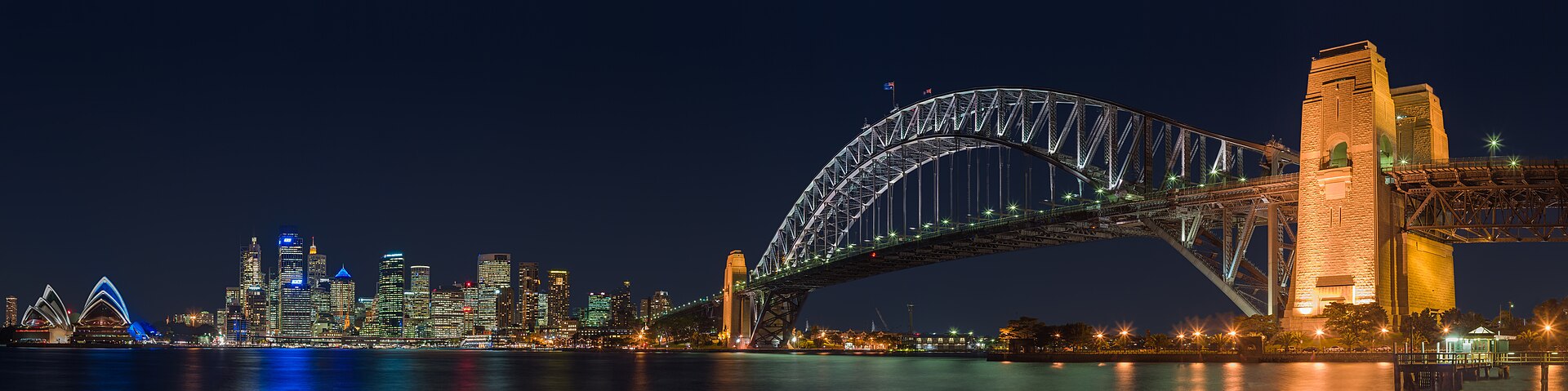
Sydney
Overview
Sydney is organised around a drowned river valley. The harbour is not a bay but a system of flooded inlets, which is why the coastline is so convoluted, why ferries are a serious form of transport, and why so many suburbs have their own small beach.
The city centre sits on the southern shore between the Harbour Bridge and the Royal Botanic Garden, but the experience of Sydney is mostly outside it: on the water, on the coastal walks, and in the beach suburbs that people actually live in.
Why Visit
Few major cities give you a world-class harbour, ocean beaches inside the urban area, and a coastal national park within an hour, all connected by public transport.
Sydney is also where most visitors first encounter Aboriginal Australia in an urban setting: the Gadigal people of the Eora Nation, whose rock engravings survive in headland reserves around the harbour and whose history is presented at several city institutions.
Best Things to Do
- The Sydney Opera House. Utzon's building is a UNESCO World Heritage site and rewards a tour or, better, a performance. The interiors are the part most visitors never see.
- The Bondi to Coogee coastal walk. Around six kilometres of clifftop path past beaches, rock pools and a cemetery above the sea. The single best thing to do in Sydney and it is free.
- The Manly ferry. A half-hour crossing of the open harbour on a normal commuter service, for the price of a bus fare. Better value than any harbour cruise.
- The Royal Botanic Garden and Mrs Macquarie's Chair. The classic view of the Opera House and bridge together, from a public park, at no cost.
- The Rocks. The colonial core below the bridge: sandstone warehouses, lanes, the oldest pubs in the city, and a weekend market.
- The Art Gallery of New South Wales. Free general entry, with a strong collection of Aboriginal and Torres Strait Islander art.
- An ocean pool. Bondi's Icebergs is the famous one, but there are dozens along the coast: seawater pools cut into the rocks, most of them free.
Map
Map data © OpenStreetMap contributors
Best Time to Visit
The seasons are inverted. September to November (spring) and March to May (autumn) are the best periods: warm, stable, and without the summer crowds or the humidity.
December to February is summer: hot, busy, and school holidays through most of January; the beaches are at their best and everything else is at its most crowded and expensive. June to August is mild rather than cold, often sunny, with whale migration off the coast and the lowest prices of the year.
Sydney's rain arrives as heavy bursts rather than drizzle, and can fall in any season. The UV index is extreme by northern-hemisphere standards for much of the year, which matters more than the temperature.
Where to Stay
The CBD, Circular Quay and The Rocks put you on the harbour with every ferry and train at hand, at the highest prices.
Surry Hills and Darlinghurst are the best areas for restaurants and bars, walkable to the centre and considerably more interesting in the evening.
Potts Point and Woolloomooloo are dense, leafy and central, with good cafés. Newtown, near the university, is cheaper, alternative and full of food.
Bondi and Manly are the beach bases: Manly has the advantage of the ferry commute, which is a genuine pleasure twice a day.
Sydney is expensive for accommodation across the board; the value improves noticeably a few stops out from Circular Quay.
Neighborhoods
The Rocks and Circular Quay: colonial sandstone, the ferry terminals, the Opera House and the bridge.
Surry Hills and Darlinghurst: terraces, restaurants, bars, and the centre of Sydney's LGBTQ life around Oxford Street.
Newtown and Enmore: King Street's bookshops, music venues and cheap eating, with a strong student presence.
Bondi, Bronte and Coogee: the eastern beaches, linked by the coastal path.
Manly and the northern beaches: across the harbour, quieter and more surf-oriented.
Balmain and Glebe: inner-west peninsulas of workers' cottages, pubs and weekend markets.
Chippendale and Redfern: galleries, a strong Aboriginal community history, and the university precinct.
Parramatta: the second centre, historically the first inland settlement, reachable by river ferry.
Transportation & Airports
Trains, buses, ferries and light rail run on one system. Tap on and tap off with a contactless bank card or phone at the reader: there is no need to buy a separate travel card, and the system applies daily and weekly caps automatically. Sunday travel has historically been capped at a low flat rate, which makes it the day to range widely; check the current fare rules as they are periodically adjusted.
Ferries from Circular Quay are ordinary public transport and the best way to see the harbour: Manly, Taronga Zoo, Watsons Bay and Parramatta are all on the network.
Driving in the centre is not worth it: tolls, tunnels and expensive parking. A car is only useful for the Blue Mountains or the coast beyond the train lines.
The airport is on the train line, about fifteen minutes from the centre, with a station access fee added to the normal fare.
Food
Sydney's food is defined by immigration and by the ocean. Cantonese, Vietnamese, Lebanese, Korean, Thai and Japanese cooking are all mainstream rather than niche, and the Vietnamese food in Cabramatta and the Chinese food in Chatswood are as good as the city centre's.
Coffee is taken seriously. The flat white is local to this part of the world and independent cafés are the norm rather than chains. Brunch is a genuine institution.
Other things worth knowing: many restaurants are BYO, meaning you can bring your own wine for a small corkage charge; tipping is not expected, as staff are paid a full wage, though rounding up for good service is common. Tap water is safe and served free everywhere.
Day Trips
The Blue Mountains: sandstone escarpments, eucalypt valleys and the Three Sisters at Katoomba, two hours by train with walking tracks from the station. The classic trip from Sydney.
Royal National Park: the world's second-oldest national park, with the Figure Eight Pools and the coast track, reachable by train to Otford or Cronulla and a ferry.
The Hunter Valley: Australia's oldest wine region, about two hours north; needs a car or a tour.
Ku-ring-gai Chase National Park: Aboriginal rock engravings, harbour views and bushwalks on the northern edge of the city.
Palm Beach: the northern tip of the peninsula, with a lighthouse walk and a ferry across Pittwater.
Budget
Sydney is expensive for accommodation and moderately so for restaurants; almost everything else that makes it worth visiting is free. The coastal walks, the beaches, the ocean pools, the Botanic Garden and the Art Gallery of New South Wales all cost nothing, and the ferries give you the harbour for the price of a normal fare.
The savings that matter: use the Opal-compatible contactless fares and the daily and Sunday caps rather than tourist passes or cruises; eat in the inner west or in the suburban immigrant food centres; and note that no tipping is expected, which takes a fifth off a restaurant bill compared with North America.
Travel Tips
Take sun protection seriously. The UV here burns fast, even on cool or overcast days. Hat, shirt and high-factor sunscreen are the local norm rather than a precaution.
Swim between the red and yellow flags. They mark the patrolled area; rip currents are the main cause of drownings on Australian beaches, and unpatrolled beaches have no one watching.
Tap on and tap off every trip, including ferries. Forgetting to tap off charges the maximum fare.
Do not underestimate distances. Sydney sprawls; a suburb that looks close on a map can be an hour away around the water.
Book the Opera House and the BridgeClimb ahead if either matters to you; both sell out in peak season.
Check whether your restaurant is BYO before buying wine there, bringing a bottle can halve the bill.
Other Cities in Australia

Frequently Asked Questions
How many days should I spend in Sydney
Three full days covers the harbour, one coastal walk and a beach day. Four or five allows the Blue Mountains and time in the inner-west neighbourhoods, which is where the city feels most like itself.
Do I need an Opal card
Not usually. Contactless bank cards and phones work directly at the readers on trains, buses, ferries and light rail, with the same caps. Buy an Opal card only if your payment method is not contactless.
When is the best time to visit
Spring and autumn, roughly September to November and March to May, for warm, stable weather without summer crowds. Remember the seasons are reversed from the northern hemisphere.
Is a harbour cruise worth paying for
Rarely. The Manly ferry crosses the open harbour on a normal fare and shows you more than most paid cruises. Spend the difference on a meal at Manly instead.
Can I see the Opera House inside without a ticket
The foyers and the outdoor podium are accessible, but the concert halls require a tour or a performance ticket. A performance is the better of the two if the programme suits you.
Plan your trip to Sydney
Free tools for flight times, time differences, budget, money and plugs.
- Flight Duration CalculatorWork out real flight time across time zones.
- Time Zone ConverterFind the time in another city instantly.
- Trip Budget CalculatorEstimate your total trip cost, item by item.
- Currency ConverterConvert prices between currencies at indicative rates.
- Travel Plug & Voltage CheckerCheck if you need a plug adapter or voltage converter.
- Jet Lag CalculatorEstimate how many days you need to beat jet lag.