
Jerusalem
Overview
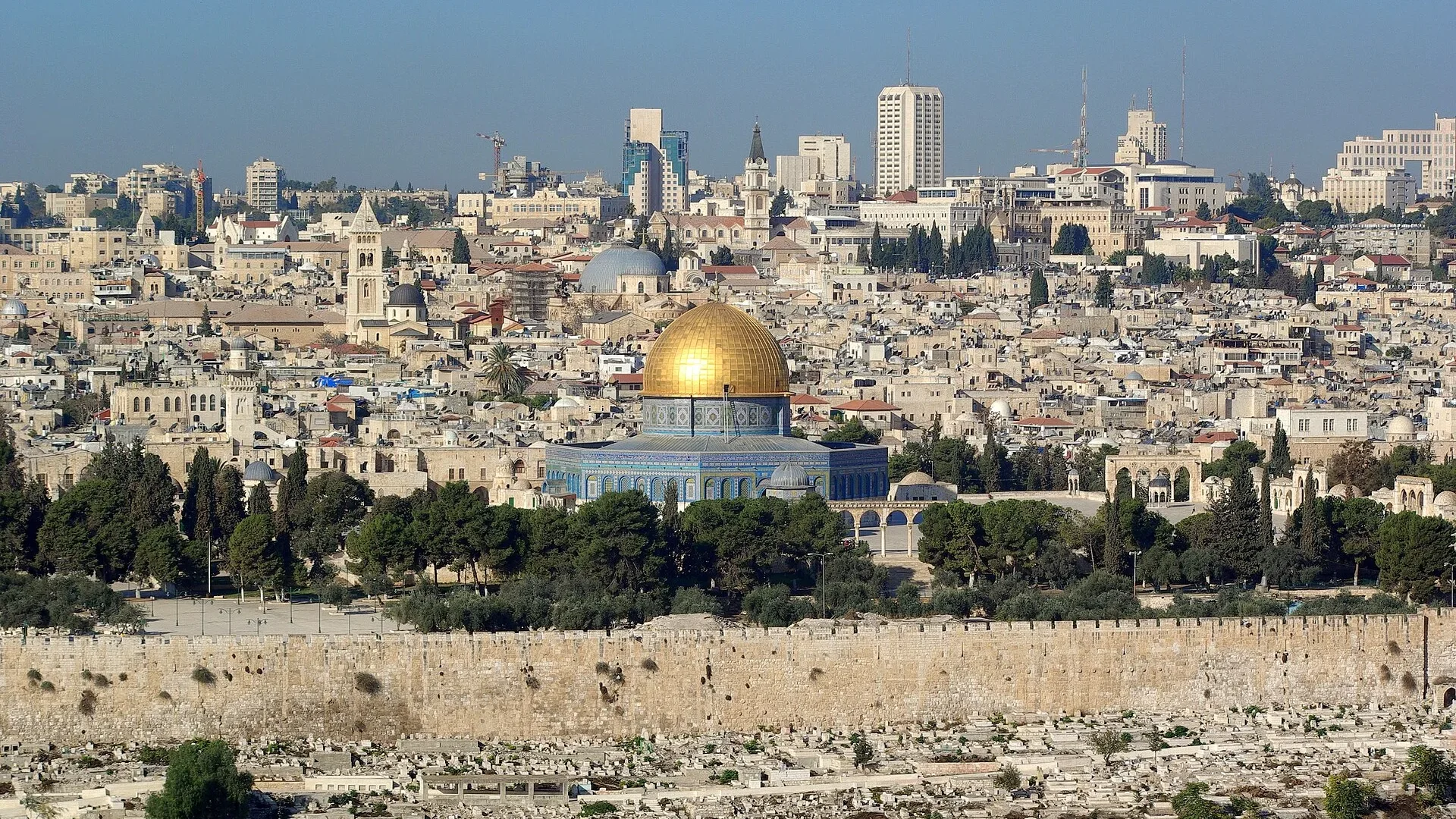
Jerusalem sits in the Judean hills at around 750 metres. Its Old City, less than a square kilometre inside sixteenth-century Ottoman walls, is divided into Jewish, Muslim, Christian and Armenian quarters and contains the Western Wall, the Church of the Holy Sepulchre and the Temple Mount / Haram al-Sharif. The Old City and its walls are inscribed on the UNESCO World Heritage List.
Outside the walls, West Jerusalem is the modern Israeli city, with the national museums and government buildings; East Jerusalem is predominantly Palestinian. The city's status is disputed and the political situation affects access, security arrangements and the practicalities of a visit.
Before travelling, check your government's current travel advice, as conditions and access to specific sites change.
Why Visit
Nowhere else concentrates this much religious and archaeological significance in such a small area, layered physically on top of itself across three thousand years.
It is also a city where the abstract becomes concrete: the distances between the holiest sites of three faiths are measured in minutes on foot, which is the fact that most visitors find hardest to absorb.
Best Things to Do
- The Western Wall. The surviving retaining wall of the Second Temple complex and the holiest site where Jews may pray. Separate sections for men and women; modest dress and head covering for men.
- The Church of the Holy Sepulchre. Built over the sites traditionally identified as the crucifixion and the tomb, shared uneasily between six Christian denominations.
- The Temple Mount / Haram al-Sharif. The platform holding the Dome of the Rock and al-Aqsa Mosque. Non-Muslim visiting hours are limited and frequently suspended; the buildings themselves are not open to non-Muslims.
- The ramparts walk. A walk along the top of the Ottoman walls, giving the clearest sense of the Old City's layout.
- The Mount of Olives. The viewpoint over the Old City from the east, with the Jewish cemetery, the Garden of Gethsemane and several churches on the slope.
- The Israel Museum. Holding the Dead Sea Scrolls in the Shrine of the Book and a large scale model of the city in the Second Temple period.
- Yad Vashem. The Holocaust memorial and museum, on Mount Herzl. Allow several hours and nothing demanding afterwards.
- Mahane Yehuda market. The main produce market in West Jerusalem, and a bar district after the stalls close.
Destinations & Attractions
Map
Map data © OpenStreetMap contributors
Best Time to Visit
March to May and September to November are the best: warm days, cool evenings and manageable crowds.
June to August is hot and dry, though the altitude keeps nights cooler than the coast.
December to February is cool and wet, with occasional snow.
Religious calendars matter more than weather. Passover, Easter, Ramadan, the High Holy Days and Christmas each bring large numbers of pilgrims, closures and restrictions. From Friday afternoon to Saturday evening, Shabbat closes most of West Jerusalem including public transport.
Where to Stay
Inside or beside the Old City, around Jaffa Gate or in the Christian Quarter, puts the sites on your doorstep and is atmospheric, though rooms are basic and access involves stairs and gates that close at night.
West Jerusalem city centre, around Jaffa Street, Mamilla and Mahane Yehuda, has the widest range of hotels, restaurants and the light rail, and is a short walk from Jaffa Gate.
The German Colony and Baka are quieter residential neighbourhoods with guesthouses.
East Jerusalem, around Salah al-Din Street, has Palestinian-run hotels close to Damascus Gate.
Neighborhoods
The Old City: the four quarters within the Ottoman walls, with the principal religious sites and the souks.
Mamilla and Jaffa Street: the modern centre immediately west of the walls, with shopping and the light rail.
Mahane Yehuda: the market district, busy by day and a nightlife area after dark.
Rehavia and the German Colony: leafy residential West Jerusalem, with cafés and guesthouses.
East Jerusalem: around Damascus Gate and Salah al-Din Street, Palestinian commercial and residential districts.
Mount of Olives and Silwan: east of the Old City, with viewpoints and the City of David archaeological site.
Transportation & Airports
The Old City is entirely pedestrian and its lanes are stepped and narrow; comfortable shoes matter more than anything else.
The light rail runs through West Jerusalem past Damascus Gate and is the simplest public transport. Buses cover the rest, with separate operators serving East Jerusalem.
Shabbat suspends most public transport and many businesses from Friday afternoon until Saturday evening; taxis and some East Jerusalem services continue to run.
Ben Gurion Airport is near Tel Aviv, about an hour away, connected by train to Jerusalem's Yitzhak Navon station and by shared shuttle taxis.
Food
Jerusalem eats across the region. Hummus, falafel, sabich and shakshuka are the everyday dishes, and each has its partisans and its favoured counters.
Knafeh, a hot cheese pastry in syrup, is the sweet most associated with the Old City and East Jerusalem.
Jerusalem mixed grill (me'orav yerushalmi) is the city's own dish, a spiced mix of chicken offal and meat in pita.
The Mahane Yehuda market is the best single place to eat, from stalls in the day to restaurants and bars at night. Note that many West Jerusalem restaurants are kosher and close for Shabbat.
Day Trips
Bethlehem, in the West Bank, is a short distance south and holds the Church of the Nativity, a UNESCO World Heritage site. Access is via a checkpoint and arrangements vary; check current conditions and entry requirements.
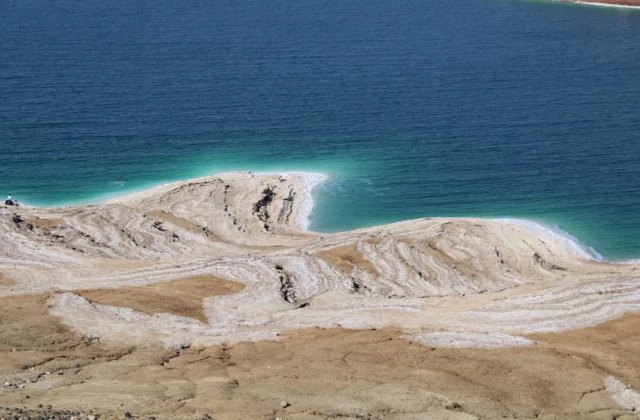
The Dead Sea, around an hour east and the lowest point on the earth's land surface, combines with Masada, a clifftop fortress and UNESCO site usually visited at sunrise.
Tel Aviv and Jaffa are about an hour by train, a completely different city on the coast.
Ein Gedi, a desert oasis nature reserve above the Dead Sea, has short walks to waterfalls.
Budget
Israel is expensive; Jerusalem slightly less so than Tel Aviv. Accommodation and restaurant meals are the main costs.
Street food keeps eating cheap: falafel, sabich and market stalls are all inexpensive. Many of the central religious sites (the Western Wall, the Holy Sepulchre, the Old City itself) are free to enter, while the museums, the City of David and the ramparts walk charge admission. Note that prices and availability rise sharply around the major religious festivals.
Travel Tips
Check current travel advice before booking. Access to specific sites, and the overall security situation, change and should be verified close to departure.
Dress modestly. Shoulders and knees covered is required at most religious sites, for men and women; head coverings are needed in some.
Plan around Shabbat. From Friday afternoon to Saturday evening, West Jerusalem largely closes, including transport.
Temple Mount hours are limited and change without notice. Non-Muslim entry is through one gate only, in the morning, and is frequently suspended.
Be aware of the sensitivity of photography near worshippers, soldiers and checkpoints, and ask before photographing people.
Frequently Asked Questions
How many days do I need in Jerusalem
Three full days cover the Old City, the Mount of Olives, the Israel Museum and Yad Vashem. A fourth allows the Dead Sea and Masada.
Can I visit the Temple Mount / Haram al-Sharif
Non-Muslims may enter the platform during limited visiting hours through one designated gate, when it is open. The Dome of the Rock and al-Aqsa are not open to non-Muslims, and access is frequently suspended.
What closes for Shabbat
Most of West Jerusalem, including public transport, shops and kosher restaurants, from Friday afternoon to Saturday after dark. The Old City and East Jerusalem are less affected.
Is it safe to visit
The situation changes and is region-specific. Consult your own government's current travel advice, follow local guidance on the ground, and avoid demonstrations.
Plan your trip to Jerusalem
Free tools for flight times, time differences, budget, money and plugs.
- Flight Duration CalculatorWork out real flight time across time zones.
- Time Zone ConverterFind the time in another city instantly.
- Trip Budget CalculatorEstimate your total trip cost, item by item.
- Currency ConverterConvert prices between currencies at indicative rates.
- Travel Plug & Voltage CheckerCheck if you need a plug adapter or voltage converter.
- Jet Lag CalculatorEstimate how many days you need to beat jet lag.

