
Petra’s ticket pricing answers this question for you, and almost nobody notices. Official entry for a visitor staying overnight in Jordan is 50 JOD for one day and 55 JOD for two. The second day costs five dinars.
That single fact reshapes the itinerary. The real question is not whether two days is worth double the money, it is not double, but whether your schedule can absorb a second night in Wadi Musa. Usually it can.
What the ticket actually costs
The official fees set by the Petra Development and Tourism Region Authority are structured around where you sleep, not how long you stay:
- Staying overnight in Jordan: 50 JOD for one day, 55 JOD for two consecutive days, 60 JOD for three.
- Not staying overnight in Jordan: 90 JOD for a single day.
The 90 JOD rate is aimed at day trips that cross from Eilat in the morning and return the same evening. It is not a penalty on foreign visitors generally. It is a penalty on not sleeping in the country. One night in Wadi Musa saves you 40 JOD before you have counted the hotel.
The Jordan Pass changes the calculation again: it bundles Petra entry with the 40 JOD visa fee and forty-odd other sites, provided you stay at least three nights in Jordan. It does not cover Petra by Night, which is separately ticketed.
How big Petra actually is
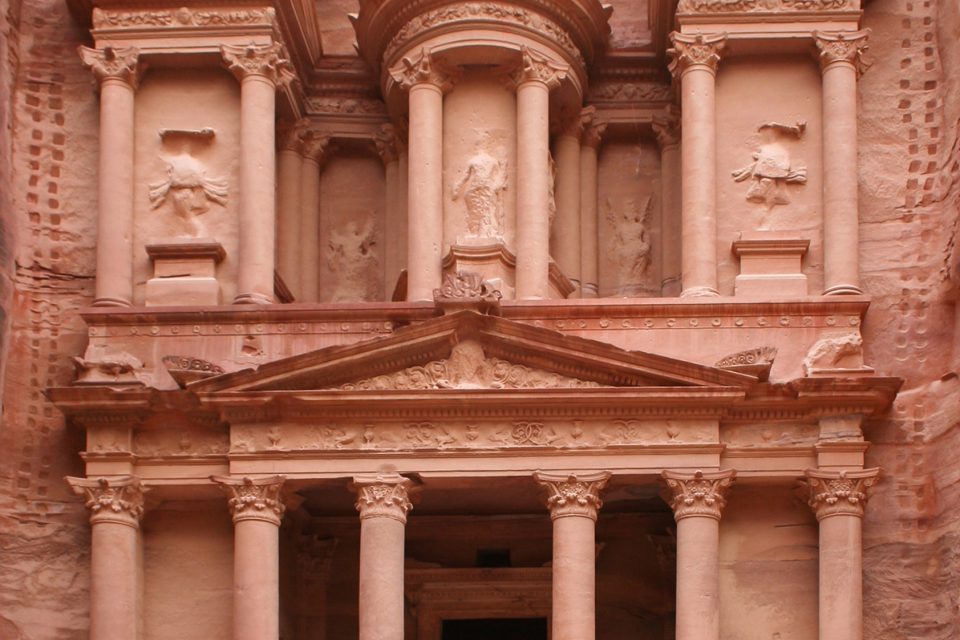
Photographs of the Treasury create a false impression of scale. Here is the geography that decides your day:
- Visitor centre to the Treasury: about 2 km, through the Siq, gently downhill.
- Treasury to the far end of the colonnaded street: another 2 km.
- The Monastery: roughly 800 rock-cut steps above that, 45 to 60 minutes of climbing.
A day that takes in the main trail and one climb comes to around 15 km on uneven stone, and the return leg is uphill, in the afternoon, when you are already tired. This is why people who allocate “a morning” to Petra leave having seen the Treasury and a fraction of everything else.
One day: what you can realistically do
Possible, and tight. The plan that works:
- At the gate for opening: 06:00 in summer, 06:30 in winter. The Siq before seven is close to empty and this is non-negotiable if you only have one day.
- Siq, Treasury, Street of Facades, Theatre: keep moving.
- Straight up to the Monastery before the heat builds, rather than saving it for later. Almost everyone who saves it never goes.
- Back down for the Royal Tombs in the afternoon, when low light brings out the banding in the sandstone.
- Walk out with daylight to spare.
You will not see the side valleys, the High Place of Sacrifice, or the Al-Khubtha viewpoint. You will see the things Petra is famous for, and you will be tired.
Two days: the version most people should book
Two days is not one day with more walking. It is a different visit, because it lets you take each part in the right light and stop climbing on tired legs.
Day one: enter at opening. Siq, Treasury, Street of Facades, Theatre, colonnaded street. Climb to the Monastery in the late morning. Come down slowly and be out by mid-afternoon.
Day two: the Al-Khubtha trail at first light, which brings you out on the cliff above the Treasury looking down at it. Then the High Place of Sacrifice, descending the back route past the Garden Tomb rather than retracing your steps. Royal Tombs in the afternoon.
For five dinars.
Three days: for hikers, not completists
The third day earns its place only if you intend to walk. The back route from Little Petra (Siq al-Barid) enters the site from above and arrives at the Monastery from behind, which reverses the whole experience and is the quietest approach to the site. Little Petra itself has surviving painted ceiling frescoes and a fraction of the visitors.
Note that Little Petra’s ticket office closes much earlier than the main site, 16:00 in summer and 14:00 in winter, so it is a morning outing.
If you are not hiking, spend the third day at Wadi Rum instead. It is under two hours away and it is a genuinely different landscape.
The timing details that matter more than the plan
Opening hours change with the season
Official hours are 06:00–18:00 from 2 March to 1 October, and 06:30–17:00 from 2 October to 1 March. In December you have roughly ten and a half hours of access rather than twelve, and less usable light within them.
The light moves through the site
The Treasury faces east and is lit in the morning. The Royal Tombs and the Monastery are afternoon subjects. Planning around this costs nothing and changes what you come home with.
Flash floods close the Siq
The Siq is a drainage channel. When rain threatens, the authority closes it, and that decision is not negotiable. If you are visiting between November and March, a spare half-day in the region is worth having.
Where to sleep, and why it changes the price
Wadi Musa, the town above the site, is where nearly everyone stays. The variable that matters is how far uphill you are: after 15 km, the climb back to a hotel at the top of town is a real consideration.
Because the entry rate depends on staying overnight in Jordan, the accommodation decision comes before the ticket decision. Book the nights, then buy the ticket that matches them, not the other way round.
Petra sits naturally between Amman, about three hours north, and Wadi Rum, under two hours south. Our full site guide: Petra.
So: how long?
Two days, unless your itinerary genuinely cannot take a second night. The marginal cost is five dinars, the marginal gain is the half of Petra that day-trippers never see, and the difference in how much you enjoy the first day, knowing you are not racing, is larger than either.
Fees and hours are set by the Petra authority and change. Confirm on the official site before you book.
Sources
- Petra Development and Tourism Region Authority: official fees
- Petra Development and Tourism Region Authority: opening hours
- Jordan Pass: official site
- UNESCO World Heritage Centre: Petra
- UK FCDO: Jordan travel advice
Last reviewed: September 13, 2026
