Cape Town
Overview
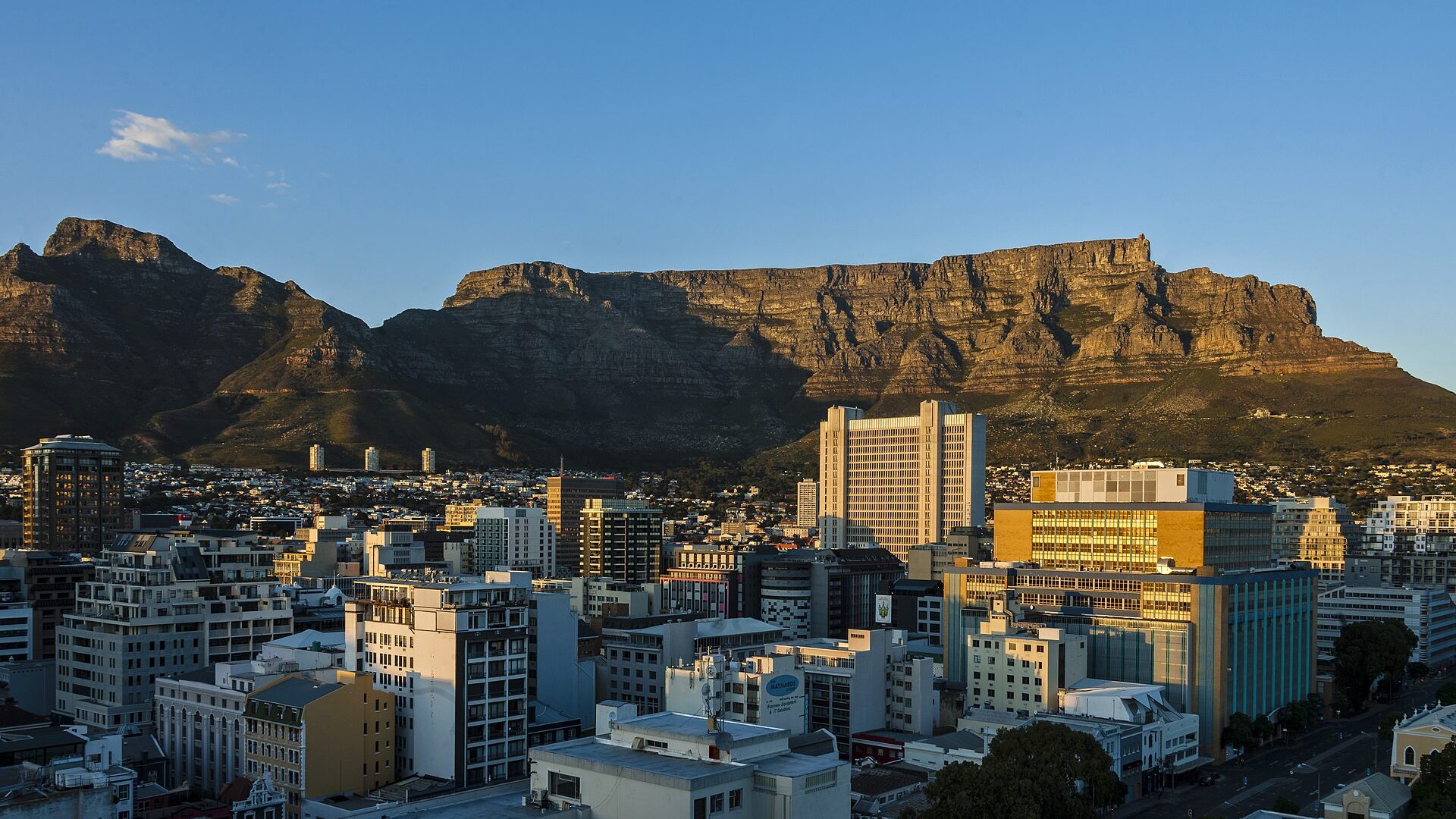
South Africa's legislative capital, wedged between Table Mountain and the Atlantic on a peninsula that runs south for some 50 km to Cape Point. The mountain is not a backdrop but a working part of the city: it sits in the middle of it, splits the suburbs, and generates the weather.
The city also sits inside the Cape Floral Region, one of the world's smallest and richest plant kingdoms, which is why the slopes look like nowhere else: fynbos rather than forest, with an extraordinary number of species in a small area.
Why Visit
Few cities put mountain, ocean, wine country and serious history within an hour of each other. You can be on a summit in the morning, at a penguin colony after lunch and in a Stellenbosch vineyard by evening.
The history is the part visitors underestimate. Robben Island, inscribed by UNESCO in 1999, held political prisoners including Nelson Mandela; across 475 hectares it also carries 17th-century quarries, a leper colony church, a 1755 tomb and Second World War installations. In the city, District Six records the forced removals that emptied an entire neighbourhood. Both are told largely by people who lived them.
Best Things to Do
- Table Mountain, weather permitting. The cableway runs only in suitable conditions and closes in high wind, so go on the first clear morning rather than saving it for later in the trip. Walking up Platteklip Gorge is the direct alternative: steep, exposed, two to three hours.
- Robben Island. Ferries leave from the V&A Waterfront and tours are led in part by former political prisoners. Book well ahead; sailings are cancelled in rough seas.
- The Cape Peninsula drive. Chapman's Peak Drive, Cape Point and the Cape of Good Hope, returning via Simon's Town and the African penguin colony at Boulders Beach. A full day.
- Kirstenbosch Botanical Garden on the mountain's eastern slope, the best introduction to fynbos, with a canopy walkway.
- The District Six Museum, small and essential for understanding what happened to the city under apartheid.
- Bo-Kaap, the historically Cape Malay quarter, for its architecture, its mosques and its cooking — best visited on a walking or cooking tour led by residents rather than photographed from outside.
- Lion's Head at sunset or full moon, a shorter, more sociable climb than Table Mountain with arguably the better view.
Map
Map data © OpenStreetMap contributors
Best Time to Visit
November to March (Southern Hemisphere summer) for warm, dry weather.
Where to Stay
City Bowl for a first visit: central, close to museums and mountain trailheads, with the widest range of prices. Sea Point for the promenade, restaurants and easier parking. V&A Waterfront if security and convenience outweigh atmosphere and cost.
Camps Bay for the beach setting, accepting a car dependency and a premium. Constantia for quiet, greenery and wine estates within the city limits. Simon's Town if you want the False Bay side and warmer swimming.
Wherever you stay, check whether parking is secure and off-street — this is a standard consideration here rather than a luxury.
Neighborhoods
City Bowl (Gardens, Tamboerskloof, Oranjezicht): central, walkable by Cape Town standards, close to the mountain and the museums.
V&A Waterfront: secure, polished, with the Robben Island ferry and the Zeitz MOCAA contemporary art museum. Convenient and expensive; not representative of the city.
Sea Point and Green Point: Atlantic seaboard, a long promenade, good restaurants, easy walking.
Camps Bay and Clifton: the beach suburbs under the Twelve Apostles. Beautiful, cold water, high prices, and you will want a car.
Woodstock: former industrial area with galleries and the Old Biscuit Mill market. Varies street by street; take local advice on where to walk.
Southern suburbs (Observatory, Newlands, Constantia): leafy, residential, near Kirstenbosch and the oldest wine estates.
Simon's Town: down the False Bay coast, warmer water, penguins, a slower base if you have a car.
Transportation & Airports
A car is the practical default. Cape Town is spread out and the best of it — the peninsula, the winelands, the beaches — is not reachable otherwise. Driving is on the left.
Ride-hailing apps work well in the central and Atlantic suburbs and are the usual choice for evenings out.
MyCiTi buses cover the airport, the City Bowl and the Atlantic seaboard on a rechargeable card, and are reliable on those routes. Coverage elsewhere is limited.
Metrorail serves the southern suburbs and Simon's Town, and the coastal stretch is a scenic ride, but service reliability and safety have been inconsistent. Take current local advice before relying on it.
Walking is fine in daylight in the City Bowl, Sea Point promenade and the Waterfront. Walking after dark in most areas is not recommended, and locals do not do it.
Food
A genuinely diverse food scene built on several distinct traditions. Cape Malay cooking — bobotie, bredie, koeksisters, samoosas — descends from the enslaved and exiled communities brought from Southeast Asia, and is best eaten in Bo-Kaap. Braai is the national barbecue culture and a social institution rather than a meal format. Winelands dining around Stellenbosch, Franschhoek and Constantia is internationally recognised.
Seafood is strong — snoek, yellowtail, West Coast mussels — and the Cape's wines, especially Chenin Blanc and Pinotage, are the obvious pairing. Street and market food centres on the weekend markets at the Old Biscuit Mill and Oranjezicht.
Day Trips
The Cape Winelands. Stellenbosch, Franschhoek and Paarl, 45 minutes to an hour away. The Franschhoek wine tram is the standard way to taste without driving.
The Cape Peninsula loop. Chapman's Peak, Cape Point, Boulders Beach and Simon's Town in a single circuit — the best full day out of the city.
Hermanus, about ninety minutes east, for land-based whale watching during the southern right whale season, roughly June to November.
West Coast National Park, an hour north, spectacular during the spring wildflower bloom in August and September.
Cape Agulhas, the southernmost point of Africa and the meeting of two oceans, a longer drive for those who want the geography.
Budget
Cape Town offers unusually good value for visitors earning in stronger currencies, particularly on food, wine and guided activities. Accommodation ranges from hostels to some of the continent's most expensive hotels.
The main costs are car hire, the peninsula and winelands excursions, and Robben Island and cable-car tickets. Eating and drinking are inexpensive by European or North American standards, including at high-end restaurants. Summer, from December to February, is peak season and prices rise sharply around the New Year.
Travel Tips
Do Table Mountain on the first clear day. The cableway closes in wind and cloud, and the mountain makes its own weather. Visitors who leave it to the last day frequently miss it.
Book Robben Island early and be prepared for cancellation in rough seas.
Safety is a real consideration, handled with routine habits rather than anxiety. Do not walk at night, do not display phones and jewellery in the street, use ride-hailing after dark, keep car doors locked and nothing visible on seats, and ask your accommodation which specific areas to avoid on foot. Follow local practice.
Never hike alone, tell someone your route, and take more water than feels necessary. Mountain rescue call-outs are common.
Water is precious. The city came close to running dry in the 2018 drought and conservation habits remain in place. Keep showers short.
The Atlantic is cold: Camps Bay and Clifton are for looking at. False Bay, on the other side of the peninsula, is noticeably warmer.
Load-shedding, scheduled electricity interruption, can still occur. Most hotels and restaurants have backup, but keep devices charged.
Other Cities in South Africa
Frequently Asked Questions
When should I visit?
November to March is warm and dry, and busiest around Christmas and New Year. The shoulder months either side give good weather with fewer people. Winter is wetter and greener, and is whale season on the coast.
Do I need a car?
For the peninsula and winelands, effectively yes. Within the City Bowl and along the Atlantic seaboard, ride-hailing and MyCiTi buses cover most needs.
Is Cape Town safe?
It requires ordinary precautions applied consistently: no walking at night, nothing visible in a parked car, ride-hailing after dark, and local advice about specific areas. Most visits are trouble-free.
How far ahead should I book Table Mountain and Robben Island?
Robben Island well in advance. For the cableway, buy online to skip the queue, but go on the first clear day rather than a fixed one — it closes in wind and cloud.
How many days do I need?
Four to five for the city and the peninsula. Add two if you want the winelands properly rather than as a rushed day.
Can I swim in the sea?
The Atlantic side is very cold year-round. False Bay, around Muizenberg and Simon's Town, is considerably warmer.
What is load-shedding?
Scheduled electricity interruptions. They have eased but can still occur; most accommodation and restaurants have backup power.