
Cartagena
Overview
Cartagena sits on Colombia's Caribbean coast. Its walled old town and the ring of Spanish fortifications around it form a UNESCO World Heritage site, inscribed for being the most complete surviving example of Spanish military engineering in the Americas.
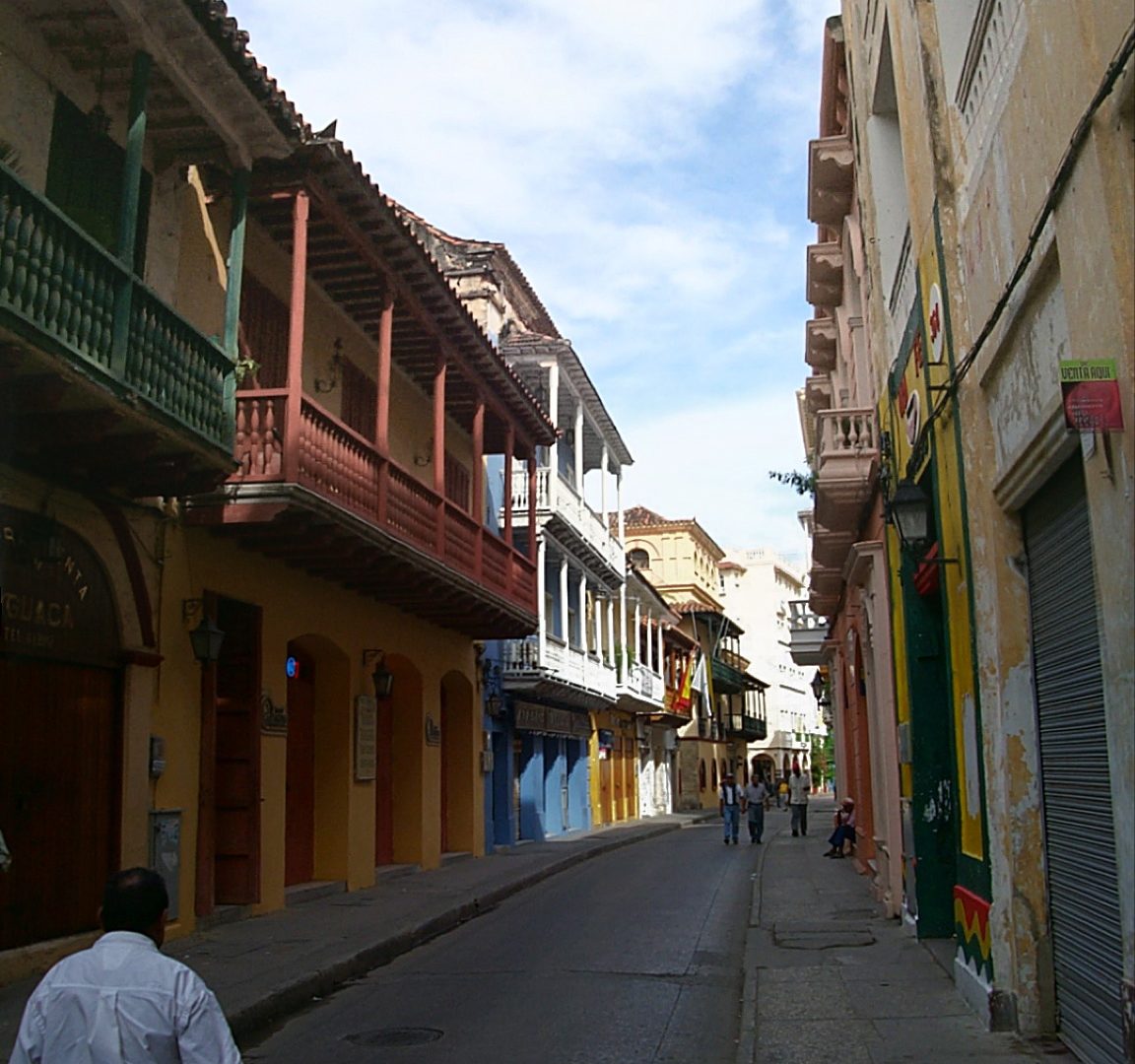
Inside the walls, the streets are narrow, shaded and lined with balconied houses in strong colours. Immediately south, Getsemaní is the old working-class quarter, now the centre of street art and nightlife. Across the bay, Bocagrande is a strip of modern high-rise hotels on the beach.
Why Visit
Cartagena is the most atmospheric colonial city on the Caribbean coast, and small enough to absorb on foot in a couple of days.
It is also the gateway to the Rosario Islands and to the Caribbean coast more widely, which makes it a natural start or finish to a Colombian trip.
Best Things to Do
- Walk the walls at sunset. The ramparts are accessible in stretches and the western side faces the sea; the Café del Mar bastion is the popular spot.
- The old town on foot. Plaza Santo Domingo, Plaza de Bolívar, the cathedral and the balconied streets between them, best in the early morning or after dark.
- Castillo San Felipe de Barajas. The hilltop fortress east of the centre, with tunnels through the rock, and the largest Spanish fort built in the Americas.
- Getsemaní. Street art, Plaza de la Trinidad in the evening, and the most genuine street life in the city.
- Palace of the Inquisition. A well-preserved colonial building on Plaza de Bolívar, now the city museum.
- The Rosario Islands. A national park archipelago about an hour offshore by boat, for clear water and beaches.
- Convento de la Popa. The monastery on the highest hill, with the widest view over the city and the bay. Take a taxi up.
Map
Map data © OpenStreetMap contributors
Best Time to Visit
December to April is the dry season and the most reliable: hot, sunny and breezier, and the busiest and most expensive period, particularly around Christmas and New Year.
May to November is wetter, with heavy but usually short showers, and lower prices. September to November is the wettest stretch.
Cartagena is hot and humid year-round with little seasonal variation in temperature. Plan sightseeing for early morning and late afternoon and rest through the middle of the day.
Where to Stay
Inside the walls (Centro and San Diego) is the most atmospheric and the most expensive, with colonial houses converted to boutique hotels.
Getsemaní is livelier, cheaper and only a few minutes' walk from the old town, with hostels and small hotels. It is also noisier.
Bocagrande has the beach and the large hotels, but the atmosphere is that of a modern resort strip rather than a historic city.
Manga, on an island in the bay, is residential and quieter, with a short taxi ride to the centre.
Neighborhoods
Centro Histórico: the walled old town, with the cathedral, the main plazas and the balconied streets.
San Diego: the quieter northern half inside the walls, with smaller squares.
Getsemaní: outside the wall to the south, street art, Plaza de la Trinidad, hostels and bars.
Bocagrande and Castillogrande: the modern peninsula of hotels, apartments and beach.
Manga: residential island district with early twentieth-century houses.
La Boquilla: a fishing village north of the city, with mangroves and a longer, less developed beach.
Transportation & Airports
The old town and Getsemaní are best covered on foot; distances are short and the streets are not built for cars.
Taxis are plentiful and generally negotiated rather than metered, so agree the fare first; ride-hailing apps also operate and remove the negotiation.
The Transcaribe bus system runs on dedicated lanes across the wider city. Rafael Núñez Airport is unusually close to the centre, around fifteen minutes by taxi.
Boats to the Rosario Islands leave from the Muelle de la Bodeguita.
Food
Coastal Colombian food is based on fish, coconut and plantain. Arroz con coco, coconut rice, accompanies most fish dishes; pescado frito is served whole with patacones.
Arepa de huevo, a fried cornmeal cake with an egg inside, is the regional breakfast, and carimañolas and empanadas fill the street stalls.
Ceviche here is Caribbean rather than Peruvian in style. Fruit sellers in the plazas, often the palenqueras in traditional dress, sell cut fruit; they generally expect payment for photographs, so agree first.
Limonada de coco is the drink of the city.
Day Trips
The Rosario Islands are the standard day out: about an hour by boat to a national park archipelago with clear water. Day tours are common; staying overnight on one of the islands is calmer.
Playa Blanca, on Barú, is the best-known beach near the city and can be reached by road or boat. It is busy and heavily hawked; going early or staying overnight helps.
Totumo mud volcano, north of the city, is a small crater filled with warm mud that visitors bathe in.
Santa Marta and Tayrona National Park are four hours east and better as an overnight than a day trip.
Budget
Cartagena is the most expensive city in Colombia, and inside the walls prices are aimed squarely at visitors. Getsemaní and the areas outside the centre are considerably cheaper for both food and accommodation.
Set lunches (menú del día) and street food keep daily costs low. Boat trips, island day tours and the fortress entry are the main discretionary expenses, and prices rise sharply between mid-December and mid-January.
Travel Tips
Agree taxi fares before getting in, or use an app. Meters are not the norm.
Expect persistent street vendors in the old town and on the beaches. A polite, firm no thank you is normal and effective.
Agree a price before photographing the palenqueras or accepting anything handed to you, including bracelets and massages on the beach.
Walk the old town early or late. Midday heat and humidity are severe and the streets offer little shade at noon.
Carry small cash. Many small restaurants, stalls and taxis do not take cards.
Frequently Asked Questions
How many days do I need in Cartagena
Two days cover the walled city, Getsemaní and the fortress. A third allows the Rosario Islands or Barú.
Are the beaches in the city good
Bocagrande's beach is convenient but grey-sand and busy. The clear water is offshore, at the Rosario Islands or Barú.
Is Cartagena safe
The tourist areas are heavily policed and generally fine by day and evening. Normal precautions apply, and check current official travel advice before going.
When is it cheapest
May to November, the wetter months. Mid-December to mid-January is the most expensive period by a wide margin.
Plan your trip to Cartagena
Free tools for flight times, time differences, budget, money and plugs.
- Flight Duration CalculatorWork out real flight time across time zones.
- Time Zone ConverterFind the time in another city instantly.
- Trip Budget CalculatorEstimate your total trip cost, item by item.
- Currency ConverterConvert prices between currencies at indicative rates.
- Travel Plug & Voltage CheckerCheck if you need a plug adapter or voltage converter.
- Jet Lag CalculatorEstimate how many days you need to beat jet lag.
