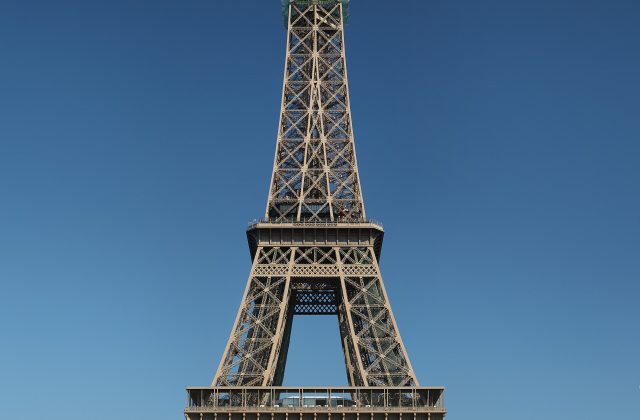

Paris
Overview
Paris is organised as a spiral. The twenty arrondissements wind clockwise outward from the Louvre, so the number in an address tells you roughly how far from the centre you are and on which bank: odd-numbered districts cluster on the Right Bank, and the Left Bank holds the 5th, 6th, 7th and 13th to 15th.
The city inside the ring road is small — about six miles across — and dense, which is why it walks so well and why the Métro stations are never more than a few minutes apart.
Why Visit
Paris holds one of the greatest concentrations of art and architecture in the world, and unusually, it is legible as a single project: Haussmann's nineteenth-century rebuilding gave the city the boulevards, the uniform stone facades and the zinc roofs that make it instantly recognisable.
The other reason is the everyday texture: the market street, the corner café, the bouquinistes along the Seine, the parks as outdoor living rooms. The monuments are the reason people come; the neighbourhoods are the reason they return.
Best Things to Do
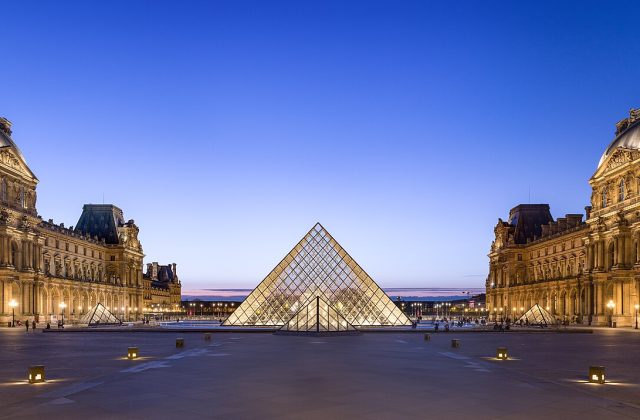
- The Louvre, with a plan. It is the largest art museum in the world and cannot be seen in a day. Pick two wings, book a timed slot, and enter through a secondary entrance rather than the pyramid queue.
- Musée d'Orsay. Impressionism in a converted Beaux-Arts railway station. Smaller than the Louvre, better organised, and for many visitors the more rewarding of the two.
- Sainte-Chapelle. Fifteen stained-glass windows enclosing the upper chapel almost entirely in coloured light. Go on a bright day and book ahead; it is small and the queue is outdoors.
- Walk from Île de la Cité through the Marais. Notre-Dame's exterior, the Place des Vosges, the medieval streets of the 3rd and 4th, and the Jewish quarter along rue des Rosiers.
- Père Lachaise cemetery. A hillside of tombs and trees, quiet and genuinely interesting to wander, with a free map at the gate.
- Montmartre early. Sacré-Cœur and the village streets behind it — the vineyard, the windmills, Place Dalida — before the crowds fill Place du Tertre.
- A market morning: rue Mouffetard, Marché d'Aligre or the Bastille market — followed by a picnic in the Jardin du Luxembourg or along the Canal Saint-Martin.
Map
Map data © OpenStreetMap contributors
Best Time to Visit
April to June and September to October are the best windows: mild, long evenings, parks at their best, and the museums busy but manageable.
July and August are warm and dominated by visitors; many Parisians leave, and a noticeable number of small restaurants and shops close for several weeks. Heatwaves have become more frequent and older buildings rarely have air conditioning.
November to March is grey, damp and dark by late afternoon, and by far the cheapest and least crowded. The museums, the covered passages and the cafés are what winter in Paris is for.
One practical note in any season: many museums close on Mondays or Tuesdays, and the closure day differs between them — check before building a day around one.
Where to Stay
The Marais (3rd and 4th) is the best all-round base: central, walkable, full of restaurants and small museums, lively without being a nightlife district.
Saint-Germain and the Latin Quarter (5th, 6th) are classic Left Bank — bookshops, cafés, the Luxembourg gardens — and priced for it.
The 9th and South Pigalle are central, cheaper and have the strongest restaurant scene of the moment. Canal Saint-Martin (10th, 11th) is younger and more local.
The 7th is quiet and grand near the Eiffel Tower, with few everyday amenities. Montmartre (18th) is atmospheric and involves hills and a longer Métro ride.
Rooms are small by international standards and lifts are not guaranteed in Haussmann buildings. A per-person nightly tourist tax is added, usually at the property.
Neighborhoods
The Marais (3rd, 4th): medieval streets, the Place des Vosges, galleries, the Picasso and Carnavalet museums.
Latin Quarter (5th): the Sorbonne, the Panthéon, rue Mouffetard and the Jardin des Plantes.
Saint-Germain-des-Prés (6th): literary cafés, antiquarian shops, the Luxembourg gardens.
Montmartre (18th): Sacré-Cœur, the village lanes, and the steep stairways below.
Canal Saint-Martin (10th): iron footbridges, independent shops, a young evening scene.
Belleville and Ménilmontant (19th, 20th): the most mixed quarters, with Chinese and North African food and street art.
The 7th: the Eiffel Tower, Les Invalides, the Rodin museum and the Musée d'Orsay across the river.
The 11th and Bastille: bars, restaurants and the Marché d'Aligre.
Transportation & Airports
The Métro is dense, fast and cheap, with stations rarely more than five minutes apart. Buy a rechargeable Navigo Easy card or use the transport app on a phone; single paper tickets have been phased out in favour of these.
The RER is the regional express network and is what you need for Versailles, Disneyland and both airports. Keep your ticket until you have exited, as RER barriers require it on the way out.
Buses are slower and show you the city; the Seine river bus and the bike-share scheme are both practical rather than novelties. Cycling has become genuinely viable with the expanded lane network.
From the airports: the RER B serves Charles de Gaulle and Orly, with the Orlyval shuttle at Orly; the Roissybus and Orlybus are alternatives. Take official taxis from the marked rank, at the fixed flat fares posted for each bank of the city, rather than accepting offers inside the terminal.
Food
The bistro and brasserie tradition is still the backbone — steak frites, confit de canard, blanquette, onion soup — but the interesting cooking has moved to smaller neo-bistros in the 9th, 10th and 11th, where chef-owned kitchens serve short daily menus.
The everyday layer matters as much: a bakery baguette, the cheese shop, the market street, and the café where you stand at the counter for a coffee at half the terrace price.
Practical points: service is included by law, so a percentage tip is not expected, though leaving small change is normal. Lunch formules are far cheaper than the same kitchen's dinner. Restaurants serve at set times and kitchens close between them, roughly from three to seven.
Paris is also one of the best cities in the world for North African, West African, Vietnamese and Levantine food: in Belleville, the 13th and the 18th rather than in the centre.
Day Trips
Versailles: the palace, the Hall of Mirrors and the gardens, forty minutes on the RER C. Book a timed ticket and go on a day the fountains are running if that matters to you; the estate is enormous and the Trianon and Marie-Antoinette's hamlet are quieter than the château.
Giverny: Monet's house and water garden, open seasonally, about an hour and a half via Vernon.
Chartres: a cathedral with almost all of its original medieval glass intact, an hour by train from Montparnasse.
Fontainebleau: a royal château with a forest around it, less crowded than Versailles.
Reims or the Champagne region: under an hour on the high-speed line, with cathedral and cellar visits.
Budget
Paris is expensive for accommodation and moderate for most other things, with a large gap between tourist-facing and everyday prices that is easy to cross.
What costs nothing: the city's permanent municipal museums including the Musée d'Art Moderne and Carnavalet, most churches, Père Lachaise, the parks, and walking the arrondissements. National museums offer free admission to under-26 residents of the EU and run occasional free days: check current rules, which have changed.
Concrete savings: buy a carnet-equivalent on a Navigo Easy card rather than singles; take the lunch formule; drink coffee at the counter; and eat outside the immediate radius of any monument.
Museum passes covering multiple sites pay off only on a dense itinerary — price your actual list first.
Travel Tips
Say bonjour first. Entering a shop, approaching a counter or asking a question begins with bonjour or bonsoir. Skipping it is the reason visitors report Parisian rudeness, and the fix costs nothing.
Book the big sites. The Louvre, Orsay, Sainte-Chapelle, the Eiffel Tower and Versailles all use timed entry and sell out in season.
Watch for the standard scams: the petition signature, the friendship bracelet at Montmartre, the gold ring found on the pavement, and the shell game along the Seine. All rely on stopping you — keep walking.
Guard pockets on the Métro, particularly lines serving the major sights, and on the RER from the airports.
Keep your RER ticket until you have left the station; the exit barriers need it.
Check museum closing days: they differ between institutions and Monday or Tuesday closures catch a lot of people.
Recommended Itineraries
Frequently Asked Questions
How many days do I need in Paris
Four full days covers the major museums, the central arrondissements on foot and one day trip. Five or six lets you spend time in the outer neighbourhoods, which is where the city feels least like a monument.
Do I need to book the Louvre and the Eiffel Tower in advance
Yes. Both use timed entry and both sell out in high season. Sainte-Chapelle, Orsay and Versailles are the same. Churches, parks and most municipal museums need nothing.
How do I buy Métro tickets now
With a rechargeable Navigo Easy card bought at a station, or through the official transport app on a phone. Single paper tickets have been phased out.
Is the Paris Museum Pass worth it
Only on a dense museum itinerary over consecutive days. Add up the individual admissions for the sites you will genuinely visit before buying; for a trip built around walking and parks it usually is not.
Why do people say Parisians are rude
Mostly a mismatch of convention. Not greeting someone before speaking to them reads as impolite here. Open with bonjour, use vous, and the reception changes completely.