Split
Overview
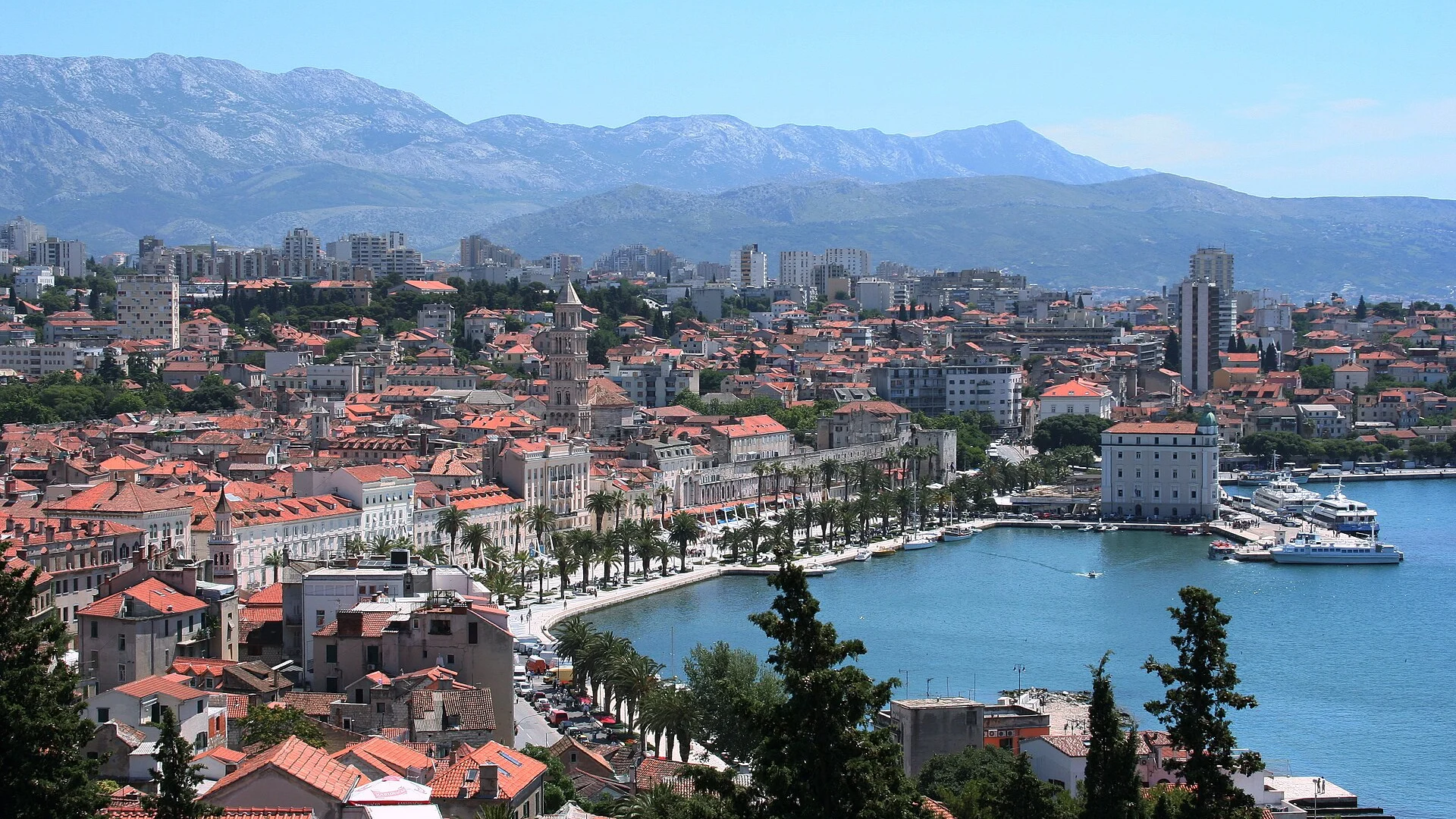
Around the turn of the fourth century AD, the Roman emperor Diocletian built a vast fortified residence on the shore of the Adriatic to retire to. When the nearby city of Salona fell in the seventh century, its people took refuge inside the palace walls, and a medieval town grew up within and around them. The result, the Historical Complex of Split with the Palace of Diocletian, has been on UNESCO's World Heritage List since 1979.
Today the palace is not a museum but a neighbourhood: cafés fill the colonnaded Peristyle, washing hangs between Roman walls and Venetian windows, and the emperor's mausoleum is a cathedral. Beyond the old centre, Split is a lively port city, the largest in Croatia after Zagreb, with the pine-covered Marjan hill to the west, city beaches to the east and frequent boats to the islands of Brač, Hvar, Šolta and Vis. It is the natural base for exploring central Dalmatia and the rest of Croatia's coast.
Why Visit
Split rewards both the curious and the lazy. You can trace seventeen centuries of history in a single morning walk, swim at a city beach in the afternoon and eat fresh fish on the waterfront at night. It is livelier and more lived-in than many Adriatic towns, with good transport links to islands, national parks and the walled towns of Trogir and Šibenik.
Best Things to Do
- Explore Diocletian's Palace. Enter through the Bronze, Golden, Silver or Iron Gate and wander the lanes to the Peristyle, the palace's grand colonnaded courtyard and the heart of the old town.
- Visit the Cathedral of St Domnius. Built into Diocletian's mausoleum, it is often described as one of the oldest cathedral buildings in the world still in use. Climb the Romanesque bell tower for views over roofs and harbour.
- Walk through the palace substructures. The vaulted cellars beneath the palace preserve the layout of the emperor's apartments above and now host stalls and exhibitions.
- See the Temple of Jupiter. This small Roman temple, later a baptistery, has a remarkable coffered stone ceiling.
- Rub Gregory of Nin's toe. Ivan Meštrović's giant statue of the medieval bishop stands outside the Golden Gate; touching his toe is said to bring luck.
- Climb Marjan hill. Steps from the Varoš district lead up to viewpoints, chapels and forest paths, with quiet swimming coves along the shore below.
- Visit the Meštrović Gallery. The sculptor's former seaside villa displays many of his works in a calm garden setting.
- Play or watch picigin at Bačvice. On this shallow sandy beach near the port, locals keep a small ball in the air while splashing through the water, a game closely associated with Split.
Map
Map data © OpenStreetMap contributors
Best Time to Visit
May, June and September offer warm sea, long evenings and a full ferry schedule without the peak-season crush. July and August are hot and crowded, with the highest prices and busy ferries, but also the liveliest atmosphere.
On 7 May the city celebrates the feast of its patron saint, St Domnius (Sudamja), with a fair and processions. Split remains a working city in winter, so it is a better off-season choice than resort towns, though island connections are reduced and some restaurants close.
Where to Stay
Staying inside or beside the palace puts you among the sights, but rooms can be noisy at night and cars cannot reach them. Varoš and Veli Varoš, on the slopes west of the Riva, are quieter, with stone houses and easy access to Marjan.
East of the centre, Bačvice and Firule are close to the beaches and the evening bar scene, while hotels along the coast towards Žnjan and Stobreč suit families wanting pools and space. If you plan to catch early ferries, anywhere within walking distance of the port is convenient.
Neighborhoods
Diocletian's Palace (Grad): the Roman core and medieval town, full of cafés, shops and small guesthouses.
Riva: the palm-lined seafront promenade in front of the palace, Split's open-air living room.
Varoš: an old fishermen's and farmers' quarter climbing towards Marjan, with narrow lanes and traditional taverns.
Bačvice and Firule: beaches, sea views and bars a short walk east of the port.
Žnjan and Stobreč: newer coastal districts further east, with long beaches and larger hotels.
Transportation & Airports
Split Airport is at Kaštela, west of the city and close to Trogir. An airport shuttle bus runs to the main bus station by the port, and local buses also link the airport with both Split and Trogir; taxis and ride-hailing are widely available.
The main bus station, railway station and ferry port sit side by side on the edge of the old town. Buses run up and down the coast and inland to Zagreb, and trains link Split with Zagreb. From the port, Jadrolinija car ferries serve islands including Brač, Hvar, Šolta and Vis, while faster catamarans run to Hvar town, Korčula and other islands, with extra private lines in summer.
The old centre is compact and pedestrian; city buses reach the outer districts. Driving within Split is slow and parking scarce, so pick up a hire car only for excursions. Use this hub to explore the rest of Croatia, including Dubrovnik to the south.
Food
Split's cooking is classic Dalmatian. Try pašticada, beef marinated and slowly braised in a rich sauce, usually served with gnocchi; soparnik, a thin chard pie from the Poljica villages nearby; grilled fish and brudet, a fish stew. Peka dishes need ordering in advance.
Browse the green market just outside the palace's eastern walls and the fish market in the west of the old town in the morning. Small family taverns (konobe) in Varoš and the palace's back lanes tend to be better value than the Riva. Local wines include red plavac mali and white pošip from the islands.
Day Trips
Trogir: a tiny island town of Romanesque and Renaissance buildings, itself a UNESCO World Heritage Site, reachable by bus or boat.
Brač and Hvar: ferries and catamarans reach Brač, with Zlatni Rat beach at Bol, and Hvar, with its lavender fields, harbour town and old Stari Grad.
Krka National Park: a chain of waterfalls and travertine pools inland from Šibenik; swimming is no longer permitted at the main falls.
Klis Fortress and Salona: the clifftop fortress above Split and the ruins of the Roman city of Salona in Solin make an easy half-day.
Omiš and the Cetina canyon: a river gorge for rafting and canyoning, south along the coast. Further afield, Vis and the Blue Cave on Biševo make a full day by boat.
Budget
Split is generally less expensive than Dubrovnik, though high-season accommodation and dining on the Riva are not cheap.
- Stay in Varoš or slightly away from the centre for better value.
- Buy picnic supplies at the green market and bakeries.
- Use public ferries rather than private boat tours where possible; they are slower but much cheaper.
- Many palace sights, including the Peristyle and Riva, are free to wander; buy combined tickets only for what interests you.
Travel Tips
Book ferries ahead in summer. Car ferries and catamarans fill up in July and August; buy online or at the port early.
Dress for town. Walking around the centre without a shirt or in swimwear can lead to a fine.
Go early. The cathedral, bell tower and Peristyle are far calmer before mid-morning.
Carry cash for small purchases. Market stalls and small cafés may prefer it.
Look up. Roman columns, medieval arches and Renaissance windows are built into everyday façades all over the palace.
Other Cities in Croatia
Frequently Asked Questions
How long should I spend in Split?
Two days cover the palace, Marjan and a beach; use extra days for Trogir, Krka or the islands.
Can I swim in Split?
Yes. Bačvice is the best-known city beach, and Marjan has quieter coves; most are pebble or rock.
Is there a train from Split to Zagreb?
Yes, the railway links Split with Zagreb, though buses are more frequent; there is no train from Split to Dubrovnik.
How do I get from Split to Hvar?
Car ferries go to Stari Grad and faster catamarans go to Hvar town; check timetables, which are reduced outside summer.
Is Diocletian's Palace free to visit?
Walking through the palace streets and Peristyle is free; the cathedral, bell tower, substructures and museums charge separate entry.
Plan your trip to Split
Free tools for flight times, time differences, budget, money and plugs.
- Flight Duration CalculatorWork out real flight time across time zones.
- Time Zone ConverterFind the time in another city instantly.
- Trip Budget CalculatorEstimate your total trip cost, item by item.
- Currency ConverterConvert prices between currencies at indicative rates.
- Travel Plug & Voltage CheckerCheck if you need a plug adapter or voltage converter.
- Jet Lag CalculatorEstimate how many days you need to beat jet lag.