Tirana
Overview
For much of the 20th century, Tirana was the capital of one of Europe's most closed regimes. Since the 1990s the city has reinvented itself, repainting grey façades in bold colours, pedestrianising its vast central square and turning symbols of dictatorship into places of memory and culture.
The result is an energetic, informal and very sociable city. It is compact enough to explore on foot, has green space in the Grand Park and on the slopes of Mount Dajti, and makes an easy base for day trips across central Albania, from medieval Krujë to the Roman amphitheatre of Durrës.
Why Visit
Tirana is one of the best places in Europe to understand how a society emerges from dictatorship, through museums such as Bunk'Art and the House of Leaves. It is also affordable, welcoming and great fun: long coffees, evening strolls, inventive restaurants and a cable car ride to a mountain viewpoint, all within a short trip of the Adriatic coast.
Best Things to Do
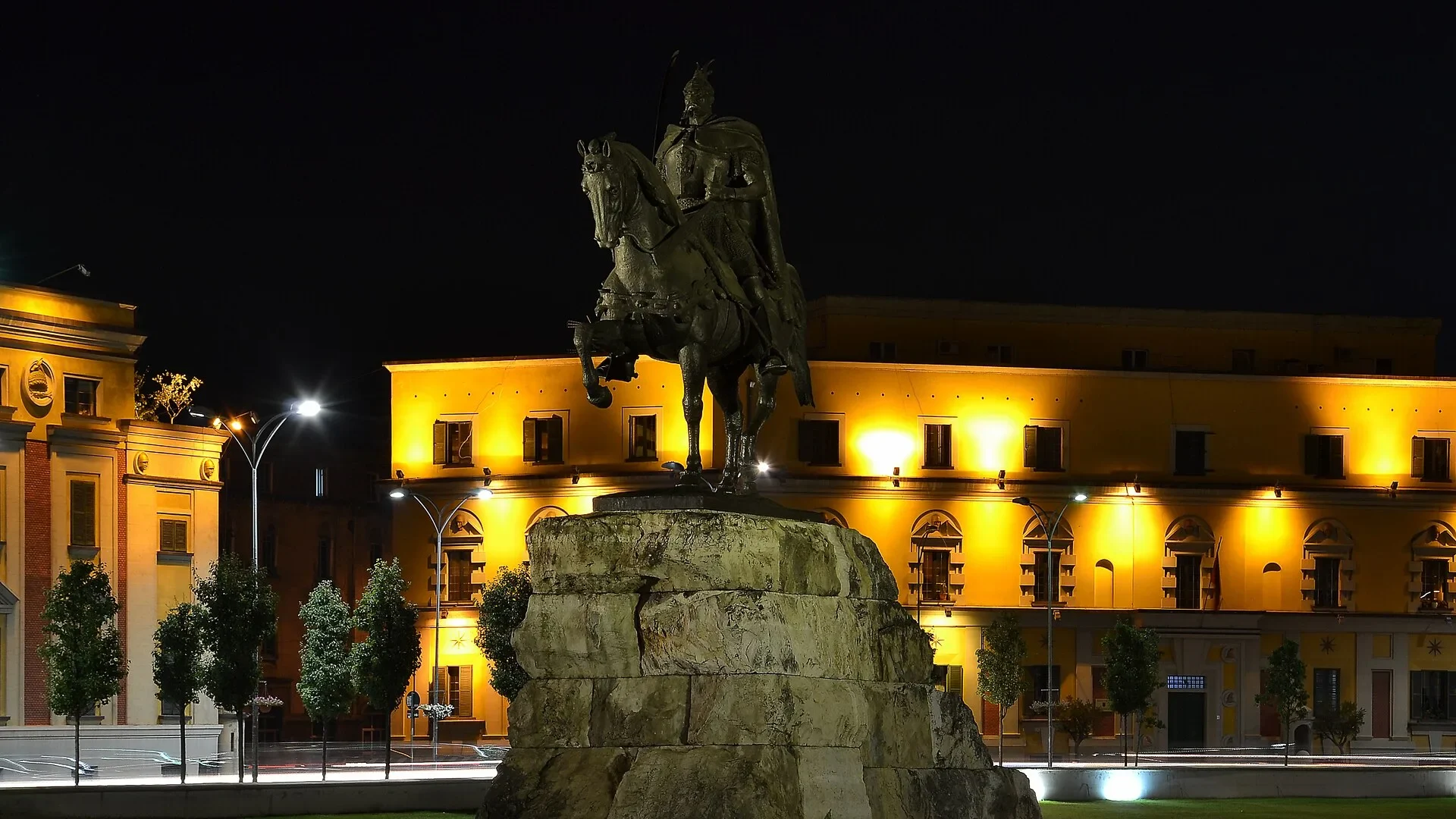
- Skanderbeg Square. The huge pedestrianised square is the city's heart, framed by the Et'hem Bey Mosque, the Clock Tower, the Palace of Culture and the mosaic façade of the National History Museum, which has been closed for long-term renovation.
- Bunk'Art 2. A former government nuclear bunker near the square, now a museum on the history of Albania's interior ministry and political police.
- Bunk'Art 1. A vast underground shelter built for the communist leadership on the city's eastern edge, with exhibitions on Albanian history and art; combine it with the Dajti cable car.
- House of Leaves. The Museum of Secret Surveillance occupies the former headquarters of the secret police and documents decades of state spying on ordinary citizens.
- The Pyramid of Tirana. Built as a memorial to the dictator Enver Hoxha, the concrete pyramid has been transformed into a technology and creative centre for young people; you can climb its outer steps for views.
- Dajti Ekspres cable car. A long cable car ride lifts you onto Mount Dajti for panoramic views over the city, walks in the national park and lunch with a view.
- Blloku and the New Bazaar. Once reserved for the communist elite, Blloku is now the city's café and nightlife district; the restored New Bazaar (Pazari i Ri) is the place for fruit, cheese, raki and casual restaurants.
Map
Map data © OpenStreetMap contributors
Best Time to Visit
April–June and September–October are the most comfortable months, with warm days, mild evenings and terraces in full swing. July and August are hot, and many residents head for the coast. Winters are mild but rainy, and Tirana's café culture makes it a pleasant off-season city break.
Where to Stay
Staying near Skanderbeg Square puts the main sights within walking distance. Blloku is ideal if you want restaurants and nightlife on your doorstep, though it can be lively late. The area around the New Bazaar has guesthouses and a more local feel. Options range from hostels and apartments to boutique and international hotels.
Neighborhoods
Skanderbeg Square and the centre: museums, the mosque, the opera house and the main boulevards.
Blloku: the former communist leaders' enclave, now packed with cafés, bars, boutiques and restaurants.
Pazari i Ri (New Bazaar): a renovated market quarter with food stalls, cafés and guesthouses.
Grand Park and the Artificial Lake: the city's green lung, south of the centre, for walks, runs and lakeside terraces.
Transportation & Airports
Tirana International Airport Nënë Tereza is at Rinas, about 17 km from the centre. The Rinas Express bus runs hourly between the airport and the city centre, and official airport taxis can be booked in advance. The centre itself is very walkable; city buses cover longer distances, and taxis are plentiful – agree the fare or check the meter before setting off.
Passenger trains are not currently an option, so buses and minibuses (furgons) connect Tirana with the rest of Albania from regional terminals that depend on the destination – ask your accommodation for the current departure point. International buses also run to neighbouring countries, including Montenegro, for onward travel to Kotor.
Food
Start the day with byrek and coffee, then try tavë kosi (lamb and rice baked under yoghurt), fërgesë (peppers, tomatoes and cottage cheese) and grilled qofte. Tirana's newer restaurants rework traditional recipes with seasonal produce from the surrounding hills, and the New Bazaar area is good for casual meals. Coffee culture is serious: expect to linger.
Day Trips
Krujë, in the hills north of the capital, has a castle linked to the national hero Skanderbeg, a museum and an old bazaar selling crafts. Durrës, on the coast, combines a Roman amphitheatre with seaside promenades. With an early start, Berat – one of Albania's UNESCO-listed Ottoman towns, famous for its tiers of white-windowed houses – makes a long but memorable day out. Our Albania guide covers the Riviera and the mountains.
Budget
Tirana is one of Europe's most affordable capitals. Coffee, street food and local restaurants are inexpensive, and most sights are cheap to enter, though prices in Blloku and at newer hotels are rising. Pay in lek: euros are sometimes accepted but at poor rates. Cards are widely accepted in the centre, but carry cash for buses, markets and small cafés.
Travel Tips
Cross carefully. Traffic can be chaotic, and UK advice notes Albania's high rate of road accidents; take care even on pedestrian crossings.
Mind your bag. Pickpockets work in busy areas, on buses and at transport hubs.
Check the cable car. The Dajti Ekspres may not run in strong wind or bad weather, so check before heading out.
Read the gestures. Some Albanians nod for “no” and shake their head for “yes” – confirm with words.
Ask about bus stops. Departure points for intercity buses vary by destination and change over time.
Frequently Asked Questions
How many days should I spend in Tirana?
Two days are enough for the museums, Skanderbeg Square, Blloku and the Dajti cable car; add a day or two for trips to Krujë, Durrës or Berat.
How do I get from the airport to Tirana?
The Rinas Express bus runs hourly between the airport and the city centre, about 17 km away. Official airport taxis are also available.
Is there a train in Tirana?
Not for travellers at the moment. A new Tirana–Durrës line is under construction, so buses and minibuses are the main way to get around Albania.
Is Tirana safe?
Crime against visitors is generally low, though pickpocketing occurs in busy areas. Traffic is the main hazard, so take care as a pedestrian.
Do I need a visa for Albania?
Nationals who can visit the Schengen area visa-free can also visit Albania visa-free for up to 90 days in 180; others apply through the official e-visa portal. Confirm the current rules for your nationality before travelling.
Plan your trip to Tirana
Free tools for flight times, time differences, budget, money and plugs.
- Flight Duration CalculatorWork out real flight time across time zones.
- Time Zone ConverterFind the time in another city instantly.
- Trip Budget CalculatorEstimate your total trip cost, item by item.
- Currency ConverterConvert prices between currencies at indicative rates.
- Travel Plug & Voltage CheckerCheck if you need a plug adapter or voltage converter.
- Jet Lag CalculatorEstimate how many days you need to beat jet lag.