Overview
The lagoon formed in the 1970s when geothermal water discharged from the Svartsengi power station pooled on the surrounding lava rather than draining into the porous rock. People began bathing in it, and by the 1980s it had been developed into a formal bathing site; it is now Iceland's most visited paid attraction.
The water is a mix of seawater and fresh water drawn from deep underground, rich in silica, algae and minerals, and it is renewed continuously rather than chemically treated in the way a swimming pool is. It sits at bathing temperature year-round, which is why the experience works as well in a January snowstorm as in July.
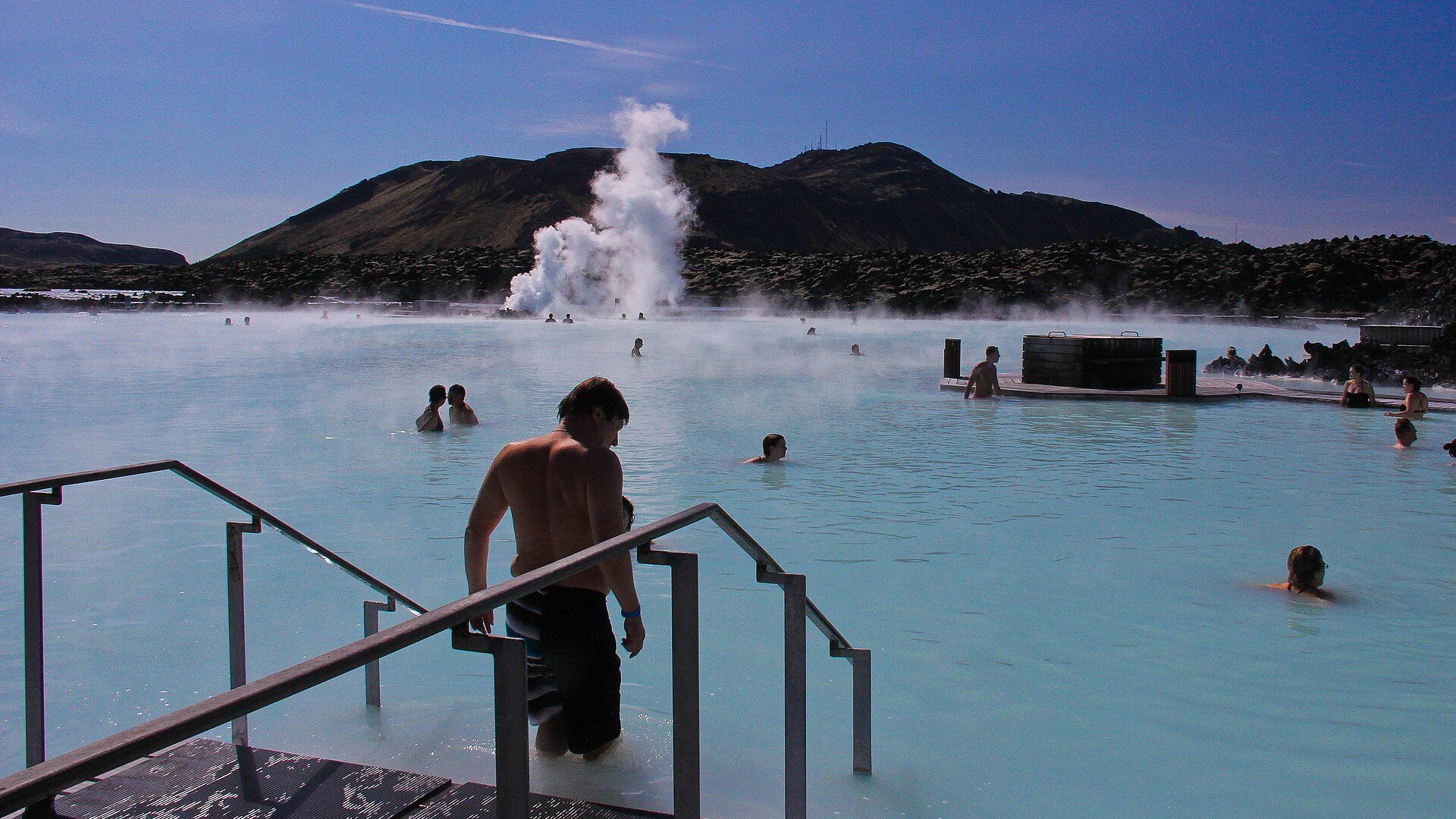
The setting is a black lava field with steam drifting off the surface and the power station's plumes visible beyond it. Whether that reads as otherworldly or industrial is a matter of taste, and both reactions are common.
Why Visit
It is the most comfortable possible introduction to Iceland's geothermal character: warm water, a lava landscape, and no walking or driving involved. For a first-time visitor arriving jet-lagged on an overnight flight, a few hours here before checking into Reykjavik is a genuinely good use of the day.
The silica and algae have a real effect on skin, and the on-site mud masks are part of the experience rather than an upsell. The swim-up bar, the steam caves and the sauna built into the lava are included in standard admission.
Top Experiences
- The silica mud mask. Available from a counter in the water at no extra charge with standard admission; leave it on for ten minutes and rinse.
- The steam cave and dry sauna cut into the lava at the edge of the lagoon, both included.
- Arriving at opening or in the last slot. The lagoon is at its emptiest at both ends of the day, and in winter the late slot means bathing in darkness with the possibility of aurora overhead.
- Winter bathing in snow. The contrast between air at below zero and water at bathing temperature is the version most people remember.
- Walking the lava field paths outside the lagoon before or after, where the moss-covered rock gives a sense of how recently this landscape was liquid.
Map
Map data © OpenStreetMap contributors
Best Time to Visit
The lagoon is open year-round and the water temperature does not change with the season, so the choice is about light and crowds rather than weather.
Winter gives snow on the lava, steam that is far more visible in cold air, and darkness early enough that an afternoon slot can include aurora. Summer gives near-midnight light and a lagoon that is busier all day.
Within any day, the first and last time slots are the quietest. The middle of the day coincides with airport transfer arrivals and organised tours.
Getting There
The lagoon is on the Reykjanes peninsula, roughly twenty minutes by road from Keflavík International Airport and forty-five minutes to an hour from central Reykjavik.
Scheduled airport transfer buses stop at the lagoon in both directions and will carry luggage, which is what makes the arrival-day and departure-day plan practical. Driving is straightforward with parking on site.
There is no public bus route designed for independent travellers, so in practice it is a transfer bus, an organised tour or a hire car.
Getting Around
Everything is within the one complex: changing rooms, lockers, the lagoon, the bar, the sauna and the steam cave. Wristbands issued at check-in open the lockers and carry any purchases made in the water, settled when you leave.
Towels and robes are available, and some admission types include them: check what your booking covers rather than assuming, to avoid paying twice.
Top Attractions
The lagoon itself, with the bar, mask stations, steam cave and sauna all included in standard entry.
The Retreat Spa and the Lava Cove, a separate and considerably more expensive part of the complex with its own private lagoon.
Gunnuhver and the Reykjanes geothermal field, a short drive away: boiling mud pools and steam vents, free and genuinely raw compared with the lagoon.
The Bridge Between Continents, a footbridge across a fissure between the North American and Eurasian plates, nearby on the peninsula.
Reykjanesviti and the Valahnúkamöl cliffs, the oldest lighthouse in Iceland and a dramatic stretch of black coast.
Food & Culture
There are restaurants and a café on site at the prices you would expect at a major attraction. Eating in Grindavík or back in Reykjavik is considerably cheaper.
The wider cultural context matters more than the food. Bathing is a daily social institution in Iceland, and it happens mostly in municipal geothermal pools: every town has one, with hot tubs where people meet and talk. The Blue Lagoon is the tourist-facing version of that culture, not its centre.
If you want the local experience, Reykjavik's neighbourhood pools such as Laugardalslaug and Vesturbæjarlaug cost a fraction of the lagoon. Sky Lagoon near Reykjavik and the Secret Lagoon at Flúðir are the mid-priced alternatives, and the Mývatn Nature Baths are the northern equivalent.
Budget
Admission is the most expensive of Iceland's geothermal bathing sites and is tiered, with the cheaper entry types selling out first. Booking earlier generally gets both a better slot and a lower tier.
Ways to keep the total down: choose the basic admission and bring your own towel if it is not included; eat before or after rather than on site; and use the airport transfer that includes the lagoon stop instead of paying separately for a hire car day.
If the cost is the obstacle, the municipal pools in Reykjavik deliver the same geothermal bathing culture for a very small fraction of the price, and locals would tell you they are the better experience.
Entry, Tickets & Permits
No permit is involved, but the lagoon operates on pre-booked timed entry and does not reliably admit walk-ups. Book before you travel, particularly in summer and over the winter holidays.
Iceland is in the Schengen area, so standard Schengen entry rules apply for the country itself: generally up to 90 days in any 180-day period for visa-exempt visitors, with the Entry/Exit System fully operational across the Schengen area since 10 April 2026 and ETIAS scheduled to start in the last quarter of 2026.
There is a minimum age for admission and under-age children must be accompanied; check the current policy when booking, as it has been adjusted.
Important Notes
Check the operating status before travelling. The Reykjanes peninsula volcanic system became active again in 2021 after around eight centuries of quiet, and subsequent eruptions and seismic episodes have led to temporary closures and evacuations of the area, including the nearby town of Grindavík. The lagoon publishes its status, and the Icelandic Met Office publishes hazard assessments. This is the single most important thing to verify for this destination.
You must shower thoroughly, without a swimsuit, before entering. This is an Icelandic rule at every pool and lagoon, it is posted in several languages, and staff enforce it. It is not optional or negotiable.
Use the conditioner provided and tie long hair up. Silica binds to hair and leaves it stiff and straw-like for days. Conditioning heavily before entering and keeping hair out of the water is the standard advice.
Remove silver jewellery. The water tarnishes it.
Hydrate and pace yourself. Long immersion in hot mineral water combined with alcohol from the swim-up bar causes more faintness than people expect.
Itinerary Suggestions
On arrival day. Land at Keflavík in the morning, leave luggage at the lagoon's storage, bathe for two or three hours, then continue to Reykjavik. It is the standard remedy for a red-eye flight and the reason the airport transfer buses stop here.
On departure day. The same in reverse, with a late slot before an evening flight.
As a Reykjanes day. Combine the lagoon with Gunnuhver's steam vents, the Bridge Between Continents and the Reykjanes lighthouse coast, which together make a full and varied day without leaving the peninsula.
Frequently Asked Questions
Is the Blue Lagoon a natural hot spring
No. It is a man-made lagoon fed by mineral-rich seawater discharged from the adjacent Svartsengi geothermal power station. The water and the minerals are geothermal in origin, but the lagoon itself is not a natural feature.
Do I need to book in advance
Yes. Entry is by pre-booked timed slot and walk-up admission is not reliable. Booking ahead also gives access to the cheaper admission tiers, which sell out first.
Is it affected by the volcanic eruptions
It can be. The Reykjanes peninsula has been volcanically active since 2021, and there have been temporary closures and evacuations in the area. Check the lagoon's own status page and the Icelandic Met Office before travelling or on the day.
Why do I have to shower naked first
Icelandic pools and lagoons use minimal chemical treatment, so bathers wash thoroughly without a swimsuit beforehand. It applies everywhere in the country, it is signposted, and staff will remind you.
Is it worth it, or should I go somewhere cheaper
It depends what you want. For a convenient, comfortable geothermal soak on an arrival or departure day it is hard to beat. For the everyday Icelandic bathing culture at a fraction of the price, Reykjavik's municipal pools are better value, and Sky Lagoon and the Secret Lagoon sit in between.
Sources
- Blue Lagoon Iceland: official site and visitor information
- Icelandic Meteorological Office: earthquakes and volcanic hazard
- SafeTravel Iceland: official safety information
- Visit Iceland: official destination information
- European Commission: ETIAS and Schengen entry
Last reviewed: September 15, 2026
Plan your trip to Blue Lagoon
Free tools for flight times, time differences, budget, money and plugs.
- Flight Duration CalculatorWork out real flight time across time zones.
- Time Zone ConverterFind the time in another city instantly.
- Trip Budget CalculatorEstimate your total trip cost, item by item.
- Currency ConverterConvert prices between currencies at indicative rates.
- Travel Plug & Voltage CheckerCheck if you need a plug adapter or voltage converter.
- Jet Lag CalculatorEstimate how many days you need to beat jet lag.