
Istanbul
Overview
Istanbul is the only city built across two continents, and the split is not a novelty. It explains the place. The Bosphorus carries the shipping between the Black Sea and the Mediterranean, and whoever held these hills controlled that traffic. Byzantium, then Constantinople, then Istanbul: capital of the Roman Empire in the east for over a thousand years, then of the Ottoman Empire for nearly five hundred more.
What that leaves is a city where a 6th-century Byzantine church, a 16th-century Ottoman mosque and a Roman cistern sit within a few hundred metres of each other, all still in use or open, all in a district you can cross on foot.
It is also a working city of some sixteen million people, and the historic peninsula is a small part of it. The most interesting days here usually involve at least one ferry.
Why Visit
For Hagia Sophia, which has been the largest cathedral in the world, an imperial mosque, a museum, and a mosque again. Its dome was an engineering problem nobody had solved before it was built in 537, and standing under it explains a millennium of architecture that followed.
For the Basilica Cistern: a 6th-century underground reservoir held up by 336 columns, two of them resting on Medusa heads laid on their side and upside down, reused from somewhere older and nobody records where.
For the Bosphorus itself. A commuter ferry from Eminönü costs the price of a bus ticket and delivers the single best view of the city, with tea served on deck.
And for the fact that the food is not a sideshow. Istanbul does breakfast better than almost anywhere, and a two-hour kahvaltı in Bebek or Kadıköy is as much the point of the visit as any monument.
Best Things to Do
- Hagia Sophia: now functioning as a mosque, open to visitors outside prayer times, with a separate ticketed entrance and route for foreign visitors. Check the current arrangements before you go.
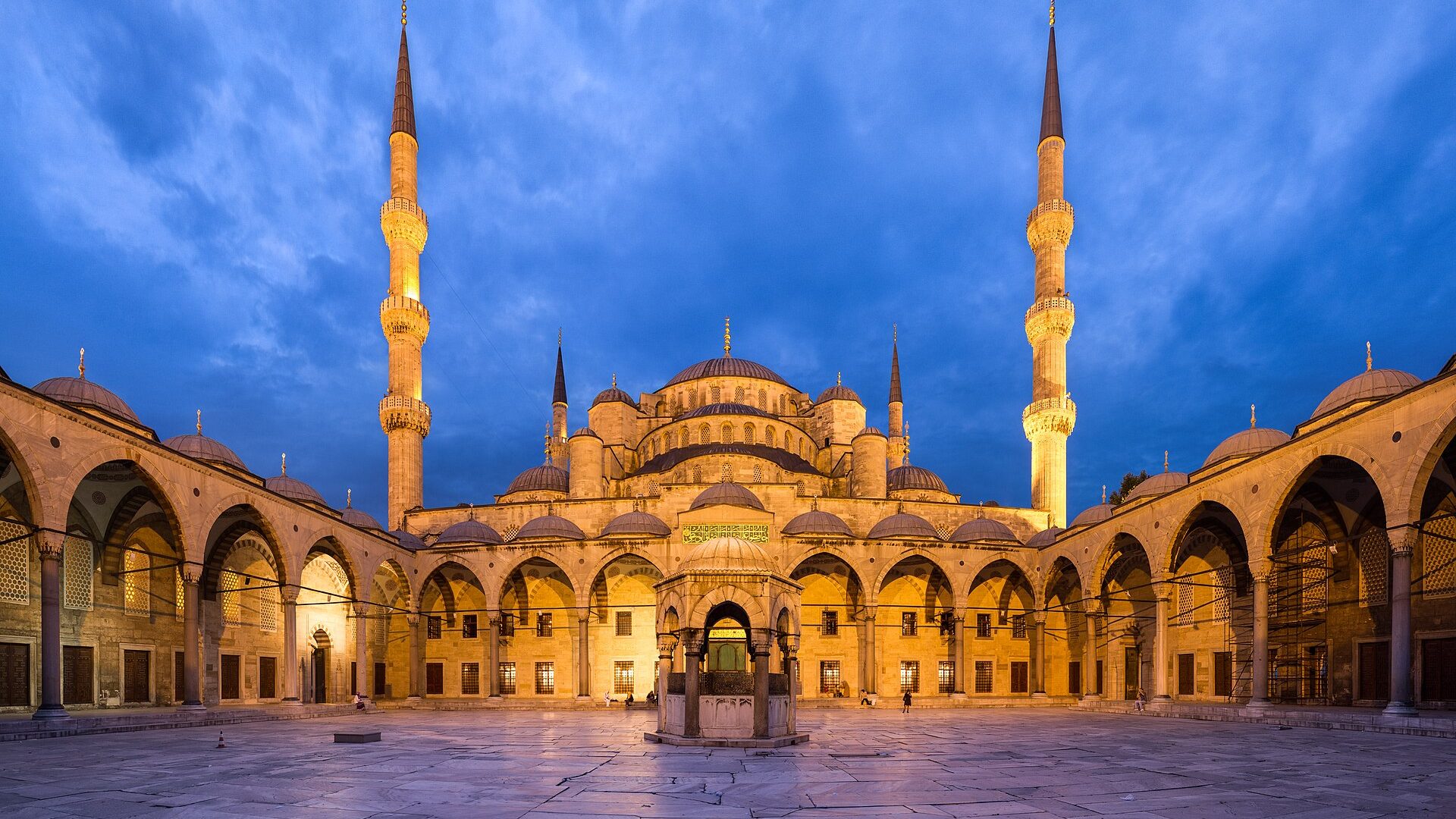
- The Blue Mosque (Sultanahmet Camii): free, active, and closed to visitors during the five daily prayers.
- Topkapı Palace: the Ottoman court for four centuries. The Harem is separately ticketed and is the part worth the extra.
- The Basilica Cistern: underground, cool, and genuinely strange.
- The Grand Bazaar and the Spice Bazaar: the first for scale and structure, the second for actually buying something.
- Süleymaniye Mosque: Sinan’s masterpiece, on a hill above the Golden Horn, and far quieter than Sultanahmet.
- The Chora (Kariye) Mosque: the finest surviving Byzantine mosaics and frescoes in the city, out in Edirnekapı and worth the trip.
- A Bosphorus ferry: the public commuter boats, not the tourist cruise.
- Kadıköy: the Asian side’s food and bar district, where Istanbul goes out.
Map
Map data © OpenStreetMap contributors
Best Time to Visit
April to May and September to October are the best months: mild, walkable, and outside the summer crush. April brings the tulips the city planted long before the Netherlands did.
Summer is hot, humid and extremely busy. Sultanahmet queues are at their longest and hotel prices at their peak. The compensation is that the ferries and waterfront are at their best.
Winter is cold, damp and grey, with occasional snow that transforms the skyline. It is also when you can walk into Hagia Sophia without queueing and eat in restaurants that turn people away in July.
Whenever you come, check the Ramadan dates. The city is beautiful during it (the mosques lit, the iftar crowds in Sultanahmet Park) but daytime rhythms shift.
Where to Stay
Sultanahmet if your visit is two or three days and monuments are the priority. You will walk to everything and eat in tourist restaurants.
Karaköy or Galata for a better balance: ten minutes from the historic peninsula by tram, and in a neighbourhood where people actually live and eat.
Kadıköy for a longer stay, better value and the best food, accepting a ferry ride to reach the monuments, which is itself the best part of the day.
Beşiktaş for Bosphorus access and nightlife without the tourist mark-up.
Check which airport you are flying into before booking. The transfer difference between IST and SAW can be over an hour depending on which side of the city you sleep.
Neighborhoods
Sultanahmet: the historic peninsula and nearly all the famous monuments. Convenient for a short first visit, and the least representative part of the city.
Karaköy and Galata: across the Golden Horn: coffee, design shops, the Galata Tower, and a short walk up to İstiklal. The best compromise between atmosphere and access.
Beşiktaş and Ortáköy: on the European Bosphorus shore, young, busy and less touristed.
Kadıköy: the Asian side. The best market, the best bars, no monuments, and a twenty-minute ferry from Eminönü Staying here is the contrarian choice and often the better one.
Balat and Fener: the old Greek and Jewish quarters on the Golden Horn, steep coloured houses, and the most photographed streets in the city.
Üsküdar: conservative, residential, Asian side, with the best sunset view back at the historic skyline.
Transportation & Airports
Get an İstanbulkart immediately. One rechargeable card covers metro, tram, bus, funicular, Marmaray and the ferries, at a fraction of single-ticket prices. Buy it at any station machine. This is the single most useful thing you can do in your first hour.
Ferries are public transport, not excursions. The Eminönü–Kadıköy and Kabataş–Üsküdar crossings are ordinary commuter routes with extraordinary views.
The T1 tram runs through Sultanahmet, over the Galata Bridge to Karaköy and on to Kabataş and covers most of what a visitor needs on the European side.
Marmaray is the rail tunnel under the Bosphorus, the fastest way between continents.
The two airports are far apart. Istanbul Airport (IST) is northwest on the European side; Sabiha Gökçen (SAW) is on the Asian side, some 70 km away with a strait in between. Transfers from either take well over an hour in traffic. Do not book into one and out of the other without checking.
Taxis: use an app. Meter disputes with street-hailed taxis are the most common visitor complaint in the city.
Food
Breakfast is the event. A proper kahvaltı covers the table in small plates and lasts two hours. Do it once on the Bosphorus at Bebek or in Kadıköy, unhurried, and it will be one of the meals you remember.
Balık ekmek: grilled fish in bread, from the boats at Eminönü eaten standing by the water.
Meyhane is the institution to understand for the evening: a tavern where meze arrive in waves alongside rakı over several hours. Nevizade in Beyoğlu and the streets behind Kadıköy market are where to look.
The Kadıköy market on the Asian side is where the city actually shops. Half a day there beats the Grand Bazaar for anything you intend to eat.
Simit from a street cart with tea is the standard breakfast on the move, and midye dolma: stuffed mussels with lemon, the standard late-night one.
For sweets: baklava from a dedicated shop, and künefe hot, from somewhere that makes nothing else.
Day Trips
The Princes’ Islands: an hour or so by ferry into the Sea of Marmara. Cars are banned; Büyükada and Heybeliada are walked or cycled. Busy at weekends, quiet midweek.
The upper Bosphorus: ferries run all the way to Anadolu Kavağı near the Black Sea mouth, past the fortresses and waterfront mansions. A half-day for the price of a transit fare.
Edirne: two to three hours northwest, for Sinan’s Selimiye Mosque, which he considered his finest work and which UNESCO lists in its own right.
Bursa: the first Ottoman capital, reachable by fast ferry across the Marmara plus a short bus, with early Ottoman architecture and the Green Mosque.
Budget
Istanbul spans a very wide range. Street food, public transport and mosque entry cost almost nothing; Sultanahmet hotels, Bosphorus restaurants and the major ticketed monuments are priced internationally.
The İstanbulkart is the biggest single saving available: fares on it are a fraction of single-ticket prices, and it works on the ferries.
The Museum Pass İstanbul is worth calculating against your list. Topkapı the Archaeological Museums, Chora and several others are separately ticketed, and the pass also lets you skip some queues, which in July has its own value.
Mosques are free, including the Blue Mosque and Süleymaniye. Hagia Sophia has a separate paid visitor route for foreign visitors.
Cards are accepted almost everywhere. Keep cash for markets, simit carts and the smaller ferries.
Travel Tips
Buy the İstanbulkart first, then plan the day.
Cross to Asia at least once. Kadıköy is twenty minutes and a different city.
Check prayer times if a working mosque is on your list: visitors are asked to leave for around half an hour, five times a day, and for longer at Friday midday.
Dress for mosques even if you had not planned to enter one: covered shoulders and knees, and a scarf for women. Most large mosques lend one.
The shoeshine scam: a man drops a brush ahead of you, you return it, and you find yourself paying for a shine you did not want. Walk on.
Use taxi apps.
Allow far more time between the two airports than any map suggests. See our guide to Turkey for the wider picture, and Cappadocia for the standard onward stop.
Frequently Asked Questions
How many days do I need in Istanbul?
Three is a workable minimum for the historic peninsula plus one other district. Four or five lets you cross to Asia and take a Bosphorus ferry without rushing.
Can I visit Hagia Sophia?
Yes. It functions as a mosque and is open to visitors outside prayer times, with a separate ticketed entrance and route for foreign visitors. Confirm the current arrangement before your visit.
Which side should I stay on?
European for monuments and convenience, Asian (Kadıköy) for food, value and atmosphere. The ferry between them is a pleasure, not a chore.
Is the Grand Bazaar worth it?
For the architecture and scale, yes. For shopping, the Spice Bazaar and the Kadıköy market are better.
How do I get between the two airports?
With difficulty: they are roughly 70 km apart on opposite sides of the Bosphorus. Avoid itineraries that require it.
Do I need to cover my hair?
Only inside mosques, where women are asked to cover their hair and everyone removes their shoes. Scarves are usually provided.
Plan your trip to Istanbul
Free tools for flight times, time differences, budget, money and plugs.
- Flight Duration CalculatorWork out real flight time across time zones.
- Time Zone ConverterFind the time in another city instantly.
- Trip Budget CalculatorEstimate your total trip cost, item by item.
- Currency ConverterConvert prices between currencies at indicative rates.
- Travel Plug & Voltage CheckerCheck if you need a plug adapter or voltage converter.
- Jet Lag CalculatorEstimate how many days you need to beat jet lag.

