Cappadocia
Overview
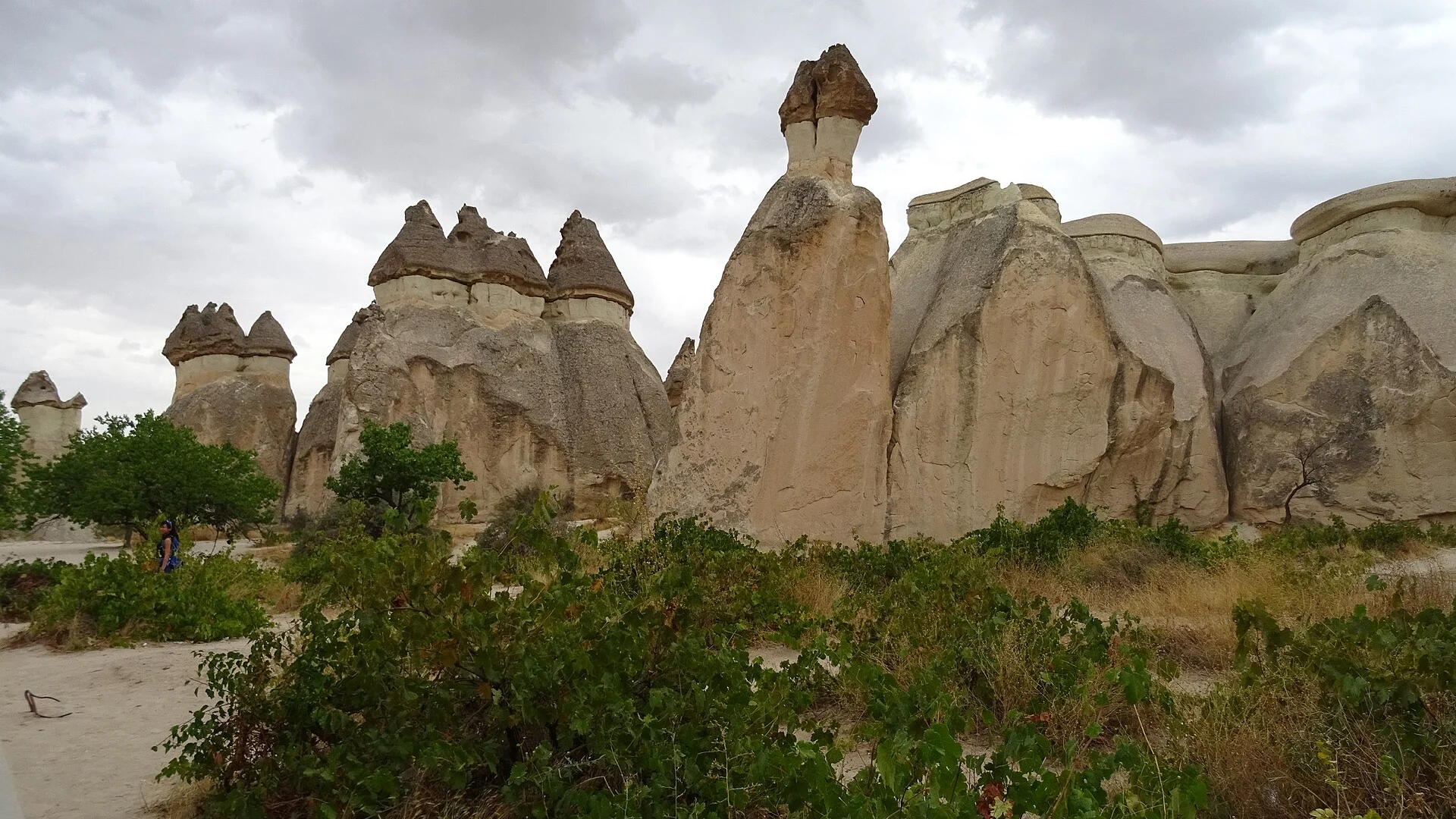
Cappadocia is a region of central Anatolia where volcanic ash settled, hardened into soft tuff, and then eroded into cones, ridges and pillars — the “fairy chimneys” that reach around 40 metres in places. What makes it more than a geological curiosity is what people did with the rock: because tuff is soft enough to carve with hand tools and hardens on exposure to air, communities here dug their homes, churches, storerooms and eventually entire underground cities directly into it.
UNESCO inscribed Göreme National Park and the Rock Sites of Cappadocia in 1985 under four criteria, cultural and natural together. The listed property spreads between Nevşehir, Ürgüp and Avanos and includes rock-hewn sanctuaries from the 4th century onward, troglodyte villages, and the underground complexes at Kaymaklı and Derinkuyu.
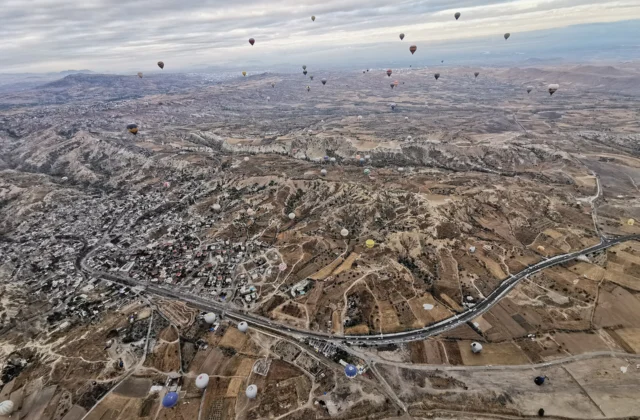
Most visitors come for the balloons, and they are worth coming for. But the churches with their Byzantine frescoes, cut into cliffs and unmarked from outside, are the reason the region is listed.
Why Visit
For the Göreme Open Air Museum, a monastic complex of rock-cut chapels whose 11th- and 12th-century frescoes survive in colours that should not have lasted, protected by the very darkness of the caves that hid them.
For the underground cities. Derinkuyu descends through multiple levels with ventilation shafts, wells, stables, chapels and rolling stone doors that sealed from the inside: built to shelter entire populations, not to hide a few people.
For the valleys, which are walkable and mostly free. Rose Valley at sunset, the Ihlara gorge with churches cut into its walls, Pigeon Valley with the dovecotes carved for the fertiliser the region depended on.
And for the balloons at dawn: genuinely one of the great sights anywhere, and the one part of a Cappadocia trip you cannot guarantee. See our guide to what decides whether you fly.
Top Experiences
- A balloon flight at sunrise: weather permitting, and it frequently does not. Book for your first morning so later mornings remain as fallbacks.
- Göreme Open Air Museum: the rock-cut monastic churches and their frescoes. The Dark Church (Karanlık Kilise) is separately ticketed and has the best-preserved paintings, precisely because it had almost no light.
- Derinkuyu or Kaymaklı underground city: multi-level, ventilated, and not for anyone claustrophobic. Some passages require walking bent double.
- Walking the Rose and Red Valleys at the end of the day, when the tuff genuinely turns pink.
- The Ihlara Valley: a green river gorge an hour southwest, with Byzantine churches cut into the cliffs and a shaded path along the bottom.
- Çavuşin and Zelve: abandoned cave villages you can walk into, with far fewer people than Göreme.
- Sleeping in a cave hotel: the rooms hold a steady temperature year-round, which is exactly why people lived in them.
Map
Map data © OpenStreetMap contributors
Best Time to Visit
April to June and September to October are the best months: mild days, cool nights, and the most settled conditions for ballooning.
Summer is hot by day — often well above 30 °C — but the altitude of around 1,000 m keeps the nights comfortable, and dawn is pleasant. It is also the busiest season.
Winter divides opinion. Snow on the fairy chimneys is extraordinary and the region is at its emptiest, but it is also when balloon flights are cancelled most often, and some valley paths become difficult.
Whatever the season, Cappadocia is a dawn destination. The balloons launch at first light, the valleys are at their best in the first and last hour of the day, and the middle of the day is when the coach tours arrive.
Where to Stay
Göreme: the centre of gravity: most cave hotels, most restaurants, walking distance to the Open Air Museum and the valley trailheads, and the main balloon launch area. Busiest and most convenient.
Üçhisar: higher, quieter, built around a castle rock, with the best views back over the valleys and the balloons at dawn.
Ürgüp: a working town rather than a tourist village, with better everyday restaurants and a fraction of the visitors.
Uchisar and Çavuşin for quiet; Avanos for the river and the pottery tradition.
On cave hotels: they are the local vernacular rather than a gimmick, and the rooms genuinely hold temperature. Ask about natural light before booking: some rooms have none, which some people love and others find oppressive.
Getting There
By air. Two airports serve the region: Kayseri (ASR), about an hour from Göreme, and Nevşehir Kapadokya (NAV), around 45 minutes and closer but with fewer flights. Both connect to Istanbul in roughly 90 minutes. Kayseri generally has more choice.
Shuttle transfers from both airports to the Cappadocian towns are standard, prebooked, and shared — expect to be dropped last if your hotel is furthest.
By bus. Overnight coaches run from Istanbul, Ankara and the coast. Istanbul to Cappadocia is a long night but the buses are comfortable and it saves a hotel night.
By car. Driving from Istanbul takes most of a day. Within the region a hire car is genuinely useful, because the sites are spread out and the best valleys are between the towns rather than in them.
Getting Around
Göreme is the usual base and is small enough to walk. Everything else is not.
Day tours are sold everywhere as the “Red” and “Green” routes: Red covering Göreme, Çavuşin, Paşabag and Devrent, Green covering Derinkuyu and the Ihlara Valley. They are efficient and they are also fixed to a schedule that puts you at each site at the busiest moment.
A hire car or scooter gives you the valleys at dawn and dusk, which is when they are worth seeing.
Walking between valleys is one of the pleasures of the region — Göreme to Çavuşin through Rose Valley is a straightforward few hours. Paths are informal and poorly signed; download an offline map.
Local dolmuşes connect Göreme, Ürgüp, Avanos and Üçhisar cheaply and frequently.
Top Attractions
- Göreme Open Air Museum: the rock-cut monastic churches and Byzantine frescoes at the heart of the UNESCO listing.
- Derinkuyu underground city: the deepest of the excavated complexes, with ventilation shafts and stone doors.
- Kaymaklı underground city: wider and shallower than Derinkuyu, and less demanding to walk.
- Rose and Red Valleys: the walking country between Göreme and Çavuşin.
- Üçhisar Castle: a hollowed rock outcrop with the widest view in the region.
- Paşabag and Devrent: the most photogenic fairy chimney fields.
- Ihlara Valley: a river gorge with rock-cut churches along a shaded path.
- Zelve Open Air Museum: an abandoned cave village inhabited until the 1950s.
Food & Culture
Testi kebabı is the regional dish: meat and vegetables sealed in a clay pot, cooked slowly, and the pot cracked open at the table. It is theatre, and it is also genuinely local: Avanos has been a pottery town since Hittite times, and the clay comes from the Kızılırmak river.
Cappadocia is also wine country, and has been for a very long time. The indigenous grapes — Emir for whites, Kalecik Karası and Öküzgözü for reds — are grown in volcanic soil and cellared in caves. Several producers around Ürgüp offer tastings.
On the culture: the underground cities were built as refuges, and their scale is a record of how often the people here needed to disappear. The rock churches were cut by Christian monastic communities from the 4th century, and continued in use for centuries after the region became Muslim. The cave villages were inhabited into the twentieth century: Zelve was only evacuated in the 1950s, when erosion made it unsafe.
Which is to say: the caves are not ancient ruins. They are recently vacated homes, and some of them have simply been re-occupied as hotels.
Budget
Cappadocia is inexpensive apart from two things: the balloon flight and, in peak season, the better cave hotels.
A balloon flight is the single largest discretionary cost in most Turkey itineraries, and prices vary by basket size, flight duration and operator. Cheaper flights generally mean larger baskets with more passengers. Book through a licensed operator and check the refund terms for a weather cancellation before paying.
Everything else — site entry, food, dolmuşes, scooter hire — is modest. The valleys are free, and they are half of what makes the region worth visiting.
Cards work in Göreme and Ürgüp. Keep cash for dolmuşes, village cafes and small entry fees.
Entry, Tickets & Permits
Cappadocia is a region, not a gated site, and most of it is free to walk. The valleys, the abandoned cave villages and the roads between the towns cost nothing.
The ticketed sites are the Göreme Open Air Museum, the underground cities at Derinkuyu and Kaymaklı Zelve, and a handful of individual churches. The Dark Church inside the Göreme museum requires a supplementary ticket on top of museum entry.
A regional Museum Pass covering the main sites exists and is worth checking against your itinerary if you plan to see several. Tickets and passes are sold at the sites and through the Ministry of Culture and Tourism’s official channels.
Balloon flights are a separate matter and are regulated. Operators must be licensed by Turkey’s Directorate General of Civil Aviation, and permission to fly is granted or refused each morning on the day, based on conditions. Book through a licensed operator, and read the cancellation terms before paying — refund practice varies considerably between companies.
Site fees, opening hours and pass coverage are set by the Ministry of Culture and Tourism and change. Confirm on the official channels before travelling.
Important Notes
Balloon flights are cancelled often, and the decision is not the operator’s to argue with. Build spare mornings into your stay rather than booking a single chance. Full detail: what decides whether you fly.
The underground cities are not for everyone. Passages are narrow, low and in places require moving bent over for some distance. If you are claustrophobic, Kaymaklı is the easier of the two.
Valley paths are informal. Signage is poor, trails braid and dead-end, and phone signal is patchy in the gorges. Download offline maps and do not start a valley walk near dusk.
Sun and altitude. At around 1,000 m with almost no shade in the valleys, the sun is stronger than the air temperature suggests.
Footwear. Tuff is soft and dusty and the paths are loose underfoot. Trainers at minimum.
Itinerary Suggestions
Three nights, the sensible minimum. Arrive in the afternoon and walk to a sunset viewpoint. Morning one: balloon attempt, then the Göreme Open Air Museum. Morning two: balloon attempt if the first failed, then Derinkuyu and the Ihlara Valley. Afternoon: Rose Valley on foot. Morning three: Üçhisar and Paşabag before the transfer.
The structure matters more than the order: put a balloon attempt on your first morning so that a cancellation still leaves you two more chances.
Two nights works but gives you a single realistic balloon window, which in winter is a coin toss.
Cappadocia pairs naturally with Istanbul — 90 minutes by air — and that two-stop combination is the standard first trip to Turkey.
Frequently Asked Questions
How many nights do I need in Cappadocia?
Three. Two gives you only one realistic balloon window; three gives you two spare mornings if the first flight is cancelled.
Are balloon flights safe?
They are regulated by Turkey's civil aviation authority, and flights are grounded when conditions are unsuitable. That is why cancellations are common: the system is doing its job.
What happens if my flight is cancelled?
Refund and rebooking practice varies by operator. Read the terms before you pay, and leave spare mornings in your itinerary.
Do I need a car?
Not strictly: day tours and dolmuşes cover the main sites. A car or scooter is what gets you into the valleys at dawn and dusk, which is when they are best.
Are the underground cities difficult?
Some passages are low and narrow enough to require walking bent over. Kaymaklı is easier going than Derinkuyu.
Is a cave hotel a gimmick?
No. Rock-cut dwellings are the regional vernacular and were lived in until the twentieth century. The rooms hold a steady temperature year-round.
Sources
- UNESCO World Heritage Centre: Göreme National Park and the Rock Sites of Cappadocia
- Turkish Directorate General of Civil Aviation (SHGM)
- Republic of Türkiye Ministry of Culture and Tourism
- Go Türkiye: official tourism portal
- UK FCDO: Turkey travel advice
Last reviewed: September 13, 2026