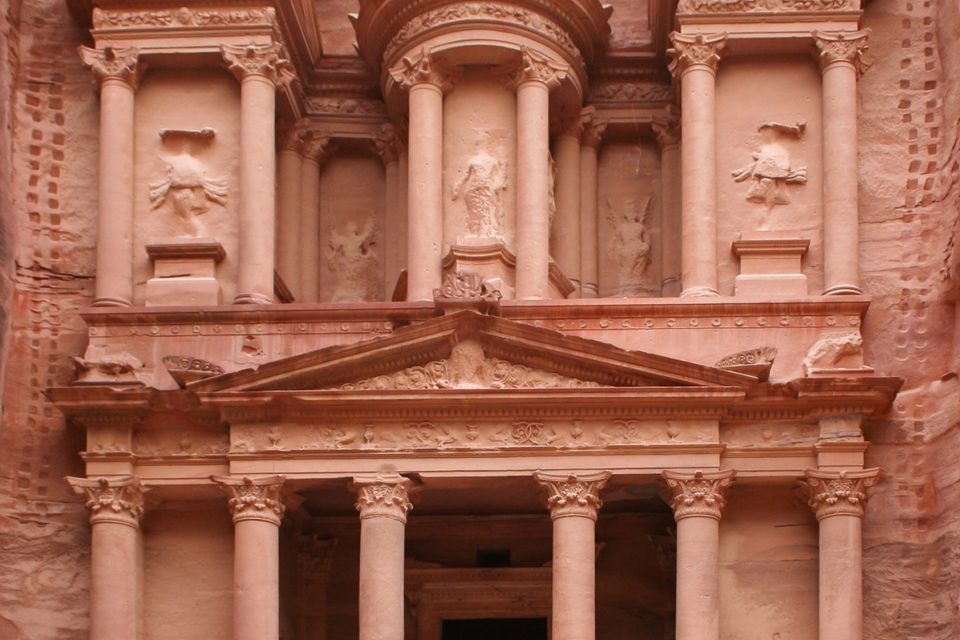
A destination’s defining image isn’t always a skyline. Sometimes it comes down to a single architectural achievement, the way Petra, carved directly into rose-colored sandstone cliffs by the Nabateans over two thousand years ago, is less a building than a city sculpted from the rock it sits in: its facades were cut top-down, without scaffolding, a detail that still puzzles visitors staring up at the Treasury’s 40-meter face.
Renaissance Italy took the opposite approach, building upward and outward in stone and marble: Florence’s domed cathedral and Rome’s layered classical ruins reflect centuries of architects working in deliberate conversation with the ancient world around them. Venice, built on wooden piles driven into a lagoon, solved an entirely different problem, a city with no solid ground to build on at all.
Barcelona offers a newer, stranger tradition: Antoni Gaudí’s early-20th-century buildings, most famously the still-unfinished Sagrada Família, borrow curved, organic forms from nature rather than straight classical lines, making the city’s skyline unlike anywhere else in Europe.
None of these styles require an architecture background to appreciate: knowing roughly what problem a building was solving (no scaffolding, no solid ground, no straight lines) tends to make it more interesting up close, not less.