
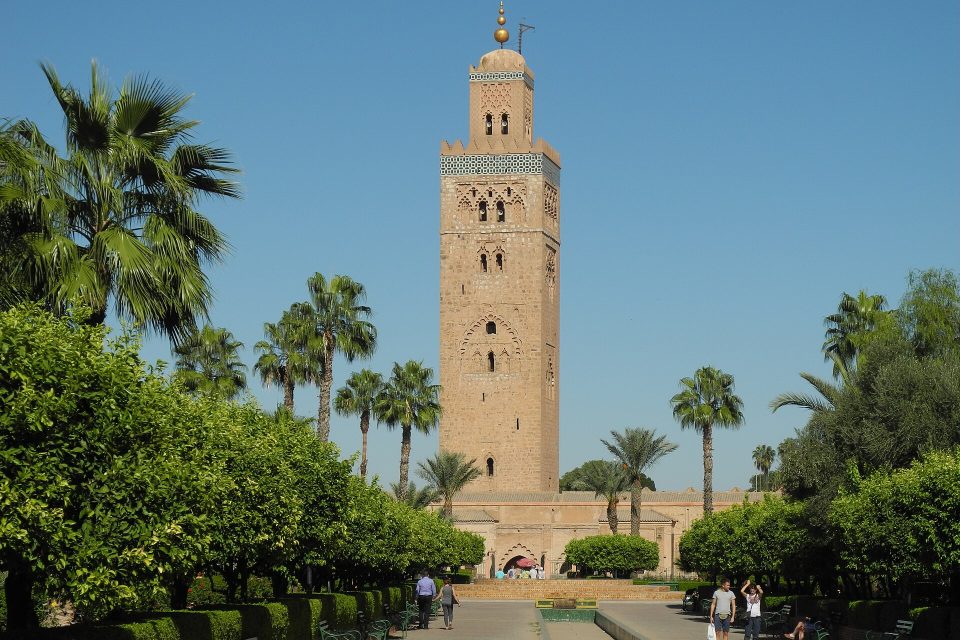
Morocco rewards travelers who slow down enough to notice its everyday rhythms, not just its landmarks. Hospitality is treated as a point of pride: it is common to be offered sweet mint tea within minutes of entering a shop or a home, and accepting it (even briefly) is part of the exchange, not an obligation to buy anything.
Food culture centers on shared plates and slow cooking. A tagine, named for the cone-lidded clay pot it is cooked in, is built for hours of gentle simmering: meat or vegetables layered with preserved lemon, olives, and warm spices like cumin, ginger, and saffron. Friday, the week’s religious day of rest, is traditionally couscous day in many households, served heaped with vegetables and a rich broth.
Craft traditions are visible everywhere in the medinas of Marrakech and Fes: leather tanneries that still work in stone vats, hand-knotted Berber rugs whose patterns vary by region and tribe, and zellige tilework assembled piece by piece from individually chiseled ceramic tesserae. None of this is staged for visitors; it is the same production process that has supplied Moroccan households and mosques for centuries.
A little etiquette goes a long way: dress modestly outside beach resorts, ask before photographing people, and expect bargaining in souks to be a normal, unhurried part of buying anything not price-tagged. For a full country overview, see our Morocco travel guide.